

Anyone who’s ever owned a classic car knows the heartbreak. You pack the picnic, wrap yourself in your favourite scarf, and glide to the garage with all the optimism of a Merchant Ivory matinee. Then—click. Nothing. The geriatric powerplant throws its walking sticks across the room and refuses to budge. Or worse: you make it to the classic car meet, bask in the admiration, and then break down on the way home in a storm so biblical it makes Noah look underprepared.
In my experience, the culprits are always the same: the bits that rely on the liquefied remains of dinosaurs and the fermented tears of fruit. Remove the engine and gearbox, and you’ve eliminated 95% of the drama. Sure, you’ll still have the odd leaky soft top, a seat that’s seen better decades, or a knob that’s lost its will to turn. But at 80-plus years old, I’d be a bit uncooperative too.
Now, mention EVs to the classic car crowd and watch them recoil like you’ve suggested replacing the king with a hologram (actually that’s a great idea). They’ll hiss, they’ll scoff, they’ll wax lyrical about the “soul” of a petrol engine—the smell of fuel, the clutch that doubles as a gym workout, the backfires that send pensioners diving for cover. But let’s be honest: that “soul” is often just a euphemism for unreliability.
I’ve long since defected to the silent, torque-rich sorcery of electric propulsion. Track days? No thanks. Give me a coastal cruise, a forest road, or a mountain pass with the top down and the drama turned off.
My Classic Car Cautionary Tale
I once owned a 1970 Mercedes-Benz 280SEL. Long wheelbase, yes, but the chassis was W108, and I always suspected it was a Frankenstein’s monster of two donor cars. The engine was on its last wheeze, the 4-speed auto was prehistoric, and the stainless exhaust—possibly original—was more blocked than a toddler’s nose in winter. The suspension was shot, the Becker radio didn’t do FM, and the air-con was a tragic aftermarket affair. The only thing that worked reliably was the vacuum central locking, bless it.
Then came the kicker: beneath the flawless paint was a body held together by filler and hope. Structurally, it had the integrity of a lace doily. The cost of restoration would’ve bought me a small island, and the finished car would’ve been worth less than a decent handbag. If it had been a W111? Maybe. But this? Not worth the heartbreak.
Classic cars, done properly, require money. Lots of it.


ABOVE: My 1970 Mercedes-Benz 280SEL – the w108 (yes w108) looked great but yeah nah!
Above: This Week’s VIDEO Review – Redtiger F77 Dashcam Review: 4K Twin Cam Glory Captures Hit & Run rear-ender
#RedtigerF77, #DashcamReview, #4KDashcam, #CarTech, #AutoGear, #GayCarBoys
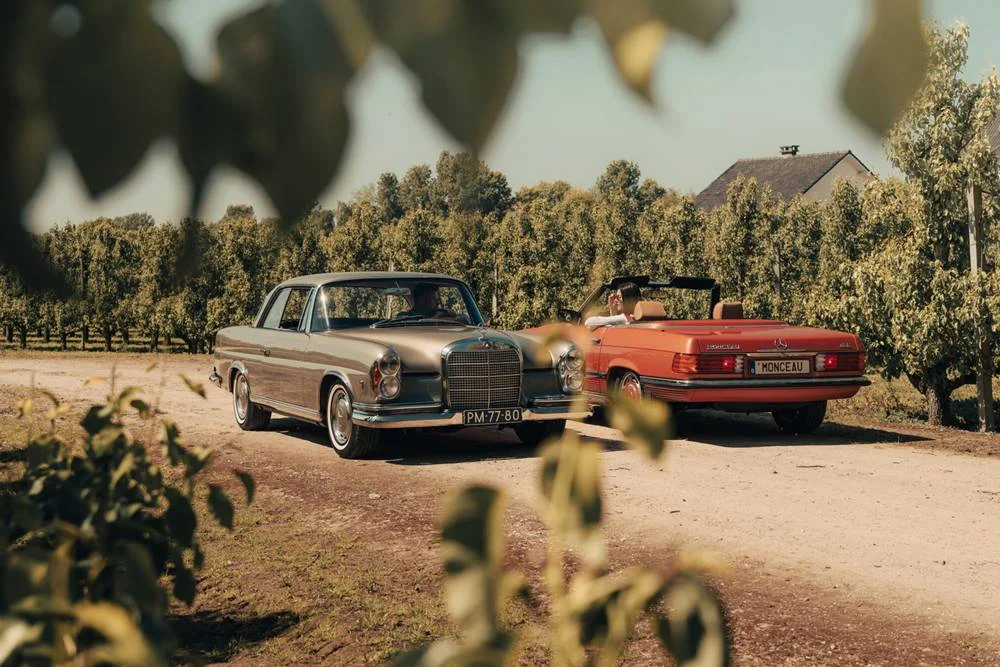
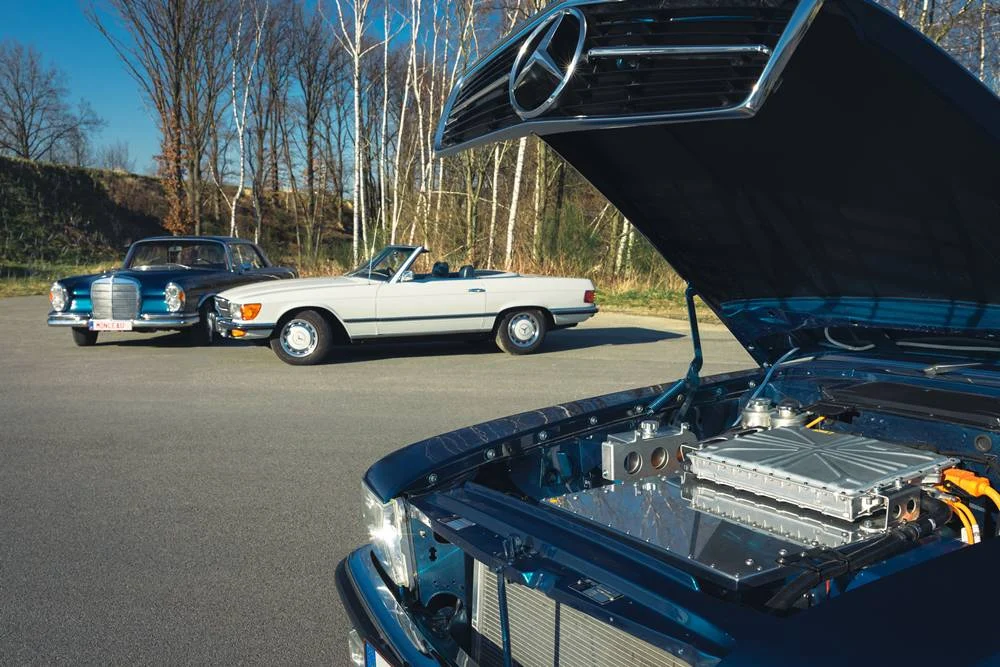
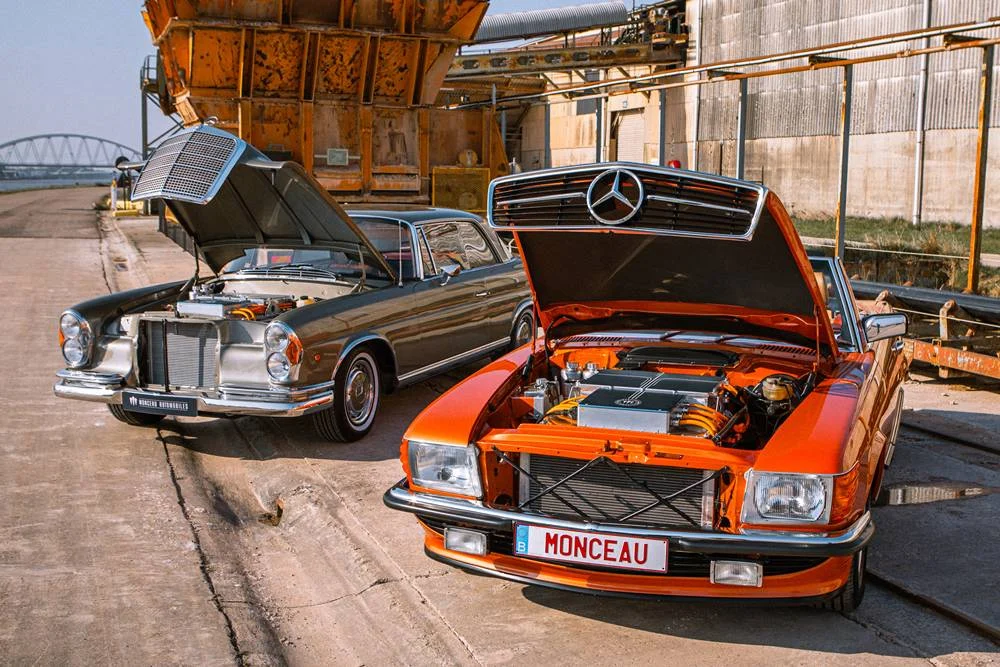
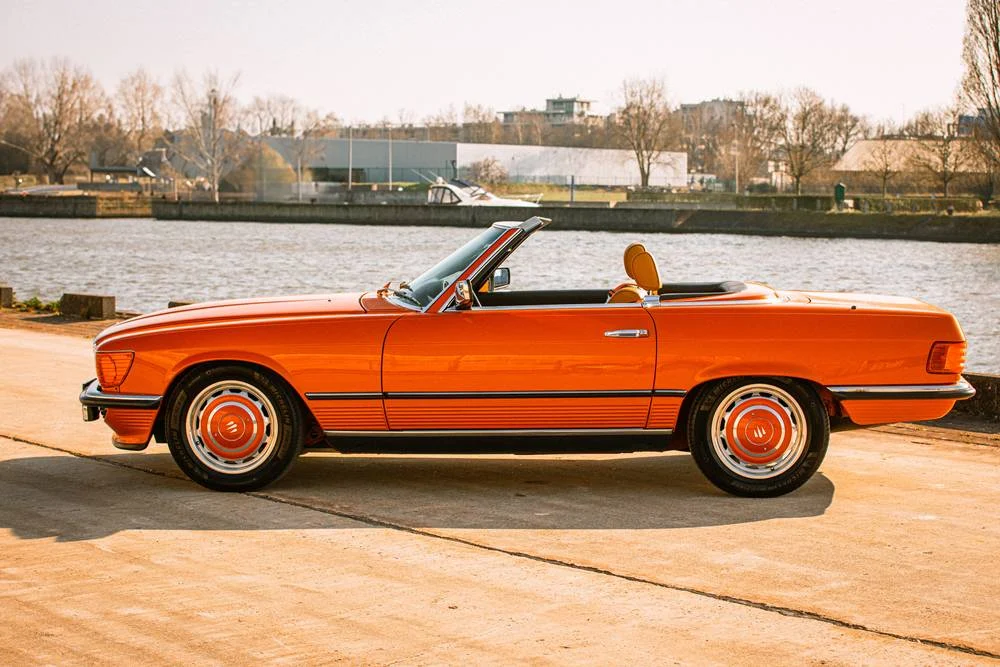


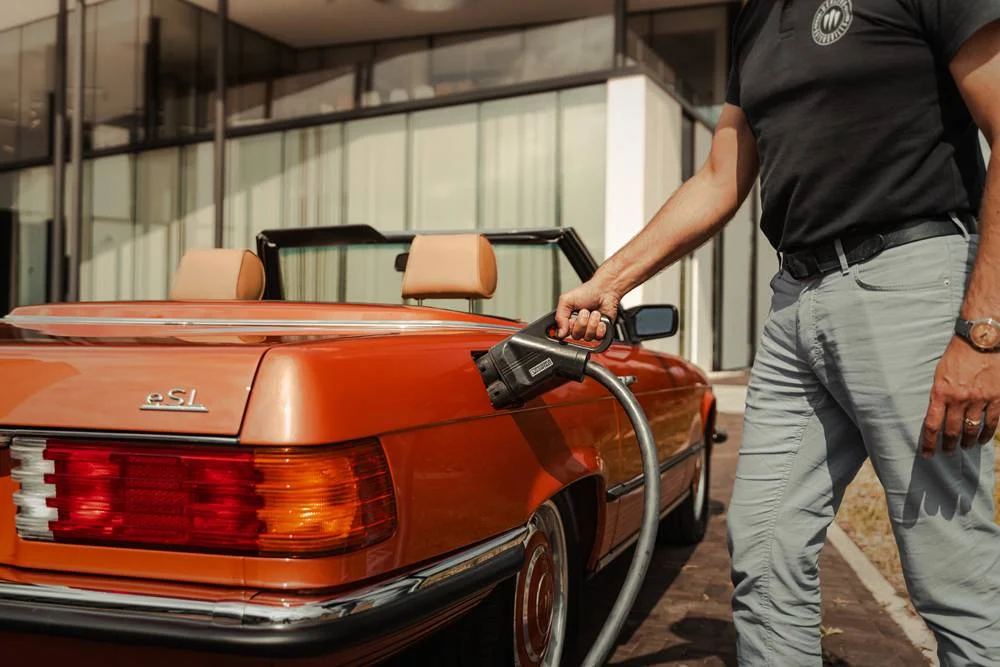
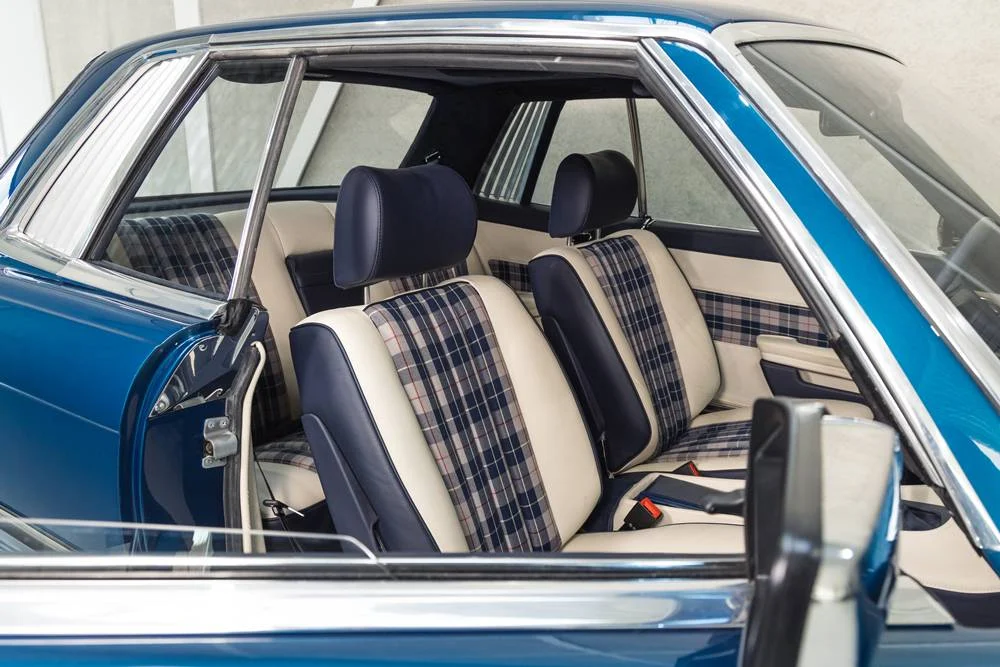
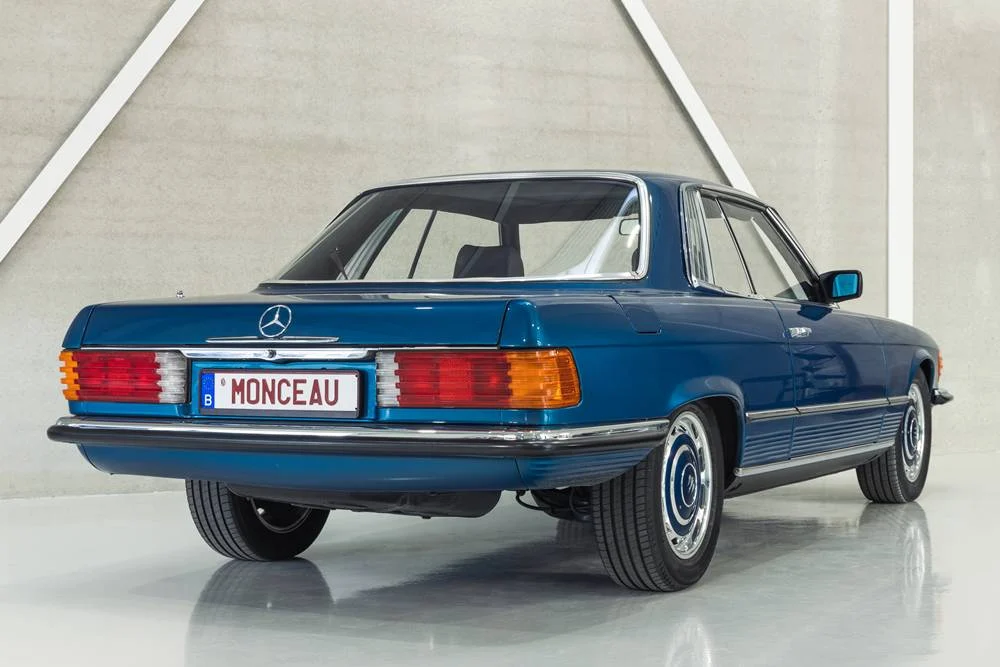
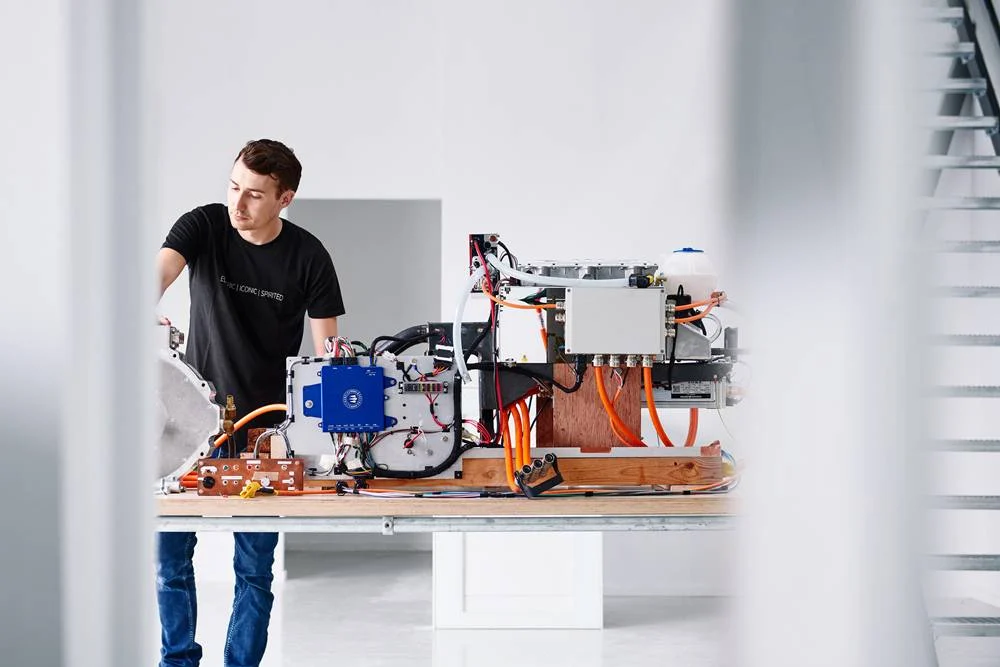
ABOVE: Photos from Monceau: Credits to ITSPBX, Noortje Blokland
Enter MONCEAU Automobiles
Which brings me to MONCEAU Automobiles, a Belgian outfit with a flair for resurrection. They take W111s, R107s, and C107s from the golden age of Mercedes-Benz and give them a second life—fully restored, fully electric, and fully fabulous.
Gone is the unreliable V8. In its place: a bespoke in-house electric drivetrain with regenerative braking and a 52kWh battery (optional 56kWh if you’re feeling frisky). The eSE convertible starts at €379,000 (plus donor and taxes), and suddenly that $995,000 AUD price tag for a restored W111 makes sense. The original V8 did 0–100 in a leisurely 11.5 seconds and drank like a sailor on shore leave. The electric version? Sub-8 seconds and no petrol station shame.
Charging is modern and merciful: CCS plug, 22kW AC or 80kW DC. That’s 100km of range in 15 minutes. Real-world range? 250–320km. Enough for a weekend away, assuming you’re not reenacting Cannonball Run.
Pricing for conversions (plus donor and taxes):
- eSE Convertible: €379,000
- eSE Coupé: €349,000
- eSL / eSLC: €229,000
And yes, I’ve seen a petrol W111 convertible listed at €559,800 in Australia. Perspective, darling.
Models Under Consideration
MONCEAU isn’t stopping at the W111. The W113 Pagoda is on the radar, as is the stately W100 Grosser—imagine that electrified, the diplomatic drama! The Ponton, that charming post-war relic, may yet get its moment in the sun. Finally, the W108/109, which may resemble the W111 or W100, but never came as a 2-door or limousine, rounds out the possibilities.
Each one a character, each one a candidate for rebirth.
The Process: Tailored Resurrection
Whether it’s your beloved family heirloom or a donor sourced by MONCEAU, the process begins with a forensic assessment. Some clients want concours-level perfection; others prefer patina (though I can’t imagine why). Either way, the body is restored to factory spec, the leather is redone, and in the eSL/SLC, you get a cheeky nod to the past with sporty chequered fabric. I always loved that look. Yes, I’m that old.
The dash stays mostly original, but MONCEAU discreetly modernises where it counts. The Becker radio? Still looks vintage but now streams music and handles calls. As for navigation and Apple CarPlay—well, Roel Pollen, MONCEAU’s MD, gently reminded me that this is a vintage experience, not a Tesla. I, however, need navigation. I couldn’t find my way out of a paper bag. A phone mount and a couple of USB ports should do the trick.
MONCEAU suggests the under-bonnet relic could be made into a mancave ornament. Not for me. Banish it. Consign it to the dustbin of engineering past and I’ll sleep easier at night. The same goes for the fouled fuel tank and anything else vaguely related to the Carboniferous Period.
I love that the floor and column-mounted gear selectors have been repurposed as direction selectors for the EV drive. You also get modern air conditioning and heating (remembering there’s no engine to heat water), regenerative braking, upgraded brakes, and other tweaks to bring the car up to modern safety standards.
The body is treated to paint and anti-rust with quality unavailable when these cars first appeared. In theory, it should all last longer than the original OEM treatment.
The MONCEAU Signature
Some of the OEM badging is changed to reflect the electrified rebirth. A 350SLC becomes eSLC. My beloved W111 becomes an eSE, instead of the rather confusing 280SE 3.5. Even the three-pointed star gets a makeover—replaced by a stylised M (for MONCEAU) that resembles a three-claw swipe, nestled in laurel leaves and embossed with the company name. Dead posh. I wasn’t convinced at first, but it’s grown on me.
The Bespoke Additions
Owners might even return to MONCEAU for future upgrades: solid-state batteries, faster charging, more efficient motors, discreet navigation and CarPlay. There are fully LCD instrument panels that sit behind the original fascia, though I didn’t mention it to Roel—he’s more of a purist than I.
Improved speakers? Yes. And no engine noise to drown them out.
The Advantage of Time
EV range will improve. Battery prices will drop. Technology will evolve. If you can afford this kind of pampering, you can afford to keep pampering. MONCEAU’s facility in Hasselt is so clean it looks like a set from a 70s sci-fi film. There, your car’s future is sculpted with surgical precision.
Other Things to Consider
Even futureproofed, a classic car won’t have ADAS, airbags, or the warning gongs that blight modern humanity. No screens to distract you. No computers to interfere. No voices demanding your attention. No tracking your every move.
And having spent the price of a Sydney apartment on a car conversion, you may wish to consider anti-theft remote tracking and immobilisation . Just a thought.
#MercedesBenz,#ClassicCars,#ElectricConversion,#EV,#MONCEAU,#W111,#Pagoda,#Grosser600,#ClassicMercedes,#CarReview
Other GayCarBoys Mercedes-Benz Stories
- 2025 Mercedes-Benz GLA 250 e PHEV Mixes Luxury with Efficiency
- Mercedes-Benz to Use Customer Vehicle Data from 2025 to Boost Road Safety: Here’s What You Need to Know
- Homero Becerra Gonzalez Replaces Jaime Cohen as CEO Mercedes-Benz Australia
- Meet the 2026 Mercedes-AMG GT XX Concept
- smart #5: Mercedes-Benz Styling for smart Off-Road Adventure EV
- 2025 Mercedes-Benz CLA Unveiled in NYC Amid Glam & Glitter
- 2025 Mercedes-Benz C 200 Sport Edition: a Dash of AMG Glam
- All New Mercedes-AMG E 53 HYBRID 4MATIC+ PHEV – No V8?
| Model | Powertrain | Power / Torque | 0–100 km/h | Range / Economy | Price |
|---|---|---|---|---|---|
| W111 280SE 3.5 | Petrol V8 | 150kW / 290Nm | ~11.5 sec | 13.5L/100km (20+ urban) | AU$995,000 |
| eSE (W111 EV) | Electric (RWD) | 150kW / 600Nm | <8 sec | 250–320km (52–56kWh) | €379,000 + donor |
| R107 350SLC | Petrol V8 | 147kW / 266Nm | ~9 sec | ~15L/100km | AU$60k–$120k |
| eSLC (C107 EV) | Electric (RWD) | 150kW / 600Nm | <8 sec | 250–320km | €229,000 + donor |
| W113 Pagoda | Petrol I6 | 110–125kW / ~200Nm | ~10–12 sec | ~13–15L/100km | AU$200k–$400k |
| ePagoda (planned) | Electric (est.) | ~150kW / 600Nm est. | ~8 sec est. | 250–300km est. | €300k–€350k est. |
| W100 Grosser 600 | Petrol V8 | 184kW / 500Nm | ~10 sec | 20–30L/100km | AU$500k–$1M+ |
| eGrosser (planned) | Electric (est.) | ~150–200kW / 600–800Nm | ~8–9 sec est. | 250–300km est. | €500k+ est. |
SHORT Video Review: Lexus LC500 Convertible Roof operation. Mesmerising. Sorry about the rubbish background
@lexus, #lexuslc500convertible, #alanzurvas, #gaycarboys
#automobile #shorts #audietrongtrs #gaycarboys #alanzurvas ##shorts
Discover more from Gay Car Boys
Subscribe to get the latest posts sent to your email.







Leave a Reply