In-car technology promised a seamless driving utopia. Instead, modern infotainment has devolved into a frustrating digital quicksand and the more you move, the more you sink into despair. We are now paying premium prices to serve as unpaid beta testers for half-baked software that crashes even at highway speeds.
The Three Tiers of Digital Disappointment
Automakers have convinced themselves they are software developers and indeed some of them are. But, and there is always one of those, the result is a confusing hierarchy of competing operating systems that fail in distinct, irritating ways.
We used to have a computer that controlled the engine only. Since then control has further been ceded to one’s and zero’s as the automotive industry further abandoned lovely buttons and knobs. Intuitive design easily used by muscle memory is now little more than digital chaos, leaving users to flail blindly through a labyrinth of branded tech jargon. It is an exercise in profound frustration, designed by engineers who do not drive their own creations.
Normally you consult your user guide, but it too is now digital. Yikes!
First, there is Android Auto.
This is merely a projection. It runs entirely off your phone, hijacking your dashboard display to mirror your apps. It remains wonderfully disinterested in your vehicle’s actual hardware. It can’t adjust your air conditioning, nor can it fettle your steering feel. It is a Air B&Ber in the house, lacking the keys to the important rooms. If you want to change the ambient lighting or check your tyre pressure, you have to exit the projection and return to the car’s UI, and who doesn’t love a terrible acronym?
Then, there is Android Automotive OS (AAOS).
This is the underlying architecture (half)baked into the car. It replaces the old, clunky proprietary systems with an open-source Android code. It runs natively, capable of controlling everything from climate zones to drive modes and those gorgeous stress-relieving massages.
Finally, we have Google Built-in.
This is AAOS injected with Google Automotive Services. It gives users native Google Maps and the Google Assistant directly in the dashboard regardless of what phone you have. It theoretically eliminates the need for a phone entirely, promising a fully integrated ecosystem.
The reality is far less elegant. Manufacturers are loading a veritable War and Peace of heavy, complex code onto processors that belong in a Barbie Budget Camper. Memory leaks plague the native navigation apps, and systems choke on the simplest of tasks. The hardware is fundamentally incapable of supporting the software’s ambitions, creating an environment ripe for failure. You are running a modern, resource-heavy operating system on the digital equivalent of a 70’s Teasmade. My memories of it are far fonder than the abomination that is Android Automotive OS.
Above: 2026 Polestar 2 DM Performance The Forgotten Polestar is Fabulous
#Polestar2 #EV #BowersWilkins #ElectricCars #SwedishDesign

Help Support Gay Car Boys Subscribe to our Youtube Channel by SMASHING THE BUTTON ABOVE


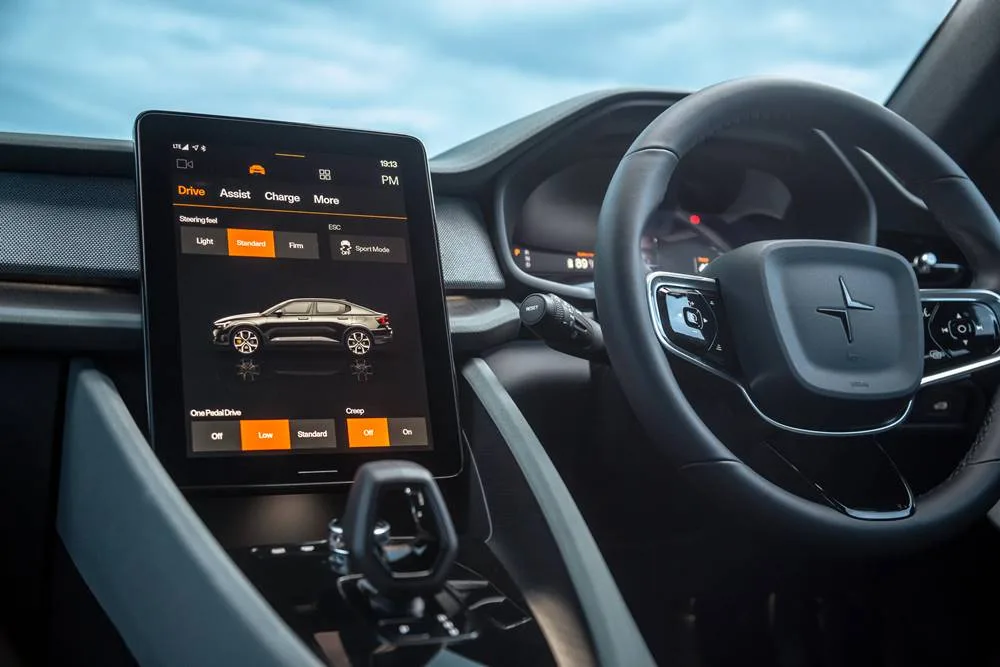

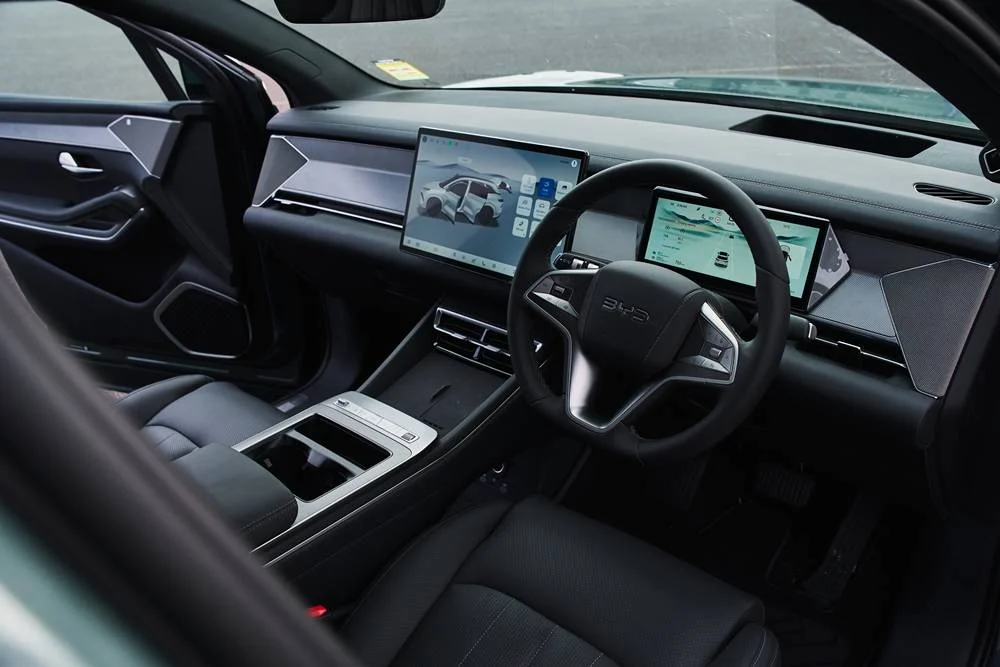

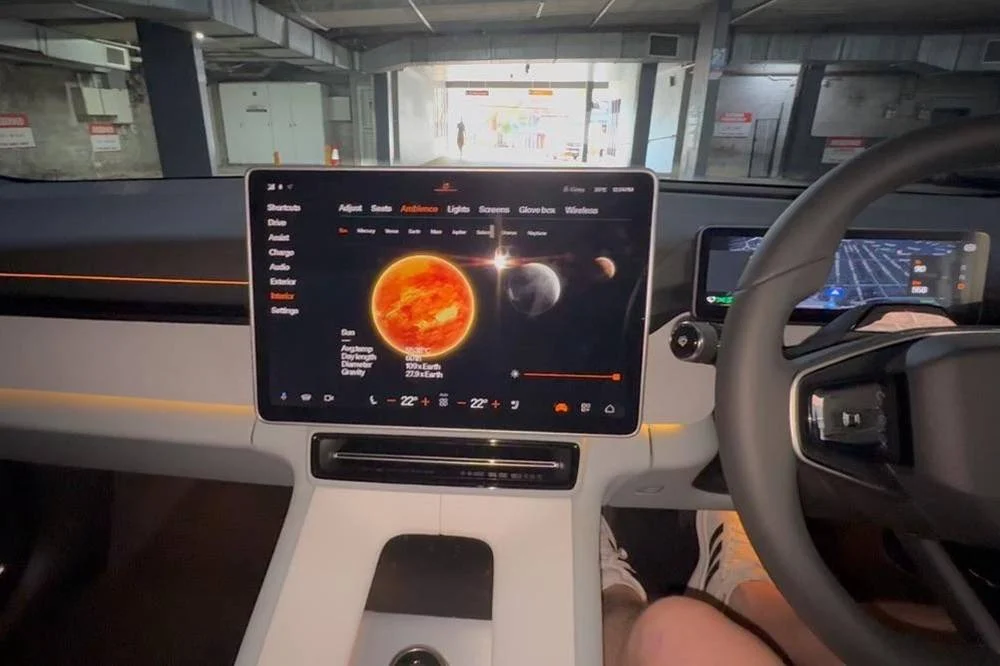
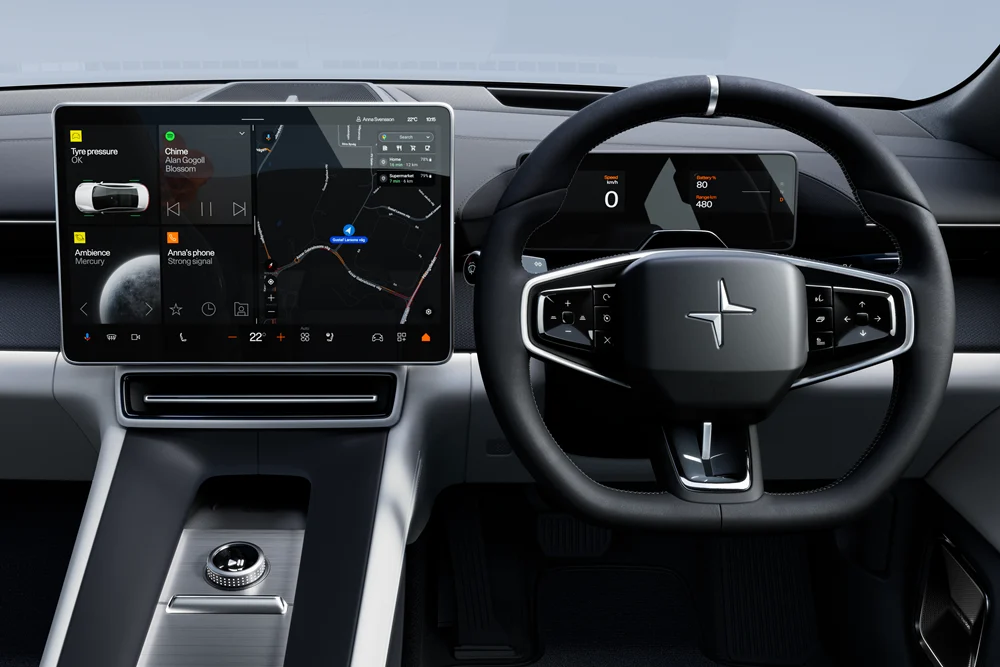

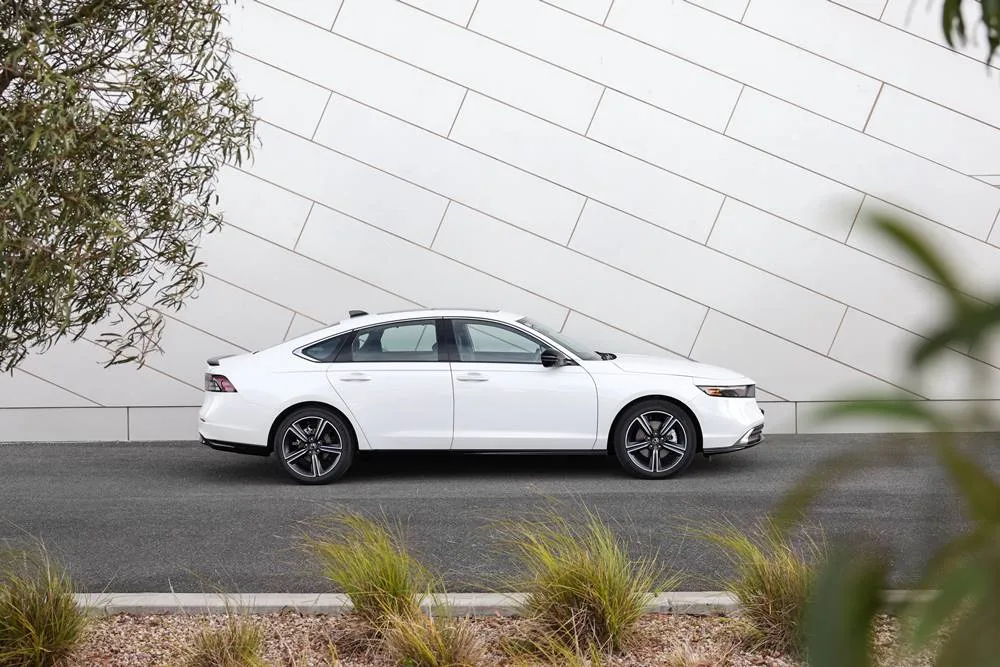
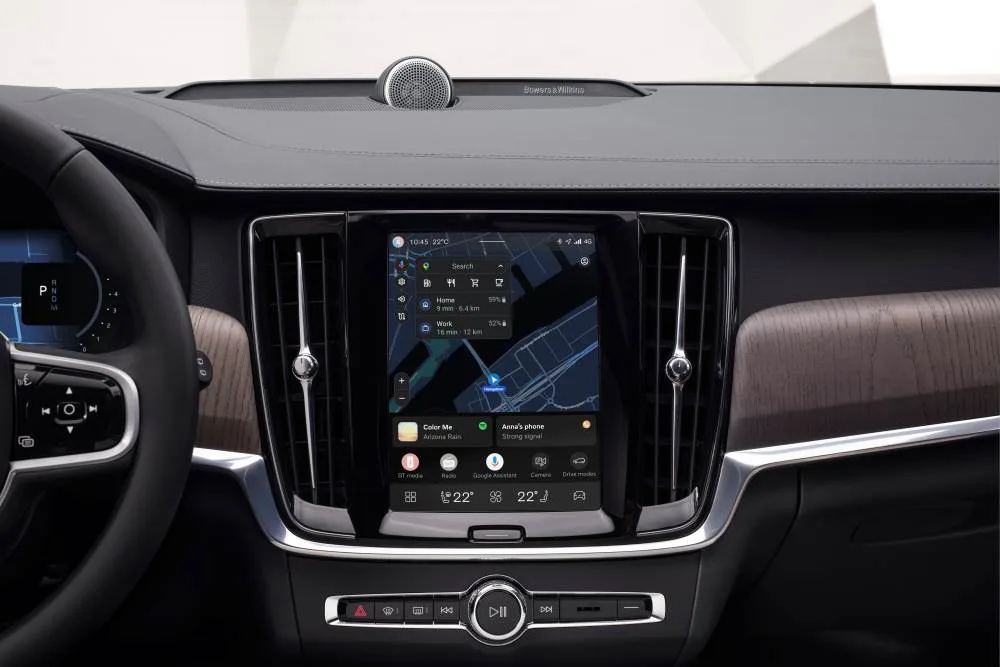
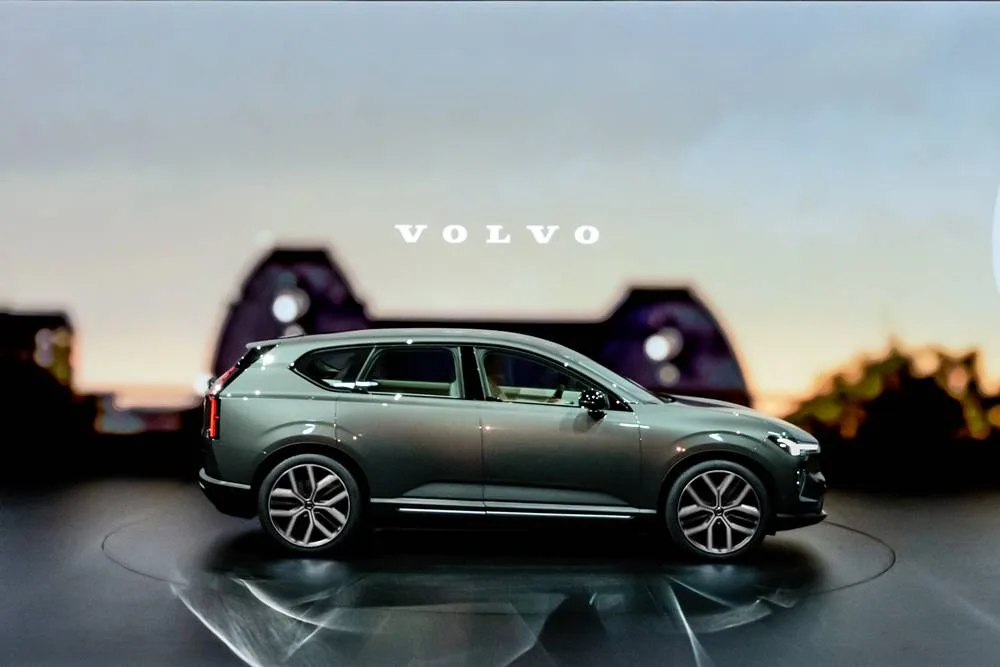
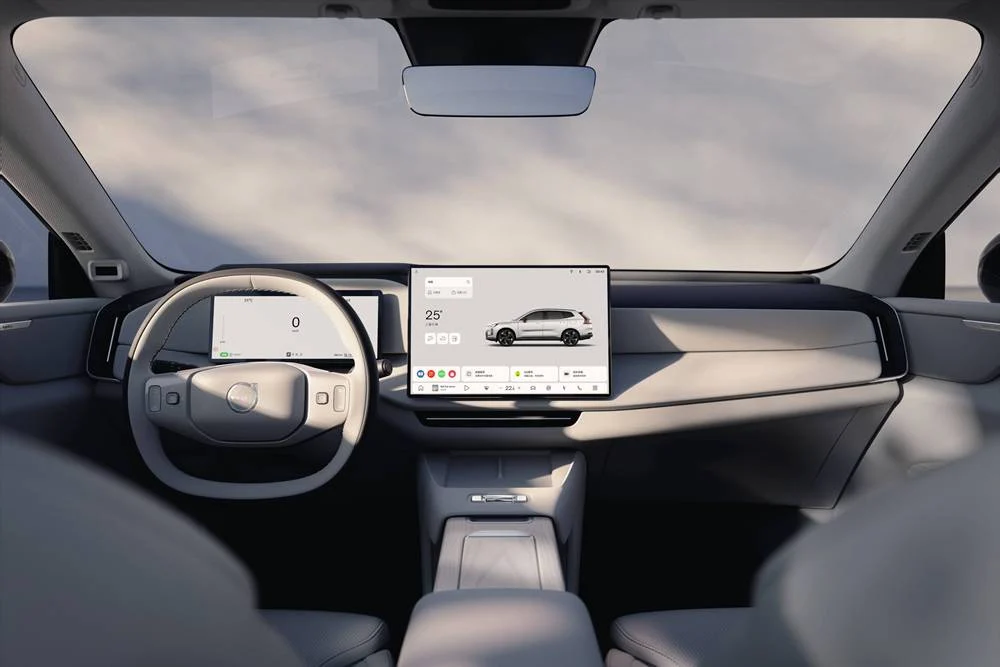
ABOVE: A cross-section of modern Android Automotive OS dashboards and infotainment systems
Highway Robbery and Hard Resets
The instability is not just annoying; it borders on dangerous. Just today, I was cruising down the M1 at 110 km/h when the centre screen died. Blank. A deep, cold, black void. The driver display and the head-up display remained tickety-boo, feeding me speed and speed alone. Every single control housed in that centre touch panel vanished instantly, plunging the cabin into an eerie, unresponsive cluster*uck.
I attempted to summon voice control to restore order. Silence. The digital assistant refused to acknowledge my existence. I was forced to perform a hard reset, holding down physical buttons for twenty excruciating seconds, all while hurtling down the road with nowhere to stop. We have reached a disturbing epoch where rebooting a 2.5 tonne vehicle at highway speeds is a required driving skill.
Luckily the reboot forces the HUD and driver LCD displays into “simple mode”, a black screen with speed and a few other essentials only. This was my 4th hard reset that day.
This roadtest isn’t an isolated incident, oh no. During my GCB review drive, I have experienced similar failures across multiple vehicle platforms. In the Polestar, the screen frequently goes dark and refuses to wake, taking all on-screen controls with it. A hard Restart is required. In Honda models, the system regularly demands a the same full cycle reset just to establish a basic Bluetooth connection. You do not expect a smartphone to freeze mid-call, yet we casually accept that a modern machine will arbitrarily lose its primary interface on a whim.
Audio Ghosts and Decorative Buttons
These glitches are most inconvenient. They strike at the most inopportune moments, usually when navigating a complex, unfamiliar intersection. It is a hostile user experience (UX) that makes your blood pressure spike.
The audio logic is a disaster of conflicting priorities. You jump into a test car, fire up the ignition, and the volume simply refuses to work. Alternatively, the system gets trapped in a voice-command loop without telling you. You attempt to crank up the volume on a track, but the car adjusts the digital assistant level instead, leaving media low or entirely muted. The software forgets to hand control back to the primary audio layer, leaving you dementedly pecking at a physical knob that does nothing. The assistant awaits a command you never gave and instead of the Voice Assist wobbling like a jelly at the top of the screen, yhe only indication is the “mic” label on the volume.
Then there is the sheer stubbornness of wireless connections. My Apple CarPlay setup routinely refuses to auto-connect when the car starts up. Even after deleting the profile and re-pairing the device from scratch, the screen stares at me like a village idiot. In some cases it has demanded a wired connection that shouldn’t be necessary. Today, CarPlay finally decided to load Google Maps, displaying the route request using the on-screen button. I then pressed the “Start” button. Nothing happened. I pressed it again. Not a sausage. I flicked back to the native Android Automotive maps which functioned flawlessly, proving the car had perfect GPS data, but the projection software had simply gone on strike.
Add in the fact that Google services randomly acknowledge my home automation routines one morning and entirely ignore my house the next. One day I can turn off the tellie and turn on the lamps using the voice function; the next moment the car acts as if I am dead to it. It haughtily declared that routines used a few minutes before, are not available, or that i authenticate an account that has been linked for months. The inconsistency is maddening.
An Expanding Roster of Offenders
You would think this widespread instability would give the industry pause. Instead, the adoption rate is accelerating. Brands are rushing to abrogate their infotainment development responsibility and allow Silicon Valley to bugger it up instead. Desperate to cut costs and chase the software-defined trend, we are hostage to software patches by Gen-Z’s on work experience.
Renault and Nissan are heavily invested in the Google Built-in architecture. General Motors controversially ditched Apple CarPlay entirely to force buyers into their native Android environment, a move that trapped drivers in a ruthlessly buggy ecosystem. Hyundai and Kia are rolling out their own Android Automotive variations to an ever-growing list of fuming users.
I have seen the quirks firsthand in BYD models, where phantom voice triggers constantly duck the audio volume because the microphone thinks it heard a command that was never spoken. I am currently testing the 2026 BYD Sealion 8 plug-in hybrid around Sydney, and while the physical hardware is sharp, you remain at the mercy of the underlying code’s psychotic mood swings. Polestar and Volvo pioneered this integration, yet they are still issuing over-the-air updates to patch the exact memory leaks that cause the black-screen failures I experienced today in the BYD.
The Inopportune Glitch
The irony of the software-defined vehicle is that the software is undeniably the least reliable component. Automakers are selling a lucrative vision of seamless, intelligent connectivity. They promise cars that act as intuitive extensions of our digital lives, preempting our needs and simplifying our daily commutes.
The execution is a bitter, caustic joke. When a centre display crashes, it does not just take away your playlist, it strips you of safety configurations, camera feeds and every other screen-based control. You are left piloting a very expensive, very fast brick. We are trading tactile, reliable physical buttons for digital interfaces that lack the raw processing power to remain stable.
We are paying premium prices for the privilege of troubleshooting broken code on the morning commute. Until these global brands figure out how to keep a simple screen lit and a volume knob functional without requiring a panic-inducing hard reboot on the freeway, the modern dashboard will remain an irritating hazard, not a luxury.
Worse still, what happens when the screen breaks completely?
Android Automotive OS (AAOS) is the full operating system running directly on the vehicle’s hardware, distinct from “Android Auto,” which is just phone mirroring.
As of 2026, the adoption of AAOS has expanded significantly across major manufacturers. Here are SOME (but not all) the cars and brands currently using or moving to the platform:
Some of the Brands with Full Integration (Google Built-in)
These vehicles use AAOS with the Google Play Store, Maps, and Assistant integrated natively.
- Volvo: Almost the entire current lineup, including the EX90, EX30, XC60, XC40 Recharge, and S60.
- Polestar: Every model, starting with the Polestar 2 through the Polestar 3, 4, and 5.
- General Motors: Most new EVs and high-end ICE models, including the Chevrolet Blazer EV, Equinox EV, Silverado EV, and the Cadillac Lyriq and Escalade IQ. (Note: These often omit Apple CarPlay).
- Renault: The Megane E-Tech, Austral, and the upcoming Trafic e-Tech (late 2026).
- Honda/Acura: The Honda Prologue, Civic (select 2025+ trims), and Acura ZDX, Accord, CR-V
- Subaru: Adopting the system starting with the 2026 Outback.
- Ford: The Mustang Mach-E and F-150 Lightning (transitioned via “Ford Digital Experience”).
Recent & 2026 Rollouts
Several major groups are currently transitioning their entire fleets to AAOS-based systems:
- Hyundai/Kia/Genesis: Launching in 2026 with the Hyundai Ioniq 3 and Ioniq 5 (second generation), plus the Genesis GV90. This is part of a global rollout of their new Android-based infotainment.
- Volkswagen Group: Moving to “VW.OS” based on AAOS. It debuts in the Cupra Raval (mid-2026) and will follow in updated Volkswagen ID.4, Skoda Elroq, and Cupra Born models.
- Porsche & Audi: The new electric Macan and Audi Q6 e-tron utilise a version of this stack.
AAOS Without Google Services
- Rivian: The R1T and R1S use AAOS as the foundation for their proprietary UI.
- Lucid: The Lucid Air and Gravity SUV.
- BMW: “Operating System 9” is based on AAOS, though it uses BMW’s own app store and navigat/on.
So, why Android Automotive OS is a nightmare
- Flaky, inconsistent performance
- Repeated needed for hard restart
- Mirroring failures
- Removes all controls
- Settings can change uncommanded
- Fixes applied don’t work
UPDATE:
The industry is doubling down on Software-Defined Vehicles (SDVs), promising cars that evolve via over-the-air updates to handle everything from smartphone keys to proactive maintenance. However, as my recent motorway blackouts prove, the current reality is a fragmented mess of unstable code and underpowered hardware. To address this, Google is expanding beyond the dashboard with AAOS SDV, an open-source infrastructure for non-safety functions. While Google claims this unified foundation for partners like Renault will reduce complexity, it digs the software deeper into the car’s central nervous system. Unless manufacturers finally provide hardware that isn’t akin to a bargain-bin tablet, this deeper integration risks taking the current digital nightmare and to a point where the entire vehicle is immobilised.
Other Google Built-In and Android Automotive OS stories
- Volvo Google OS Adds Prime Video and YouTube
- Polestar 2 Where Its Google OS is Star-Trek-Meets-Car-Trek
- 2026 Honda CR-V Price and Specs Australia, Full Range Starts at ,900
- Mercedes Benz EQS Steer By Wire The End Of The Mechanical Era
Help Support Gay Car Boys Subscribe to our Youtube Channel

Alan Zurvas is the founder and editor of Gay Car Boys, Australia's leading LGBTQI+ automotive publication. Before launching GCB in 2008, Alan's automotive writing was published in SameSame.com.au and the Star Observer. With over 16 years of hands-on car reviewing experience, Alan brings an honest, irreverent voice to every review — championing value and innovation over brand loyalty.
Leave a Reply