
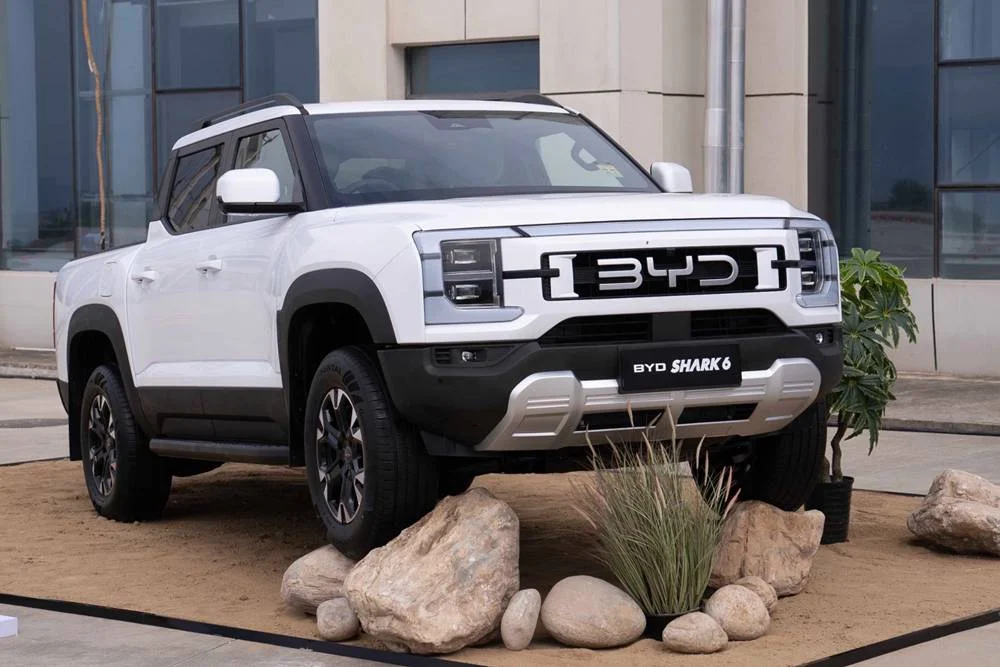
The BYD Shark 6 doesn’t arrive quietly. It turns up, smiles, then kicks the ladder from under the market leaders while they’re still trying to climb it. In a segment long dominated by habit and heritage, the Shark 6 feels like a clean break — modern, electric-minded and entirely unashamed of its confidence.
Australian ute buyers have changed, even if much of the market pretends otherwise. This isn’t a nation of constant towing exercises and muddy worksites. It’s surfers, campers, tradies who knock off early, and people who want a vehicle that looks equally at home at the beach, the snow and the supermarket. BYD understands this shift, and the Shark 6 has been engineered precisely for it.
There’s only one version — Premium — and that’s telling. No options maze, no artificial scarcity. Premium is the point. From the outset, the Shark behaves less like a commercial tool and more like a well-heeled SUV with a tray attached. The ride is supple, free of the agricultural leaf-spring setups still clinging to rival utes like a bad habit from the 19th century, likewise disc brakes all-round. Electric steering is relaxed but accurate, and the cabin never feels like a punishment zone.
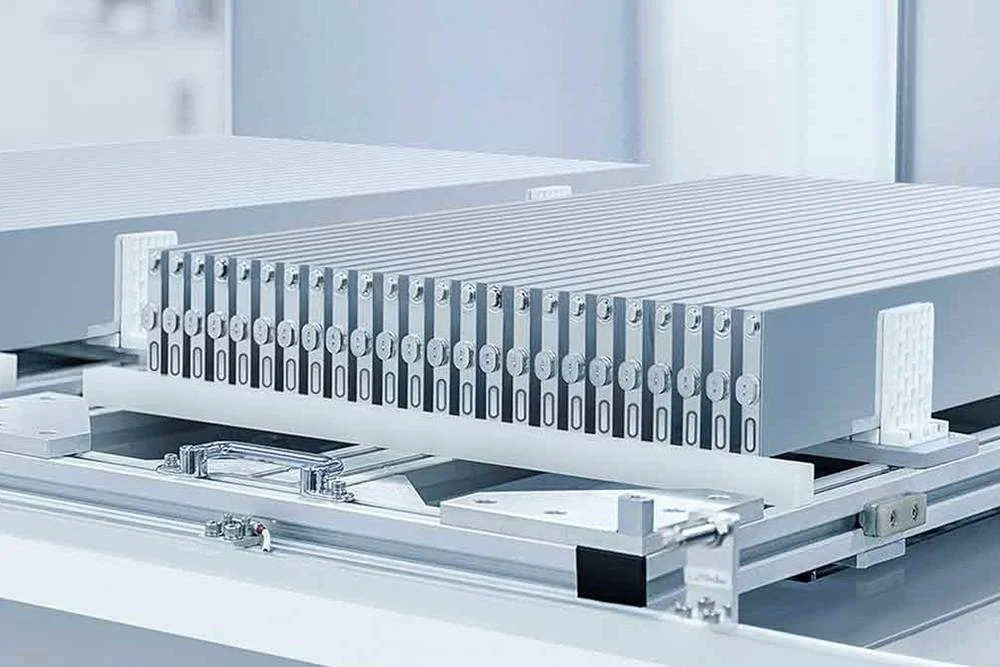
The powertrain is where the Shark 6 truly separates itself. This is a PHEV done properly. Electric motors drive both axles via single-reduction gears, while the petrol engine acts primarily as a generator once the battery is depleted. There’s no mechanical connection between front and rear — just electricity — meaning the AWD system doesn’t require low range to do its work. Above roughly 70km/h, the engine can assist with front-wheel propulsion, seamlessly and without fuss.
Around town, the Shark moves with EV calm — silent, smooth and immediate. When pushed, it’s brisk rather than brutal, delivering its 321kW and 650Nm without theatrics. The 0–100km/h run takes 5.7 seconds, but the more impressive part is how it gets there: effortlessly, completely smoothly, and without a conventional transmission interrupting the flow. It feels like an EV because it is an EV, with a petrol engine acting as a range extender.
We found a pretty cool rear canopy HERE:
Download Brochure HERE:BYD-SHARK-6-2025
| Specification | Details |
|---|---|
| Model / Trim | BYD Shark 6 Premium |
| Price | $57,900 RRP |
| Drivetrain | AWD |
| Seating Capacity | 5 |
| Overall Length / Width / Height | 5,457 / 1,971 / 1,925 mm |
| Wheelbase | 2,710 mm |
| Front / Rear Track | 1,660 / 1,660 mm |
| Minimum Turning Radius | 6.75 m |
| Approach / Departure / Ramp-over Angles | 31° / 19.3° / 17° |
| Ground Clearance | 230 mm |
| Maximum Wading Depth | 700 mm |
| Tray Capacity | 1,200 L |
| Kerb Weight / Gross Vehicle Mass | 2,710 kg / 3,500 kg |
| Front Motor | Permanent magnet synchronous, 170 kW / 310 Nm |
| Rear Motor | Permanent magnet synchronous, 150 kW / 340 Nm |
| Engine | 1.5T High-Power Hybrid Engine, 135 kW / 260 Nm |
| Total Power / Torque | 321 kW / 650 Nm |
| Acceleration 0-100 km/h | 5.7 s |
| Fuel Consumption* | 2 L/100 km (SOC <25%) |
| Combined Range* | 800 km |
| Electric Range* | 100 km (SOC 25%-100%) |
| Battery Type / Capacity | BYD Blade Battery, 29.58 kWh |
| Front Suspension | Double Wishbone |
| Rear Suspension | Double Wishbone |
| Front / Rear Brakes | Ventilated Disc |
| Wheel Type / Size | Alloy, 18 × 8J, 265/65 R18 |
| AC Charging | 7 kW Type 2 |
| DC Charging | 55 kW CCS 2 |
| V2L Function | 5 external plugs (3 in tray, 2 on cable) |
| Interior Colour | Black |
| Steering Wheel | Leather-wrapped, mounted controls |
| Front Seats | 8-way power, heated & ventilated |
| Rear Seats | Height-adjustable headrests, foldable armrest with cup holders |
| Air Conditioning | Automatic dual-zone, rear vents |
| Keyless Entry & Start | Yes, with BYD digital key |
| Touch Screen | 15.6-inch rotating screen |
| Sound System | Dynaudio® premium, 12 speakers |
| Connectivity | Apple CarPlay®, Android Auto™, Bluetooth®, USB-C/A front & rear, OTA updates |
| Navigation / Voice Assistant | Satellite navigation, voice assistant (English) |
| Headlights | LED, manual height adjustment, follow-me-home |
| Daytime Running / Tail / Brake / Fog Lights | LED all round |
| Airbags | Front, side, curtain, far-side |
| Seat Belts | Dual-stage pretensioner, rear warning force-limited, reminders |
| Driver Assistance | Adaptive Cruise Control, AEB, LDW, LDP, ELKA, FCW, ICC, RCW, TSR, ISLI/ISLC |
| Parking & Cameras | 360° camera, front & rear sensors |
| Blind Spot & Cross-Traffic | BSD, FCTA/FCTB, RCTA/RCTB |
| Others | Trailer Stability Control, HHC, HDC, Auto-hold, DFM |
| Exterior Colours | Deep Blue Sea, Tidal Black, Great White |
| Roof & Mirrors | Aluminium roof rack, shark-fin antenna, electrically heated & retractable mirrors |
| Windows & Glass | Privacy rear glass, rear windscreen wiper & defroster, auto-dimming interior mirror |
Above: This Week’s VIDEO Review – BYD Shark 6 Review: The Smart Ute Diesel Didn’t See Coming
#BYDShark6, #ElectricUte, #PHEV, #UteReview, #AustralianCars, #EVLife, #CarReview, #GayCarBoys


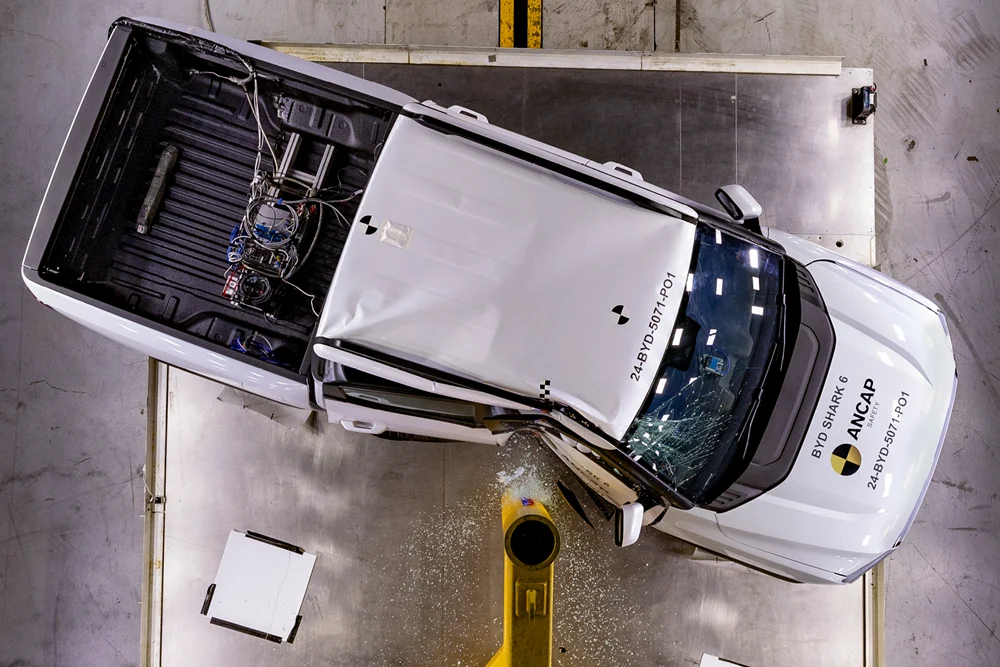
ABOVE: Shark 6 – BYD
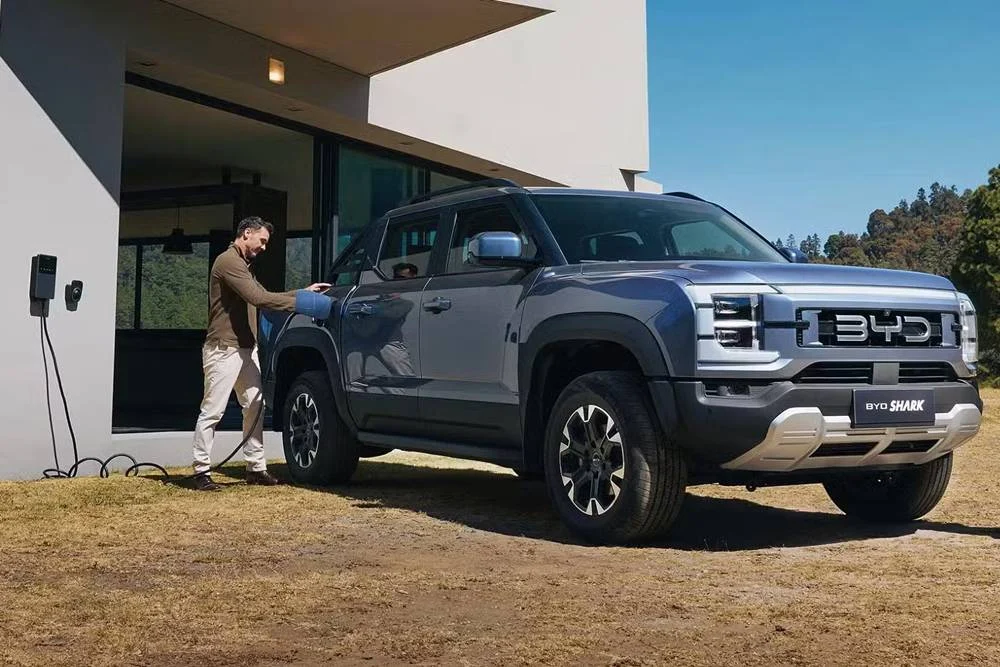
EV range hovers around the 100km mark in ideal conditions, and while the 55kW DC charging rate is middling by EV standards, it comfortably outclasses rivals like the Ranger PHEV, which relies on AC charging alone. It’s enough to make nightly top-ups genuinely worthwhile. When charged and used as intended, fuel consumption drops to levels that render most diesel utes faintly ridiculous. Towing capacity is rated at 2,500kg — less than the 3,500kg diesel benchmark — but the obvious question remains: who is actually towing that much, that often?
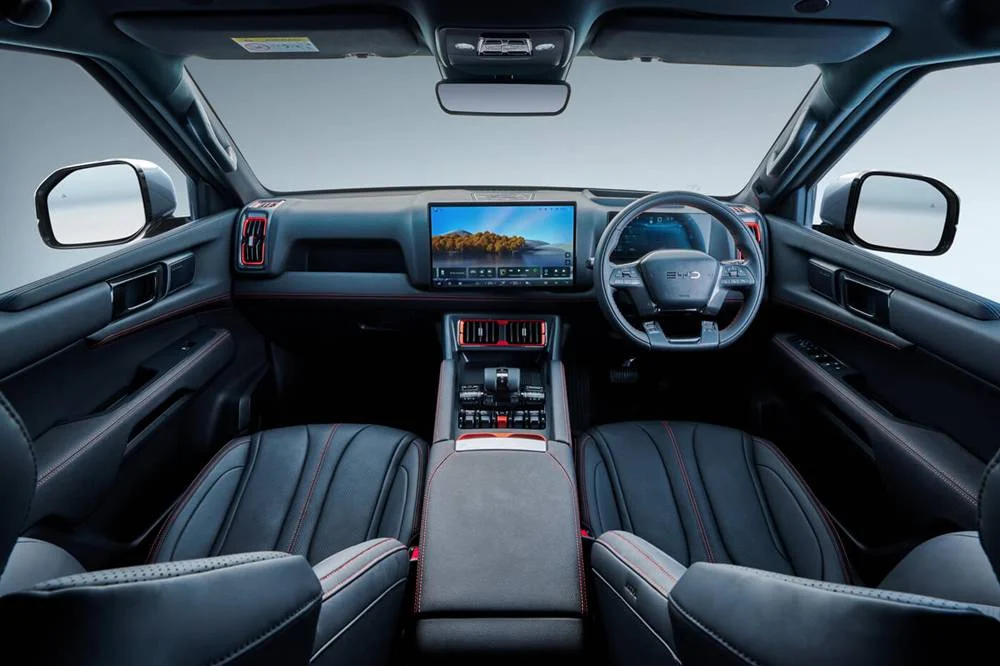
Inside, the Shark 6 continues its quiet flex. The design is modern, warm and sensibly laid out. Seats are supportive and indulgent — heated, cooled and powered — rear space is genuinely adult-friendly, and the 12-speaker Dynaudio sound system is a standout, delivering rich, deep audio that feels properly premium. This isn’t a cabin designed to be hosed out every weekend, but it’s still tough enough to wander off-piste. It’s a space you’d happily spend hours in.
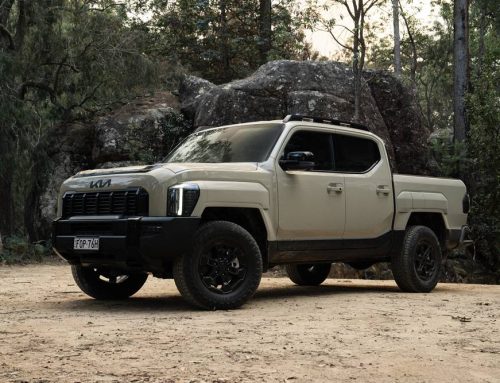
On the subject of rear space, Ranger, Hilux and Triton all feel tight, but the new Kia Tasman is particularly unforgiving. With the front seat set to my driving position, rear legroom shrinks to mere inches — completely unacceptable in utes that cost more while offering less.
Technology is mostly well judged. The infotainment system is logical, though quicker access to essentials like favourites and climate functions would improve usability. These are refinements rather than flaws — the kind of polish expected as software matures. The rotating centre screen is inspired, though it defaults back when switching to CarPlay, which only operates in landscape mode. Directions still project onto the head-up display even when using CarPlay navigation, which is a thoughtful touch.
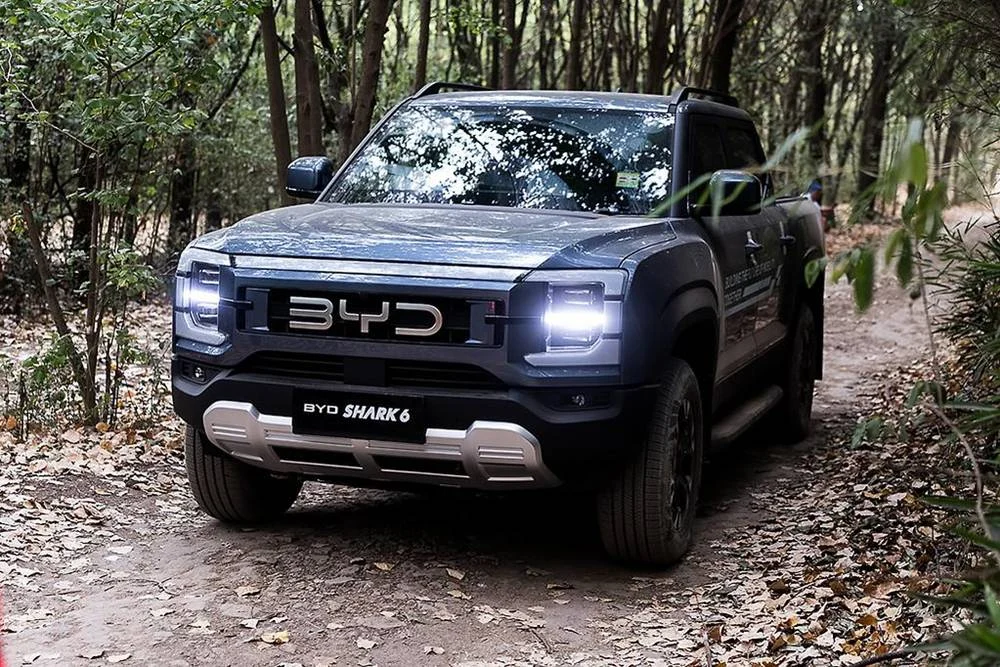
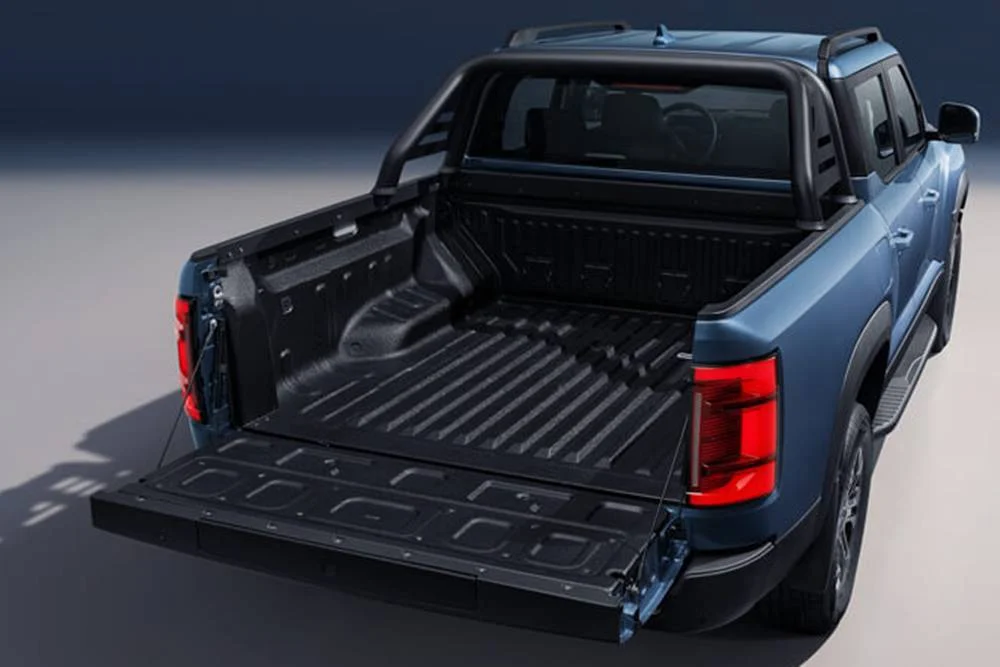
Practical details abound. The sprayed tray liner is standard, there are no fewer than six VTL outlets, ground clearance is generous, and the electric tailgate release feels like an indulgence you didn’t know you wanted until it’s there. The Shark 6 isn’t pretending to be a hardcore rock crawler or a long-haul tow rig. It’s honest about its mission: versatility, comfort and intelligence.
At camp, the Shark 6 can deliver 6.6kW of power for roughly 10 hours from the battery alone. When that’s depleted, the petrol engine quietly steps in to act as a generator — clever, unobtrusive and genuinely useful.
At around $62,000 drive-away, the Shark 6 lands squarely in the heart of the segment, yet it feels years ahead of much of the competition. Park it next to a (slightly smaller) Hilux or Ranger and the contrast is stark — one looks forward, the others look like barn finds.
The BYD Shark 6 isn’t trying to overthrow the ute world through brute force. It does it through calm competence. It’s quick without shouting, clever without being smug, and practical without feeling crude. For buyers ready to move on from tradition for tradition’s sake, this may be the most convincing ute Australia has seen in years.
#BYDShark6, #ElectricUte, #PHEV, #UteReview, #AustralianCars, #EVLife, #CarReview,
More BYD at GayCarBoys
- BYD Shark 6 Mid-Week Check-In: EV Refinement, Luxe Cabin, Strength
- BYD Shark 6 Mini Review: The Ute That is the New Black
- BYD Plugs In: Four New Electrified Models
- BYD’s DENZA Taps Mark Harland as COO, B5 & B8 SUVs Incoming
- Mark Harland Named COO of BYD’s Premium Brand DENZA
- BYD Breaks Sales Records, has a Tech Hub Tour, and Goes Factory-Backed
- Stephen Collins Joins BYD Australia as COO & Sealion 8 PHEV and Atto 2 EV on the Way
- BYD Shocks Auto Shanghai 2025: EVs, Wagons, Supercars and Drones!”
- BYD Sealion 7 & Geely EX5 5-Star ANCAP – But It’s Not All Roses
- BYD gets 1st of 8 Ships Dedicated to EV Deliveries
| Model | Battery | EV Range | DC Charging | Max DC Rate | Price |
|---|---|---|---|---|---|
| Haval H6 PHEV | 34 kWh | 110–120 km | Yes | ~35 kW | $45–55k |
| MG HS Plus EV | 16.6 kWh | ~63 km | No | – | ~$50k |
| Haval H6 GT PHEV | 34 kWh | 110–120 km | Yes | ~35 kW | $50–60k |
| GWM Cannon Alpha PHEV | ~30 kWh | ~100 km | Yes | 40–50 kW | $55–65k |
| BYD Shark 6 PHEV | ~30 kWh | ~100 km | Yes | 40–60 kW | $60–70k |
| Hyundai Santa Fe PHEV | 13.8 kWh | ~58 km | No | – | $70–80k |
| Mini Countryman SE ALL4 PHEV | 10–14 kWh | 50–60 km | No | – | $70–80k |
| Outlander PHEV | 20 kWh | ~84 km | Yes | ~22 kW | $60–75k |
| BMW X1 xDrive25e | 14.2 kWh | 55–60 km | No | – | $75–85k |
| Kia Sorento PHEV | 13.8 kWh | ~68 km | No | – | $82k |
| Mazda CX‑60 P50e | ~17.8 kWh | ~50 km | No | – | $82–89k |
| Lexus NX450h+ | 18.1 kWh | 69–75 km | No | – | $90–95k |
| Volvo XC60 Recharge | 18.8 kWh | ~81 km | No | – | $92k |
| Mercedes‑Benz GLC300e | 13.5 kWh | 45–50 km | No | – | $95–100k |
| Audi Q5 50 TFSI e | 17.9 kWh | 55–60 km | No | – | $95–100k |
| Porsche Cayenne Turbo E‑Hybrid | 25.9 kWh | 70–80 km | No | – | $300k+ |
| Range Rover P550e Autobiography | 38.2 kWh | ~100 km | Yes | ~50 kW | $300–400k |
| BMW XM Label Red | 25.7 kWh | ~80 km | No | – | $350k |
| Mercedes‑AMG GT 63 S E Performance | 6.1 kWh | ~12 km | No | – | $350k |
| Bentley Bentayga Hybrid | 18 kWh | 40–50 km | No | – | $500k+ |
| Ferrari 296 GTB | 7.45 kWh | ~25 km | No | – | $600k+ |
Discover more from Gay Car Boys
Subscribe to get the latest posts sent to your email.









Leave a Reply