UPDATE: the lifelong fuel consumption of this particular car was 2.8L/100km. This figure consists ONLY of the time the petrol engine was running, not the total number of kilometres. For a change the fuel figures have not been exaggerated. We used about 0.5L over 400km. Not too shabby.
I sat down to write of my week in Holden’s American made Volt. Several versions later I trashed it all and started again because my words seemed to convey insufficient importance. It’s not just that Volt is a completely new take on low CO2 personal transport, but rather the Volt is unique in that it is the only electric car which can charge itself while driving. It’s true that we can’t afford to keep guzzling fossil fuel like drunken sailors at a vat of rum and it’s probably true that we have reached Peak Oil Production. How will future generations look upon our efforts to curtail the alarming rate at which our poor planet suffers the slings and arrows of modern life?
After a short briefing I was handed the keys and I was on my own and to be honest I felt just a little bit excited. I’m only going to bother with a few figures because they don’t tell the true story anyway. The electric engine puts out 111kW of power and an astonishing 370Nm of torque. It’s the torque that’s most important around town because it’s the torque that gets your car moving. The greater the torque, the easier your car moves from stop, and the faster the captain gets to your cruising altitude.
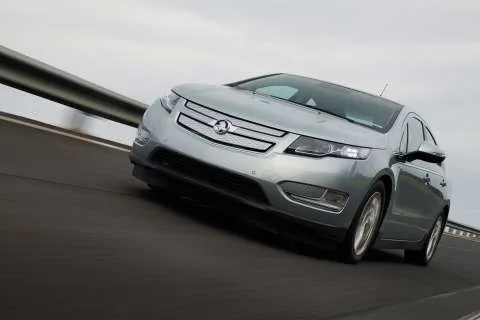
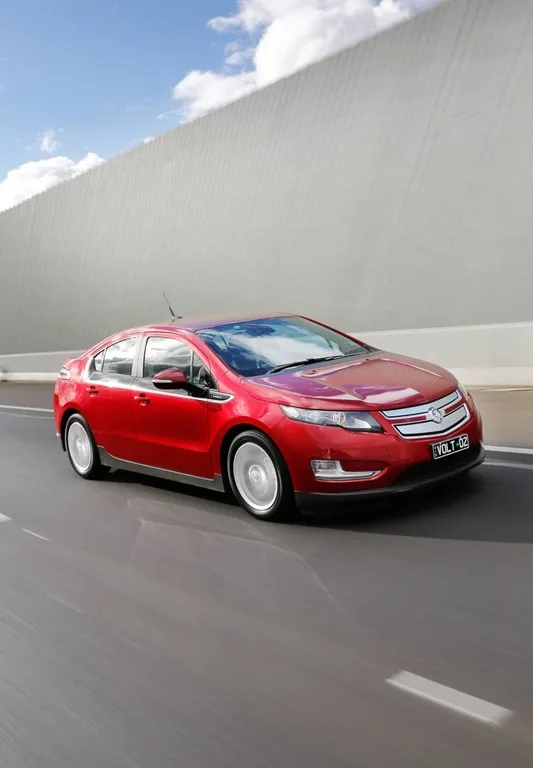
The Volt’s shape is dictated by the obsession with lowering the drag so the wedge shape is shoved in a tunnel and bits chopped off or stuck on so the streams of smoke are disturbed as little as possible. It’s important when you’re trying to get as far as possible on battery power to be as slippery on the outside as you can which might explain why hybrids (and range extenders) look as they do. Further lowering the drag is the ultra low front end (only a few cm above the road) and low rolling-resistance tyres.


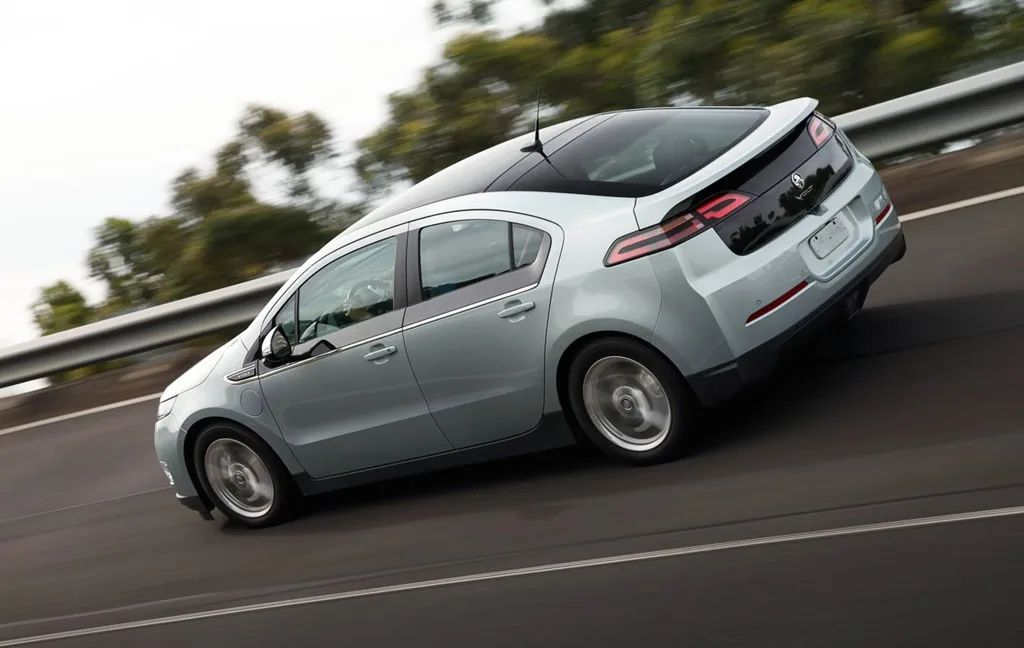
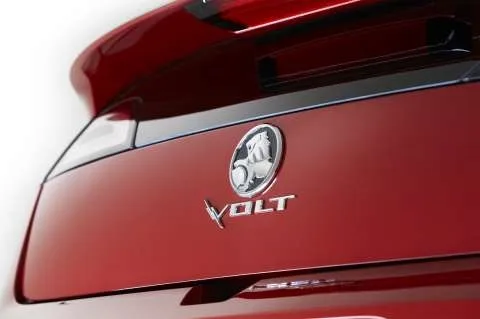
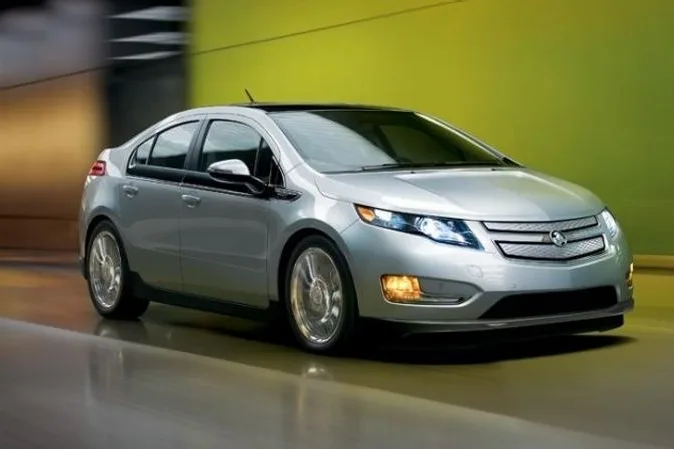

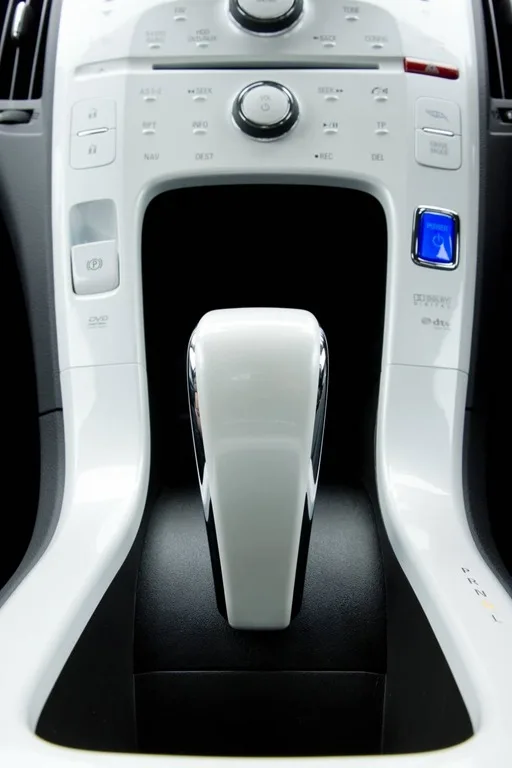

Entering the Holden Volt cabin is via the keyless start/stop/entry system. There are a couple of discreet buttons on the door handles and with practice you can enter the cabin in a single movement. Once pressed the car senses whether you’ve got a key secreted about your person, then grants permission to enter the temple to Mondial-inspired post-modernity. The first impression is one of a classy, well designed environment aimed at a driver who is keen on gadgets and electronic knick-knacks. I noticed the subtle nod to the fifties in the scoop of white on the door lining which looks to have been inspired by the curvaceous exterior of the 50’s Corvette.


The line continues up and over the dashboard forming two raised pads purely for design sake. The centre console looks like a piece of the bridge from Jean-Luc Picard’s Enterprise has been gently pushed into gooey plastic. Speaking of the centre console, what a thing of beauty. Most of the controls are touch buttons and although they take a bit of getting used to, make you want to caress them. The blue “START”, the electric parking brake, door locks and power management buttons are the only physical buttons. There are the two rotary knobs for some of the functions of the infotainment system but everything else is a sensory experience. It has a sensuality not usually associated with electric cars unless you care to fork out big bucks for a Fisker.
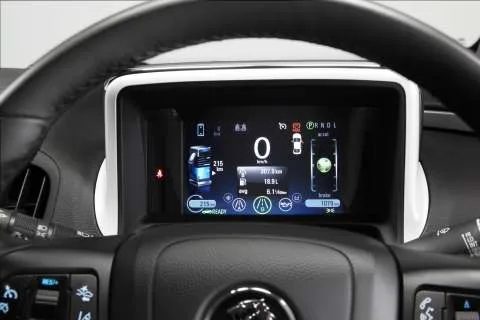
The functions of the normal dash dials are on the 7” LCD in front of the driver with a second 7” LCD in the console for auxiliary functions such as power use and entertainment. It’s also the screen where DVDs will play when you’re not moving. Even General Motors could foresee problems with watching James Bond while on the move.
It occurred to me that I was sitting Volt’s driver’s seat of one the most unique cars available on the Australian market. It’s not just the confection of Star Trek and 50’s sports car, or the pure electric mode for driving, but rather the combination of both being married to a petrol engine so the batteries can be charged on the go. The Volt is intentionally different so the owner feels he is getting a little something extra for his money.
Pressing the big friendly blue button activates the car sending a discreet “start-up” tone through the sound system as if someone has restarted the USS Enterprise. If you’re feeling frisky you can select the drive mode button and toggle to “sport” which is shown as an icon on the LCD. The car also warns you if you’re still plugged into a charging station. Ripping out your power cord could cause no end of expensive problems. The only gripe here was each and every time you charge you must remember to ensure the charging mode is set to “10 amp” or she will take a million years charging at “6 amps”. For some odd reason the Yanks chose to snatch defeat from the jaws of victory.
When I gently depressed the pedal the first time, I was unsure what to expect. The sensation of instant acceleration in utter silence is spooky. The only sound is the whisper from the air vents and with no engine and no gearbox as such, there is no vibration and no gear changes. The only sensation is one of being pushed gently back in your seat, unless you manage to find a blemish on the road surface where a subtle bump is felt. The ride really is that good. 200 kilos of batteries makes the smallish car ride like a big one. The silent acceleration is addictive and you find yourself wanting to do it over and over again. Each and every traffic light was like experiencing it for the first time. You look for an excuse to slow down so you can speed up again. And all of this without using a single drop of fuel which took nature millions of years to create. You can charge the Volt entirely from “green renewable fossil-free” power. You could power it from your own PVs if you felt so inclined. Endless free driving.
Hot smelly traffic kicks the smug factor up a notch as you sit in your cabin in complete climate controlled silence. There is no vibration or noise from the engine to disturb your musings except for the air vents. I discovered some relaxation music on my phone which made each and every stop feel like a mini day-spa experience. I’ve bought myself a shiny new iPhone 5 and Bluetooth streaming runs the battery down fast so plugging in to the USB is essential. This is just as well as the blokes over at GM forgot to include Bluetooth audio streaming in the arsenal of Volt gadgetry.
The average driver is going to get through most of his day without having to recharge but fear not, should you need to do a few more km than the batteries will allow, the petrol engine cuts in seamlessly. Remember it is only charging the batteries to keep the electric motor going, so the drive is still as smooth and sophisticated as under normal battery power. It does get a bit raucous under hard acceleration because the electric motor needs extra oomph, but other than that you are not aware the petrol engine is running as it’s merely ticking over. Isn’t that nice?
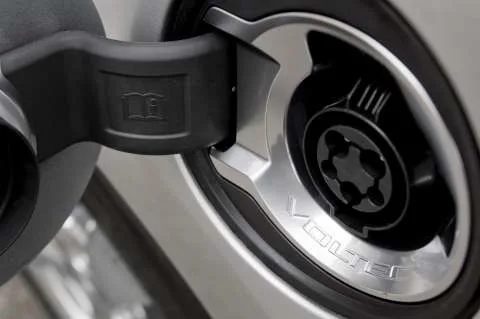
I ran into what I thought were a few problems during the week with the charging. First I couldn’t get the charge light on the dash to come on, then I thought I wasn’t getting a full charge. I then figured out the procedure for plugging her in so the light came on almost every time. More importantly, the numbers indicated on the dash are the kilometres range based on driving style. In other words I have a foot which has been lovingly cast in solid lead and Volt wasn’t impressed. Putting the old darling in SPORT makes the situation worse and she goes through the charge like a fat kid through candy. I took the unit out of the boot and attached it to the 10amp power point then plugged it into the car but the charging light didn’t come on. Unplugging it then plugging back in and switching the point back on did the trick. It was about then that I wondered what would happen if the cycle was interrupted by someone smart alec trying to pull the plug out, so I tried. Suffice to say it sets the alarm off, very loudly. The charge takes 6 hours from flat but is faster from a 15amp point or public fast charge station.
I sent friends off in her from time to time to get opinions other than my own and most said they liked it. None frothed at the mouth as I did when I first jumped in though. This caused me to reflect on my thoughts. Had I been bowled over by technology? No, I don’t think so. It seems there is a certain lack of confidence in the new tech. Perhaps there was a question as to whether or not people could be bothered plugging it in every night. I too thought I might be in that camp. However after a couple of goes at plugging her in I found a certain rhythm and it became automatic. Of course your own garage would have an extra unit hanging on the wall ready so the only thing you need to do is make a quick pit stop near the passenger’s door to put the power in. ( times out of 10 I had to get my key out because I’d forgotten to release the charging door from inside the cabin. There is a button on the key for such situations thankfully. The charge point is on the footpath side because that’s where the public charge points normally are.
One myth that needs putting to bed is the ridiculous notion that you gain nothing because the electricity is produced by coal. The CO2 produced by going full electric is a fraction of the same distance travelled using petrol. The cost is also a fraction of that using petrol so the numbers stack up. Let’s do a few sums: The cost of a full charge for me overnight was 84c which will give me about 70km. To do 70km on petrol costs between $15 and $20 depending on how much of that time you spend with your engine cold. A cold engine pours extra fuel in to be burned whereas an electric motor doesn’t care, and you don’t need to warm it up. If, as I do, you do many quick trips to the shops then the idle would always be advanced, and, like my old SAAB would be getting 18L/100km. This, at $1.40 a Litre, is $26.60 for 100km or $15.96 for 60km. $15.96 vs 84c is a no brainer but remember I was able to charge at off peak rates. I say this not to be trite but to demonstrate that there are good reasons to buy electric. Unfortunately the one fly in your ointment will be the purchase price of the one and only model of the Volt which is $65,000 or thereabouts. That’s an awful lot of petrol considering the Volt is built on the same platform as Holden’s humble Cruze. The most expensive Cruze is 32k but is nowhere near as sophisticated or as lovely to drive.
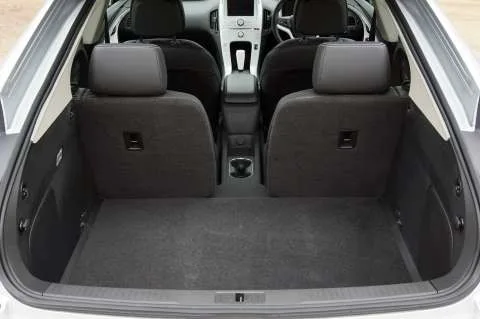
The steering is delightful, the seats very comfortable and the ride is superb. The ride is due at least in part to the weight of the batteries which makes the vehicle weigh in at a smidgen over 1700kg, hefty for a car this size. The straight line performance is amazing but slightly less amazing is the handling. It handles more like a large car and there is a certain inertia inherent in the bulk of the batteries which means that unless you sacrifice the ride, your handling is going to be more limo-like and stately rather than sprightly and sporty. The rear leg room isn’t what one would call capacious either. It’s not actually cramped but it is very tight. Your city driving will mostly be many short trips so who really cares what the rear legroom is anyway, right? There are only two seats anyway. You won’t be shoving too much in the boot either because it’s quite shallow.
My conclusion is simply this: you will not buy the Volt based on saving money, but if you are hell-bent on being green you’ll find it very attractive. If you are clever you could conceivably power your car by solar cells therefore using no CO2 ever. It is the only range extending electric car on the market and as such is in a niche of its own. It is unique, and because there is nothing else like it there is nothing else to compare it to. Remember, it is not a hybrid. Did I love it? Yes. Would I own one? Yes. Would I want to pay for it? No.
#HoldenVolt, #ElectricVehicle, #RangeExtender, #SydneyDriving, #CarReview
GayCarBoys Holden Stories
Holden Volt: A Bright Spark In A Sea Of Beige- REVIEW
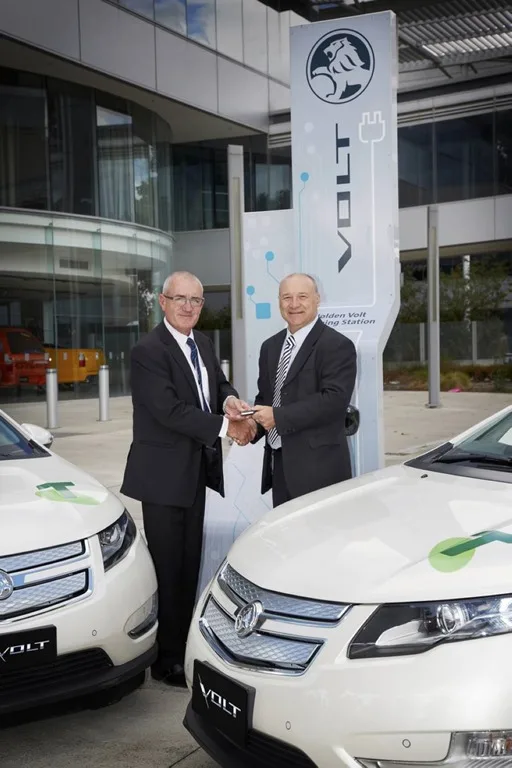
Holden Volt Electric Vehicle Joins National Telstra Fleet
2012 Holden Volt Garage Sabotage and the 60k Tech Trap
Holden Volt Day 3: Still no Fuel used.

Alan Zurvas is the founder and editor of Gay Car Boys, Australia's leading LGBTQI+ automotive publication. Before launching GCB in 2008, Alan's automotive writing was published in SameSame.com.au and the Star Observer. With over 16 years of hands-on car reviewing experience, Alan brings an honest, irreverent voice to every review — championing value and innovation over brand loyalty.
Leave a Reply