Will Honda‘s New HR-V Flagship Help Falling Sales
Honda has a new flagship HR-V.
The problem is that it comes at a time when the company appears to be fighting, and losing, yesterday’s battle.
This week Honda Australia unveiled the HR-V e RS, a “sporty” new range-topper for its small SUV line-up. As we pointed out in our HR-V reviews, there is nothing sporty about it apart from the description. Honda says the new model builds on strong HR-V growth and forms part of a strategy that will see hybrids account for more than 80% of its local sales by the end of the year.
Ten years ago that would have sounded progressive but in 2026 it sounds oddly conservative.
While much of the industry races towards battery electric vehicles, Honda is doubling down on hybrids. While Chinese manufacturers flood Australia with increasingly sophisticated EVs, Honda’s big news is another petrol-electric SUV. While rivals chase the fastest-growing segment of the market, Honda continues to sit largely on the sidelines.
The numbers explain why that should worry Honda shareholders.
According to VFACTS data, Honda delivered just 5,277 vehicles during the first four months of 2026. That’s barely different from the same period last year and leaves the Japanese brand well outside Australia’s top ten sellers.
Above: 2026 Leapmotor B10 – Possibly the best value EV ever, and at $42,000 is cheaper than ICE SUVs with the same space
#leapmotor #ElectricCars #ev #leapmotorB10

Help Support Gay Car Boys Subscribe to our Youtube Channel by SMASHING THE BUTTON ABOVE


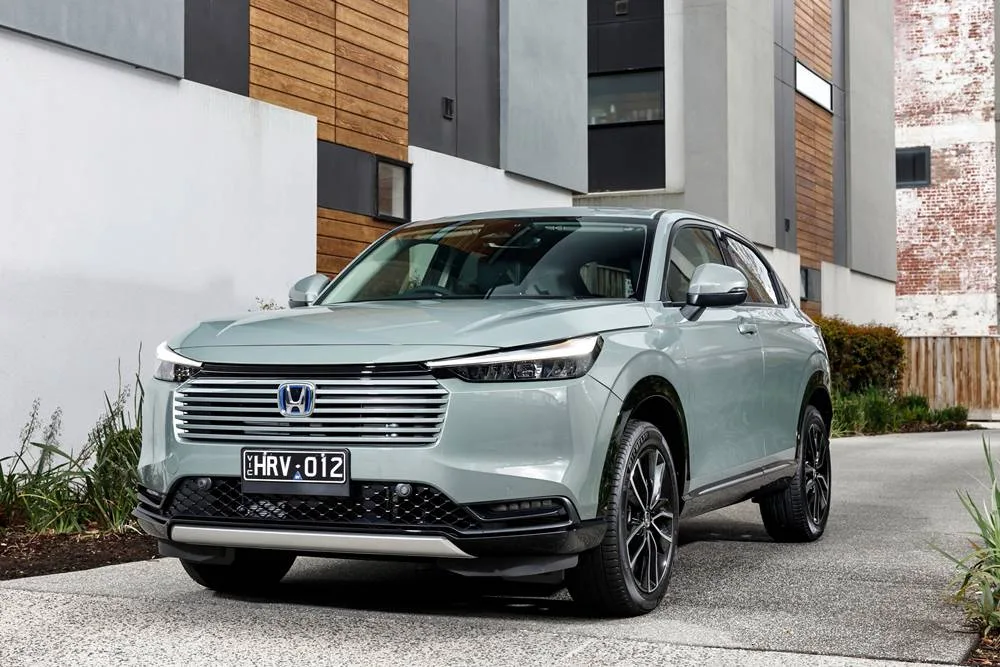
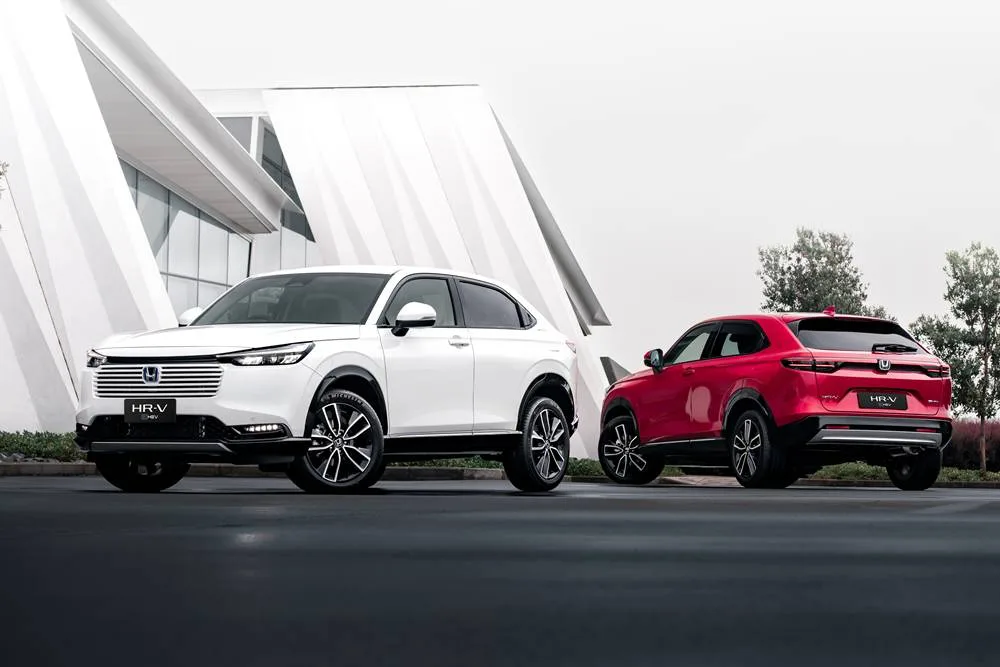


ABOVE: 2026 Honda HR-V e:HEV RS.
What the HR-V RS adds
The 2026 HR-V e:HEV RS gets an RS grille in Bernina Black, matching door mirrors, lower door garnishes, lower bumper garnishes, RS emblems, and 18-inch wheels. Crystal Black also returns as an RS-only colour, joined by Platinum White, Premium White Silver, Slate Grey, Premium Crystal Red, Botanical Green, and Crystal Black.
None of that changes the basic HR-V silhouette, which remains part coupe-ish SUV, part tall hatch, part Honda packaging exercise. The rear door handles still do their little hidden trick, the roofline still has a mild swoop, and the whole thing looks less try-hard than many small SUVs that have nasty plastic cladding up to their eyebrows.
Hybrid now does most of the Sales
The broader HR-V range now runs to four grades. The entry VTi X keeps the 1.5-litre i-VTEC petrol engine and starts at $32,900 driveaway. Above that sit the e:HEV X at $39,900, the e:HEV L at $42,900, and the new e:HEV RS at $44,400.
Honda says three of the four grades now use its two-motor e:HEV hybrid system, and it expects hybrids to account for more than 80% of Honda sales by the end of the year. That is a rather large admission from a brand that used to talk about engineering purity, and by that I mean petrol engines. Honda has finally remembered that hybrids are not just a compliance fig leaf, but are what a lot of real people want. Oddly, PHEV models are now gaining even more popularity, but we will have to wait ages for a Honda hybrid with a plug.
The One concession to that is, Honda One. It is on the way as a small EV of city-car proportions, but set against larger Chinese EVs for the same price, it might have a fight on its hands.
Equipment and Warranty
The HR-V range includes Gen 2 Honda Connect, Google Built In, post-collision braking, and Honda SENSING. There is also a five-year unlimited kilometre warranty, five years of premium roadside assistance, and five low price services. Honda’s servicing pitch is still well short of Kia, MG and many other brands who have between 6 and 10 years coverage.
As an aside, we’ve written extensively about the mounting difficulty with Android Automotive OS and the Android Open Source Project (AOSP) it is built on. All brands using it or a version of if have had issues. In fact anything based on built on Android Open Source Project (AOSP) have sketchy screen performance, patchy phone mirroring, and various glitching in software. BMW i-Drive 9 and MG i-Smart are among the infotainment systems to use Android, even if they claim otherwise.
The HR-V e:HEV L we covered previously was already the one to buy over the base petrol model, and the RS does not change that logic. It adds trim rather than a new powertrain. If you want the hybrid with less garnish, the buy the e:HEV L. If you want the one with more Saturday night glitter, the RS is the new answer.
The GCB view
Once upon a time Honda was a major force in Australia. Today it is being outperformed by brands that many Australians had never heard of five years ago.
BYD has already racked up more than 25,000 sales this year. GWM is approaching 20,000. Chery has passed 16,000. Even Geely, still effectively a newcomer, is breathing down Honda’s neck.
More importantly, those companies are succeeding by doing exactly what Honda isn’t, bringing EVs.
Australian buyers purchased more than 40,000 battery electric vehicles during the first four months of 2026, a staggering increase of 130.2% compared with last year. Plug-in hybrids also surged. The market is moving rapidly towards electrification.
Honda isn’t.
Instead, the like Toyota, Honda continues presenting hybrids as the solution to a problem many consumers have already moved beyond. The HR-V RS is the latest example. Honda talks extensively about hybrid growth, hybrid expansion and hybrid demand, while making almost no mention of a battery electric future.
In fact, Honda recently cancelled almost all electric models in the pipeline. That might be easier to defend if Honda was growing, but it isn’t.
That might be easier to defend if Chinese competitors were struggling, but they aren’t. That might be easier to defend if EV sales were stagnating, but they’re doing the opposite.
None of this means the HR-V RS is a bad vehicle. In fact, it may well be one of the better small SUVs in its class. Honda still builds solid, reliable, intelligently engineered cars. The HR-V remains practical, efficient and likely to appeal to loyal Honda buyers.
But being good is no longer enough.
Chinese brands have larger screens, more technology, longer warranties, more powerful drivetrains and, increasingly, lower prices. Many are doing it with full battery electric platforms rather than hybrid stopgaps.
The uncomfortable reality for Honda is that the market has changed faster than the company. The HR-V RS should be a flagship model that demonstrates where Honda is heading next.
Instead, it feels like a reminder of where Honda is still stuck.
As EV sales soar and Chinese brands continue climbing the sales charts, Honda’s latest flagship doesn’t highlight the company’s future. It highlights how far behind it risks falling.
More Honda Stories
- Why 2025 Honda HR-V eHEV L Is Way Better Than The Base Model
- 2026 Honda Prelude Returns To Australia At $65,000 Driveaway
- 2026 Honda CR-V eHEV Price and Specs Australia
Help Support Gay Car Boys Subscribe to our Youtube Channel

Alan Zurvas is the founder and editor of Gay Car Boys, Australia's leading LGBTQI+ automotive publication. Before launching GCB in 2008, Alan's automotive writing was published in SameSame.com.au and the Star Observer. With over 16 years of hands-on car reviewing experience, Alan brings an honest, irreverent voice to every review — championing value and innovation over brand loyalty.
Leave a Reply