While sitting around the TV a few nights ago, the subject of “modding” your car came up.
This is a subject dear to many, and of absolutely no interest to others. That leads to the inevitable question of warranty. While many modified cars are older than Methuselah, some brave souls do their new cars too, where changing engine management and other settings can give a boost. An extra few kilowatts can make all the difference in a dick-swinging contest.
More GCB Sports Car Stories
- Sexy Men Drive 2021 Toyota Yaris Cross
- How Fast is 2020 Toyota Supra? GayCarBoys review
- 2020 Toyota 86 Review and Last Drive Before New Model Released
- Can Toyota Supra Handle Macquarie Pass’ hairpin Bends Roadtest Review
- i30: N 2018 Hyundai i30 N Review and Video
- 2018 Hyundai i30N Review
- We Drive Mazda MX-5 (Miata, MX5) 30th Anniversary Edition. It is any good?
- Brilliant Orange Mazda MX5 Special Edition
- 2019 Mazda MX5 Launch Review
- 2018 Mazda MX5 RF road trip review and video
Modifications can be physical too. Turbo charging is a favourite among the jaunty-capped-chav community where bigger is better. Air filters and exhausts come in for attention too, with air filters like dinner plates and exhausts like paint tins. Bragging rights aside, they allege performance improvements.
Above: This Week: Tesla Model 3 – What’s New, What’s Changed, What do I like and loathe

Help Support Gay Car Boys Subscribe to our Youtube Channel
- Top GayCarBoys Stories:
- Sexy Men Drive 2021 Toyota Yaris Cross
- 10 Sexiest MotoGP Motorcycle Riders
- DON’T Drive YOUR CAR until you’ve Checked if your AIRBAG will KILL YOU
- 10 Hottest Racing Drivers
- Top 10 Gay Lesbian LGBT Cars
- Top 10 Gay Lesbian LGBT Sports Cars
- Top 15 gay and lesbian LGBT SUVs
- Talented Twinks – Callum Ilott Virtually Races Arthur Leclerc


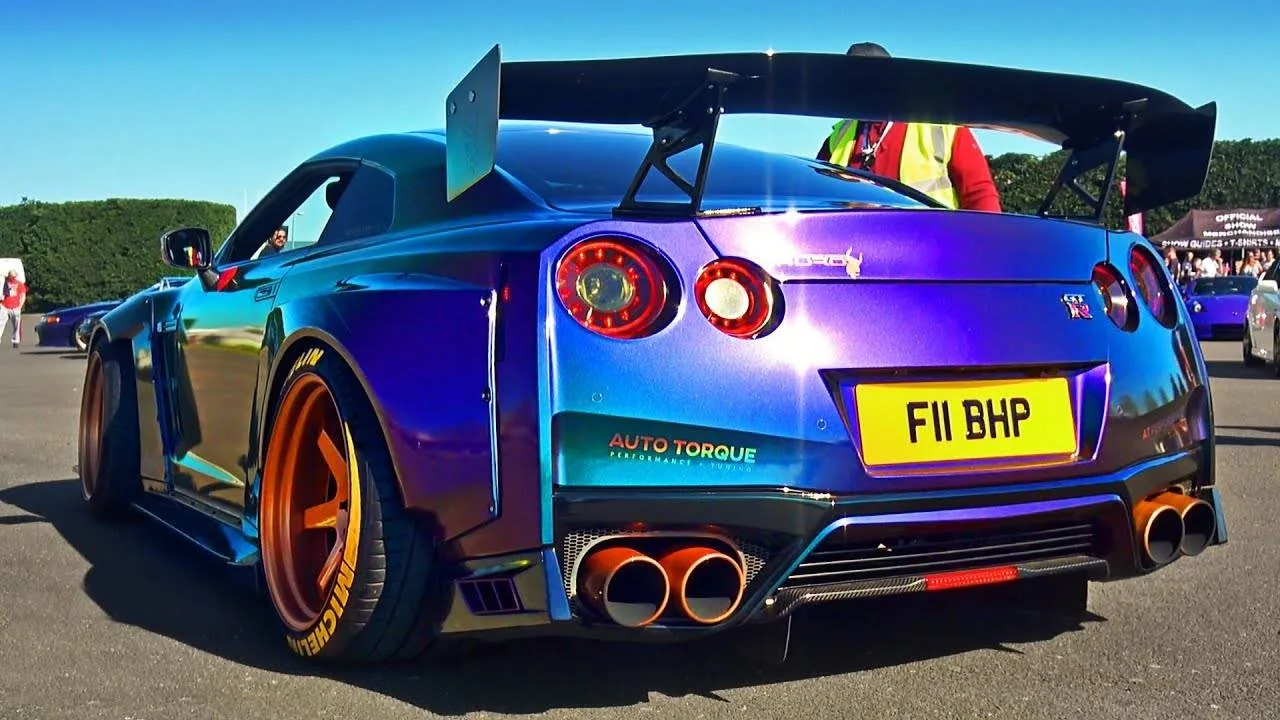


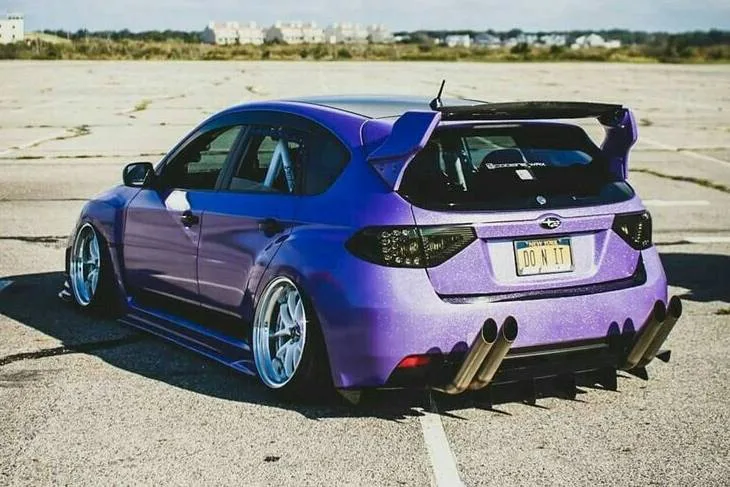


ABOVE: Modified Cars
We contacted car makers for comment.
Strangely, the replies fell in to several categories. The main one involved catastrophic engine failures caused by the owner’s not-so-subtle tweaks. Modders say warranties should be honoured either way. Car makers say it is not reasonable to expect them to cover owner’s changes which caused failures, major or otherwise, so bugger off.
Who is right?
Let’s look at a couple of examples:
Engine management is altered to provide more power, and the engine fails at some time in the future. The owner takes his car the service centre to be told the modifications had rendered his warranty void. Oh dear.
Next, engine performance has been dialled up so much, that it takes a couple of hundred bucks to back out the driveway. The transmission can’t quite handle what’s being thrown at it and it has a Emmy-award-winning hissy fit.
Finally, the humble hot hatch now has the power of a small town. The suspension has been lowered and has the ride of a BBQ, and the exhaust is loud enough to drown out a 787 taking off. Suspension bounces it in to a shrubbery at MK10, and the police pull over to plaster defect stickers all over it, and probably a few fines as well.
Is the owner at fault? While some modifications are legal, car makers are under no obligation to honour the warranty. Here’s why:-
Consumer law says warranty conditions change if “the consumer causes the vehicle to become of unacceptable quality or does not take reasonable steps to prevent the vehicle from becoming of unacceptable quality, for example, the consumer puts petrol in a diesel vehicle”
It goes on to say “the consumer uses the vehicle in an abnormal way. ‘Abnormal’ use has not been defined under the ACL. However, certain uses for vehicles will be inherently abnormal, for example, a small hatchback is not designed for towing a horse float. Information provided in the manufacturer’s handbook and any other operating instructions may also be relevant.”
“or the consumer uses the vehicle in an abnormal way. ‘Abnormal’ use has not been defined under the ACL. However, certain uses for vehicles will be inherently abnormal, for example, a small hatchback is not designed for towing a horse float. Information provided in the manufacturer’s handbook and any other operating instructions may also be relevant.”
“Abnormal use
Vehicles are not expected to be indestructible; a consumer’s use of a vehicle can affect its durability.
The guarantee of acceptable quality will not apply if the consumer:
- uses a vehicle abnormally
- causes the quality of a vehicle to become unacceptable
- fails to take reasonable steps to avoid the quality becoming unacceptable.
The law does not define ‘abnormal use’. However, examples of abnormal use would include:
- a soft-top vehicle is left out in the rain with its roof open, resulting in damage to the interior
- a two-wheel drive vehicle being consistently driven in lower traction over rough surfaces that are better suited for four-wheel-drive vehicles.
There is a difference between damage caused by abnormal use, and gradual deterioration (also called ‘wear and tear’) caused by a consumer’s normal use of a vehicle. Wear and tear involves the eventual wearing out of parts to the point where they no longer work, as well as such things as scuffing, scratching or discolouration that would predictably occur over time when the vehicle is used normally. Normal wear and tear is not a minor or major failure.
If a consumer uses a vehicle normally, and its condition deteriorates faster or to a greater extent than would usually be expected, then the vehicle may have failed to meet the guarantee of acceptable quality and the consumer may be entitled to a remedy. “
In short, consumer law does not cover owners’ changes that cause a car to behave in a way it was not designed for.
Modders say it is up to the car maker to prove the modifications caused failure. Car makers claim that modifications will cause stress on parts which were not subject to tests during design and development. They went on to say that each case would be looked at as needed but that the owne3r should ask the dealer before proceeding to alter a vehicle.
Their example was a new head unit for the audio system might void the warranty for a claim on the speakers, but not on the transmission, for obvious reasons. If, however, the engine power was increased by 20% and any part of the drivetrain fell over, the link might be more obvious.
Who is right?
A manufacturer is not allowed to reduce a buyer’s rights under consumer law, but as we’ve seen above, consumer law doesn’t cover idiocy.
We were unable to find who has the burden of proof. We found no qualifications in the wording of the regulations. In fact, it is as clear as mud.
Despite the manufacturers being very clear, what if the failure would have occurred either way? What if the disaster was caused by a faulty part, poor design, or a manufacturing error?
How does the owner prove that? Modders say it is for the car makers to show their changes made no difference. The manufacturers may or may not be judicious in their assessment.
What we discovered
We were not able to clarify responsibility in any of the events investigated. Results varied, with modders claiming success in warranty issues, and car makers saying they void warranties on modified vehicles.
in one example, a modder claimed he dialled up the power on his WRX after which the engine failed. An inspection revealed an oil valve failed, the pistons hit the valves, and the cam belt came adrift, therefore engine was no longer servicable. The modder says Subaru fixed the engine at their cost because the valve failure was their fault and nothing to do with his modification.
However the truth was not so cut and dry. What we know for certain is: modifications were made for more power, engine parts failed, Subaru fixed said engine.
On further investiagion, we discovered no specific instances where consumer law protected modified vehicles in this, or any other case. It’s worth noting the company which produced the modoficaiton might also provide warranty on that specific part.
Conclusion:
The moral of the story is that if you change any part of your new car, you might not be covered by either warranty, or consumer law. Further more, court is one expensive avenue, and you’ll be in for a fight which might still fail. A litigant will need to prove their case, and expsnsive experts won’t necessarily mean success. There will be opinions argued on both sides, but both modders and car makers remain imovable.
If you modify your car, be aware.

Alan Zurvas is the founder and editor of Gay Car Boys, Australia's leading LGBTQI+ automotive publication. Before launching GCB in 2008, Alan's automotive writing was published in SameSame.com.au and the Star Observer. With over 16 years of hands-on car reviewing experience, Alan brings an honest, irreverent voice to every review — championing value and innovation over brand loyalty.
Leave a Reply