
Nissan has been testing an automotive paint designed to lower a vehicle’s ambient cabin temperature during summer, thereby reducing air-conditioning energy usage. This paint, developed in collaboration with Radi-Cool, incorporates metamaterial—synthetic composite materials with unique properties not typically found in nature. This initiative aligns with Nissan’s commitment to differentiated innovations aimed at enhancing travel experiences and promoting sustainability.
The feasibility trial, which began in November 2023 at Tokyo International Air Terminal at Haneda, involves a Nissan NV100 service vehicle operated by All Nippon Airways (ANA). The extensive, open tarmac of Haneda airport provides an ideal setting for real-world evaluation of the paint’s performance in high-temperature conditions.
Preliminary results are promising: While not as good as parking under cover, vehicles treated with Nissan’s cool paint exhibit up to a 12-degree Celsius reduction in exterior surface temperatures and up to a 5-degree Celsius cooler interior compared to those with traditional paint.
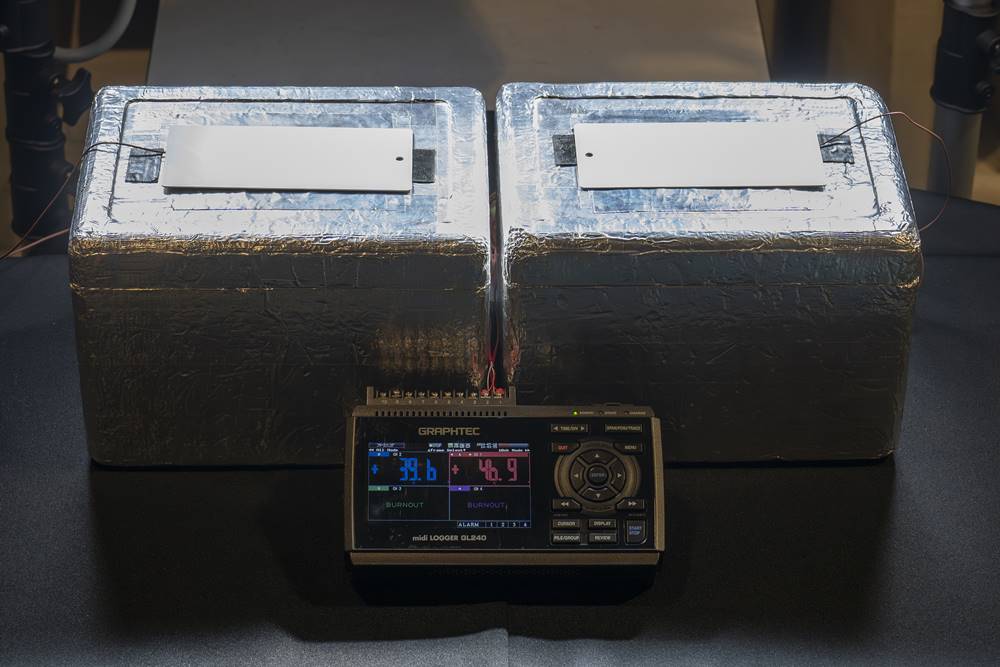
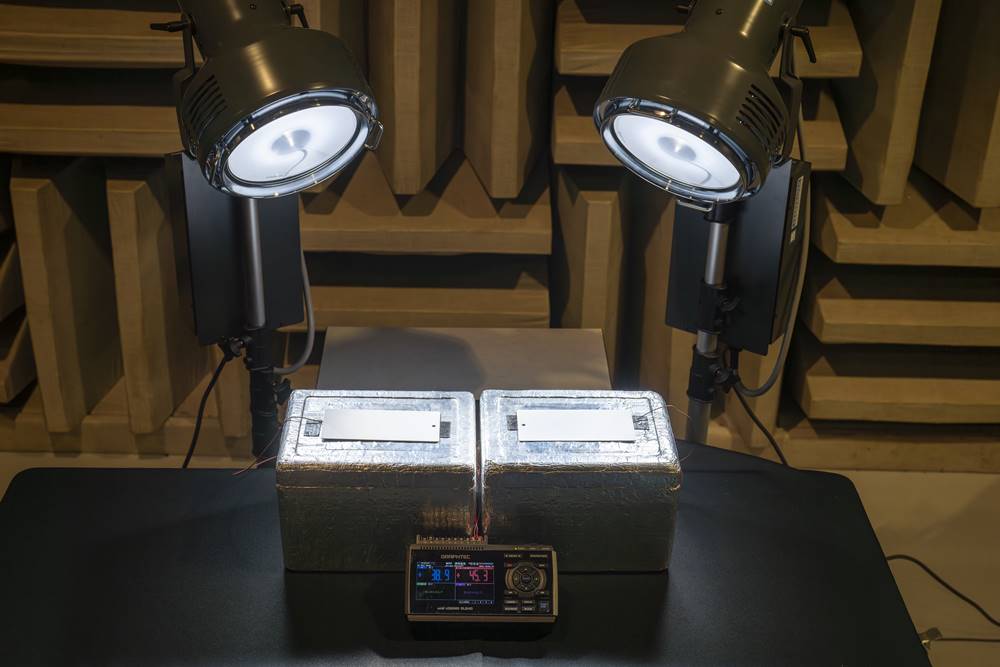
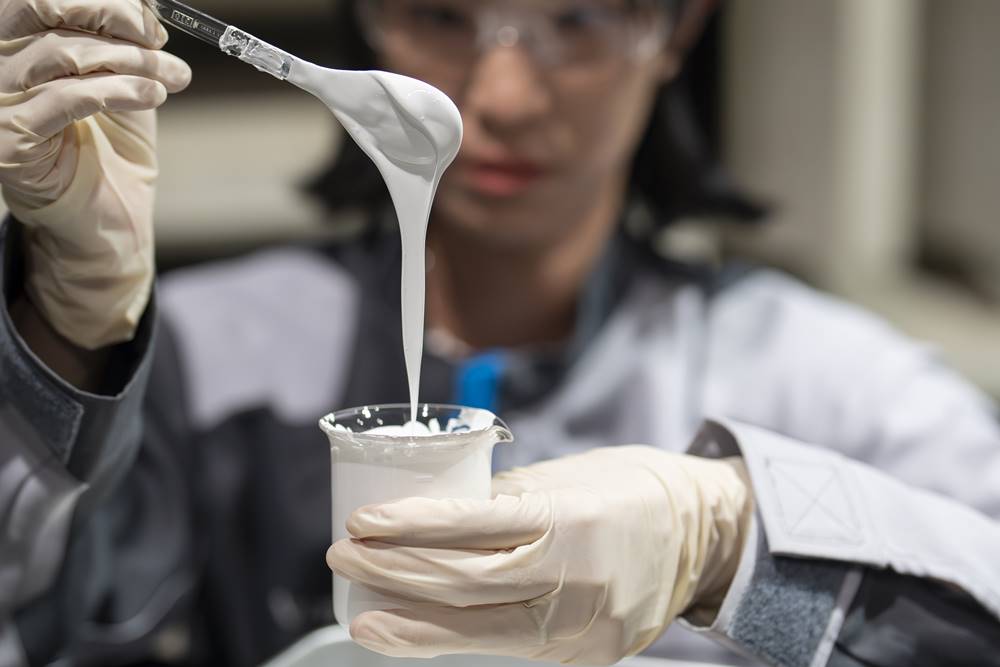
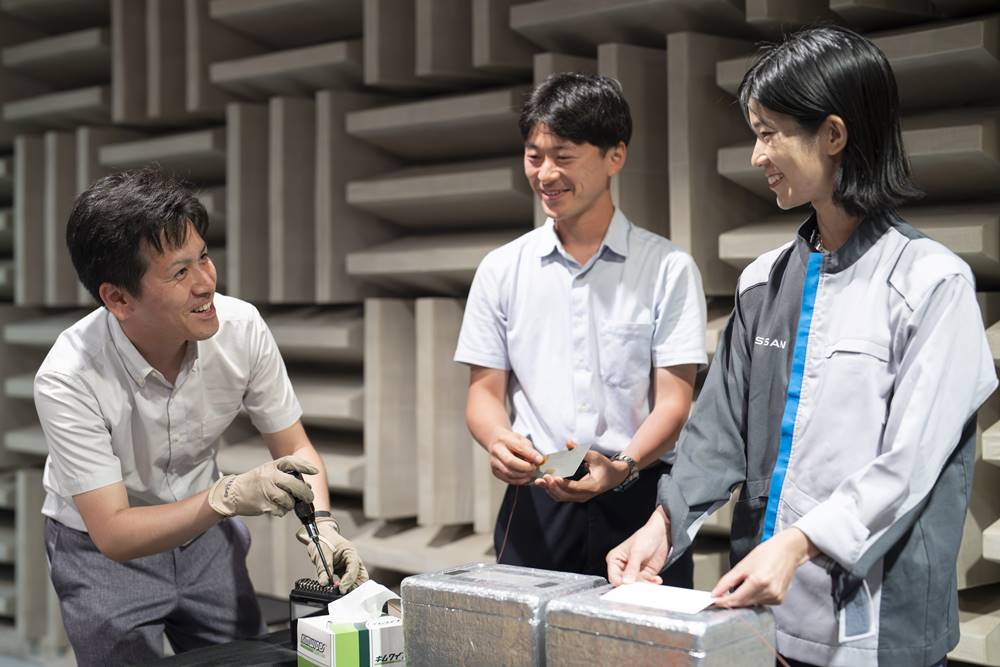
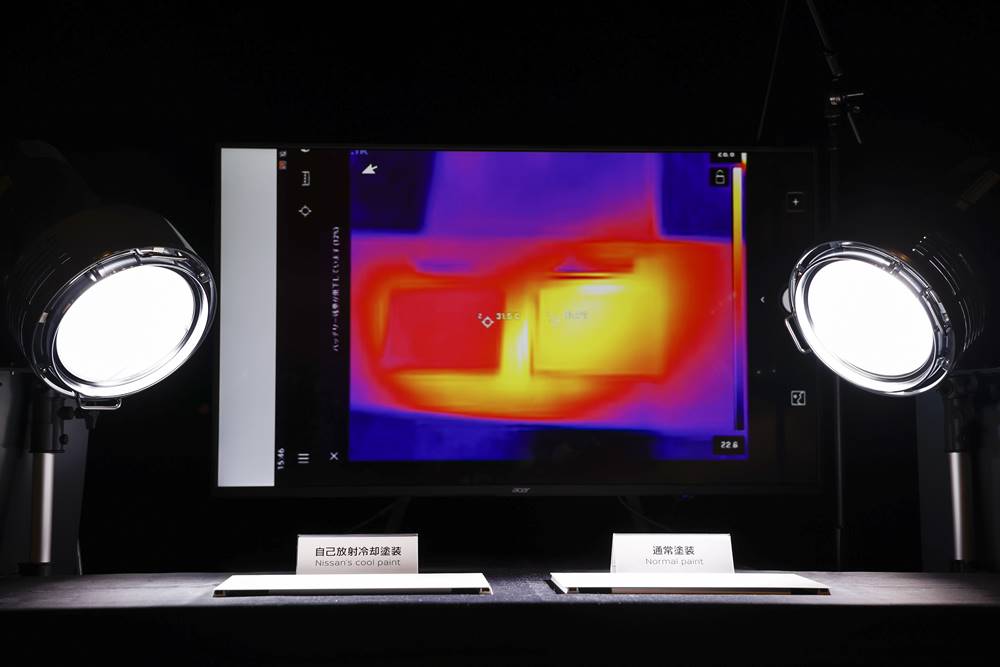
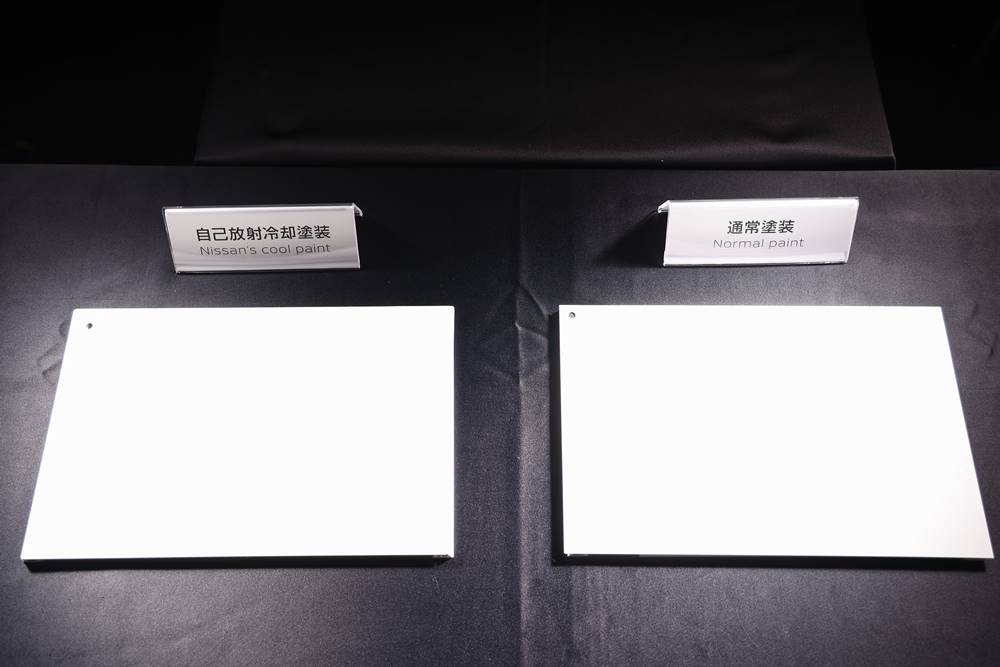
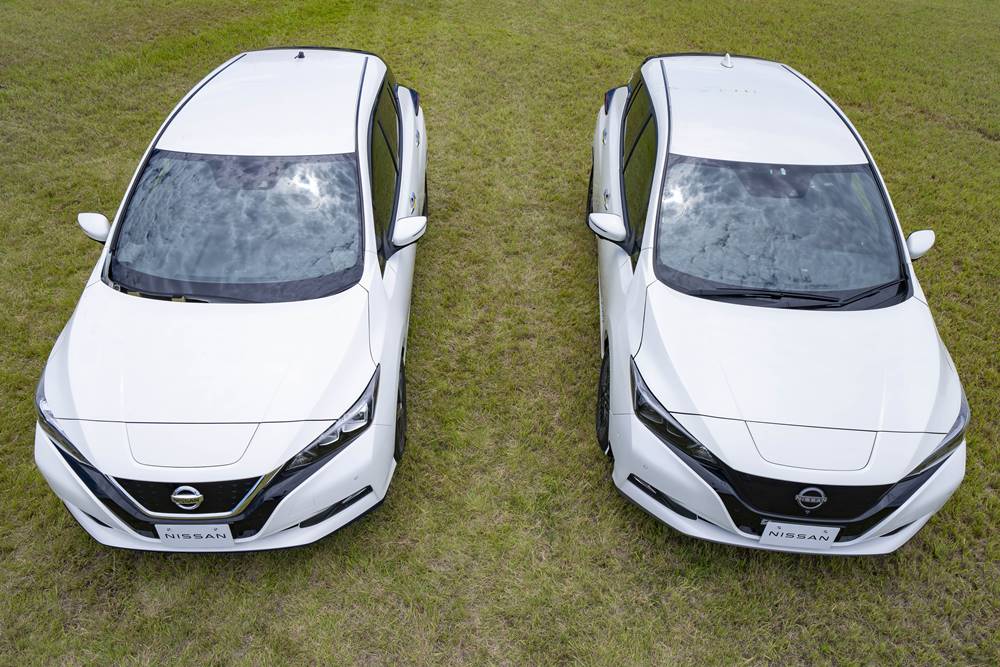
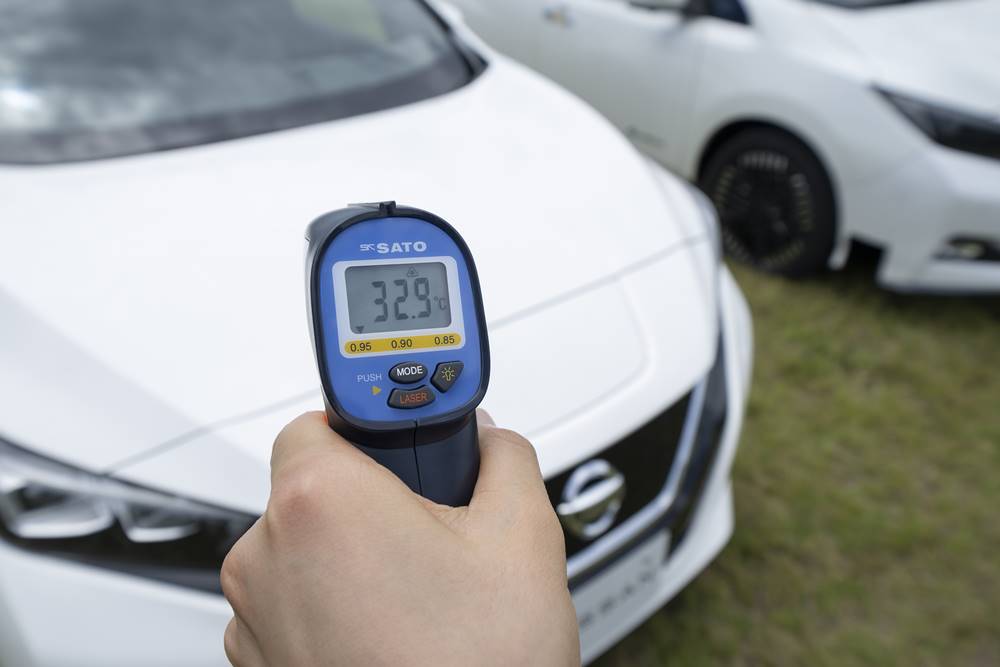
ABOVE: Nissan’s “cool paint” experiments
This significant cooling effect is particularly advantageous when vehicles are parked in the sun for extended periods. Cooler cabins not only enhance occupant comfort but also reduce the need for prolonged air-conditioning, thereby lessening the load on the engine or, in the case of electric vehicles, the battery. This efficiency improvement is beneficial for both conventional and electric powertrains.
The paint’s effectiveness stems from two microstructure particles within the metamaterial. One particle reflects near-infrared rays, which typically generate heat by causing molecular vibrations in traditional paint. The second particle counteracts the sun’s rays by creating electromagnetic waves that redirect the energy away from the vehicle into the atmosphere, reducing heat transfer into surfaces like the roof, hood, doors, and panels.
Dr. Susumu Miura, senior manager and expert at Nissan’s Advanced Materials and Processing Laboratory, leads the development. Miura, known for his work on noise-reducing acoustic materials, aims to create cooler cars without additional energy consumption—a critical objective in the electric vehicle era where air-conditioning can significantly impact battery charge.
Radiant cooling paint is not a new concept but is usually used for buildings and is often thick and applied by roller, lacking a clear topcoat and leaving a chalky residue. Miura faced challenges adapting this technology for automotive use, ensuring the paint could be applied via spray gun, incorporate a clear topcoat, and meet Nissan’s stringent quality standards. Since development began in 2021, Miura’s team has tested over 100 samples, currently evaluating a thickness of 120 microns—about six times thicker than standard automotive paint. They have confirmed the paint’s resistance to salt, chipping, peeling, scratches, chemical reactions, color consistency, and repairability, while continuing to explore thinner options with comparable cooling performance.
Miura envisions the paint’s future application, particularly for light commercial vehicles like vans, trucks, and ambulances that operate extensively under direct sunlight. The goal is to offer this paint for special orders in various colors, enhancing both efficiency and comfort for a wide range of vehicles.
Other GayCarBoys Stories:
Above: This Week’s VIDEO Car Review – 2024 Audi RS E-Tron GT Review MY NEW FAVOURITE CAR, HERE’S WHY
#alanzurvas, #gaycarboys, #audiAustralia, @audi, #gayaudi, #2024AudiRSeTronGT
Video Review: UNBOXING VALUE FitcamX OEM Style Dashcam #fitcamx #alanzurvas, #gaycarboys
What about some HOT RACING DRIVERS. Gay? Or just plain gorgeous?
SHORT Video Review: Audi e-Tron GT RS Quick Look – Light Show
#automobile #shorts #audietrongtrs #gaycarboys #alanzurvas ##shorts
Discover more from Gay Car Boys
Subscribe to get the latest posts sent to your email.








Leave a Reply