The Hyundai Staria has always been a bit of an oddball. In a market full of boxy people movers and commercial vans, it looks like something that escaped from a science fiction film. Whether you love it or hate it, nobody mistakes a Staria for anything else.
Now Hyundai has given its futuristic van a substantial update for 2027, adding hybrid power, a new luxury-focused Lounge flagship and confirming a fully electric Staria Load is on the way later this year.
For families, ride-share operators and businesses, the changes make oodles of sense. The question is whether they are enough to keep the Staria ahead of an increasingly crowded field, especially from China.
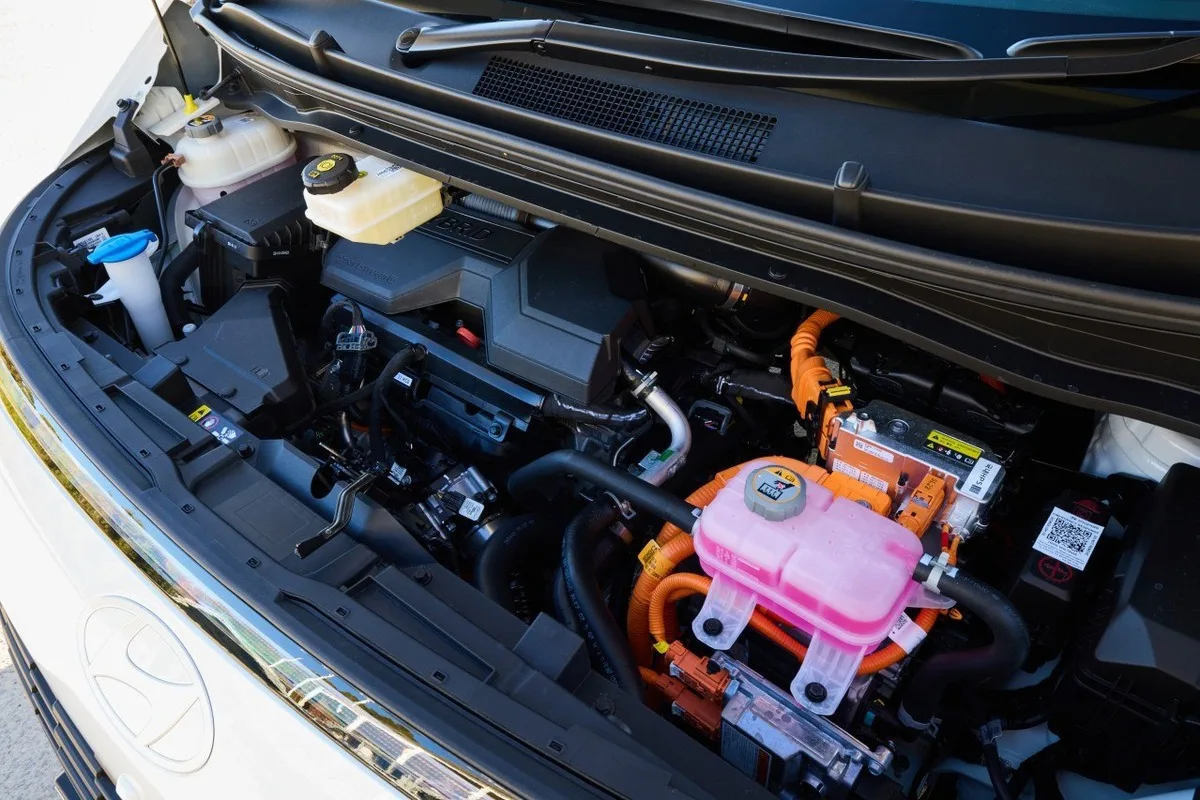
The headline news is the arrival of Hyundai’s 1.6-litre turbocharged petrol hybrid. It pumps out a decent 180kW and 304Nm, while claiming fuel consumption of 6.5L/100km.
That is a big improvement over the thirsty 3.5-litre petrol V6, which drinks 10.5L/100km, yet has more power than the current 2.2-litre turbo diesel.
For commercial buyers, the Staria Load is one of the first hybrid vans in its segment, giving businesses a way to bring down those fuel bills without making the leap to an electric vehicle.
Above: 2026 MG7 Essence Full Review – a Sweet Little GT Sports car
MG7Review #GrandTourer #Sedan #CarReview

Help Support Gay Car Boys Subscribe to our Youtube Channel by SMASHING THE BUTTON ABOVE


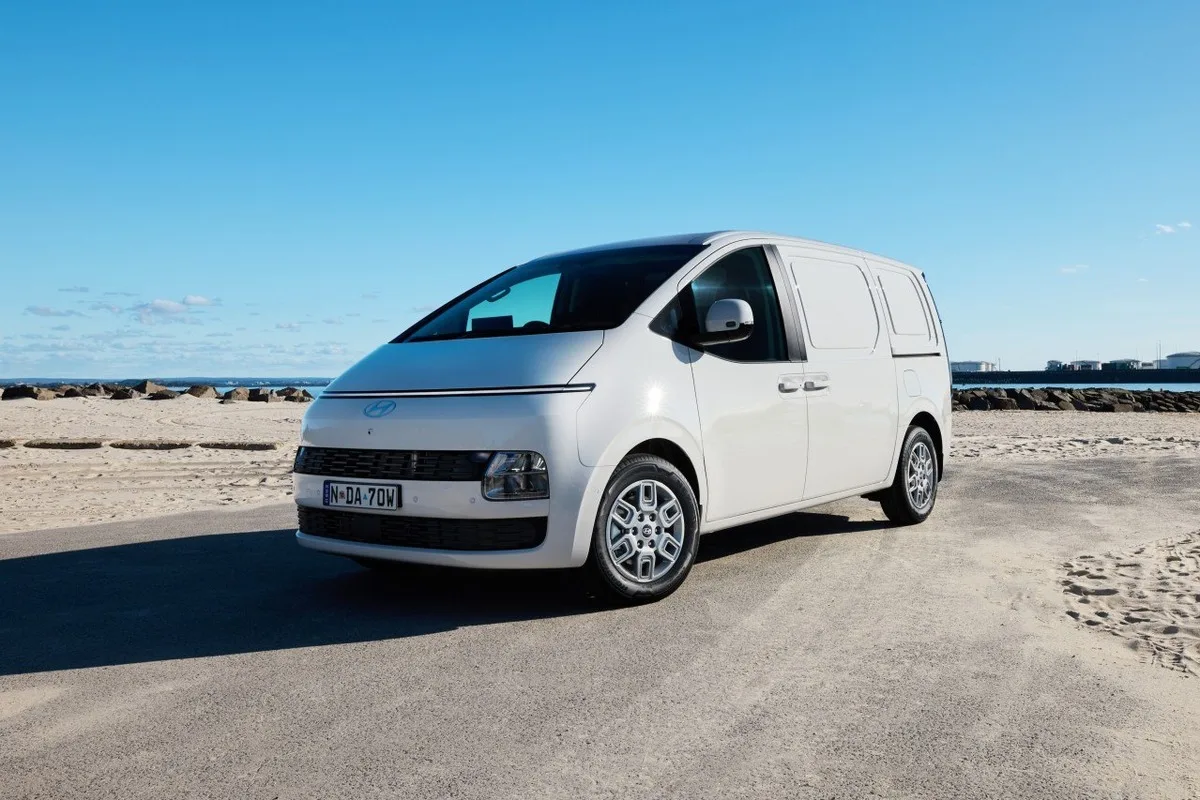


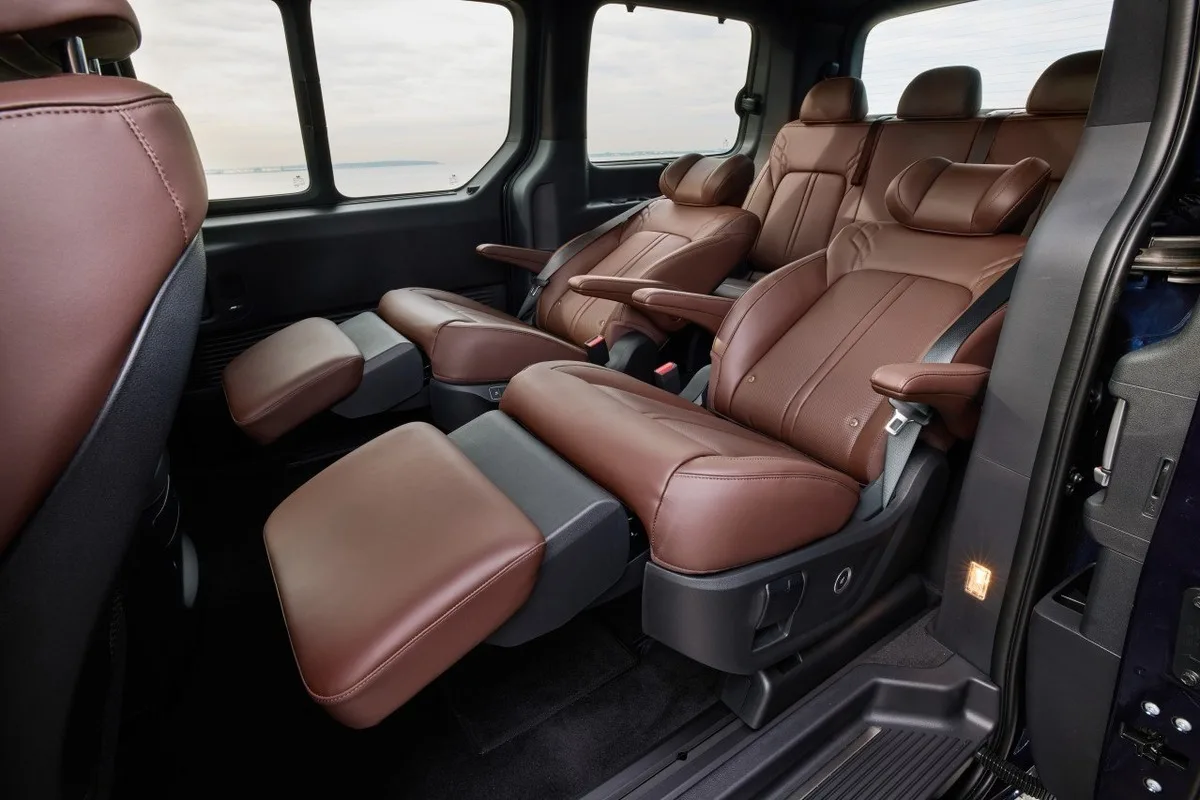
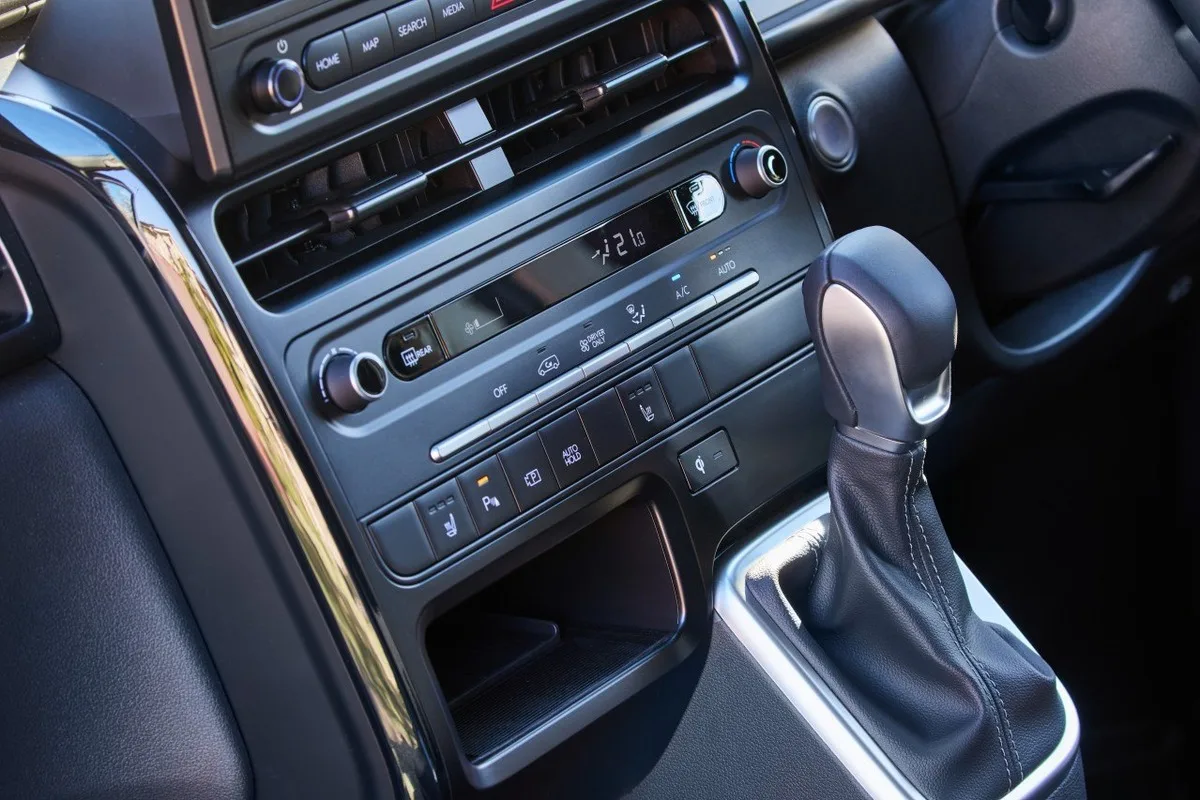
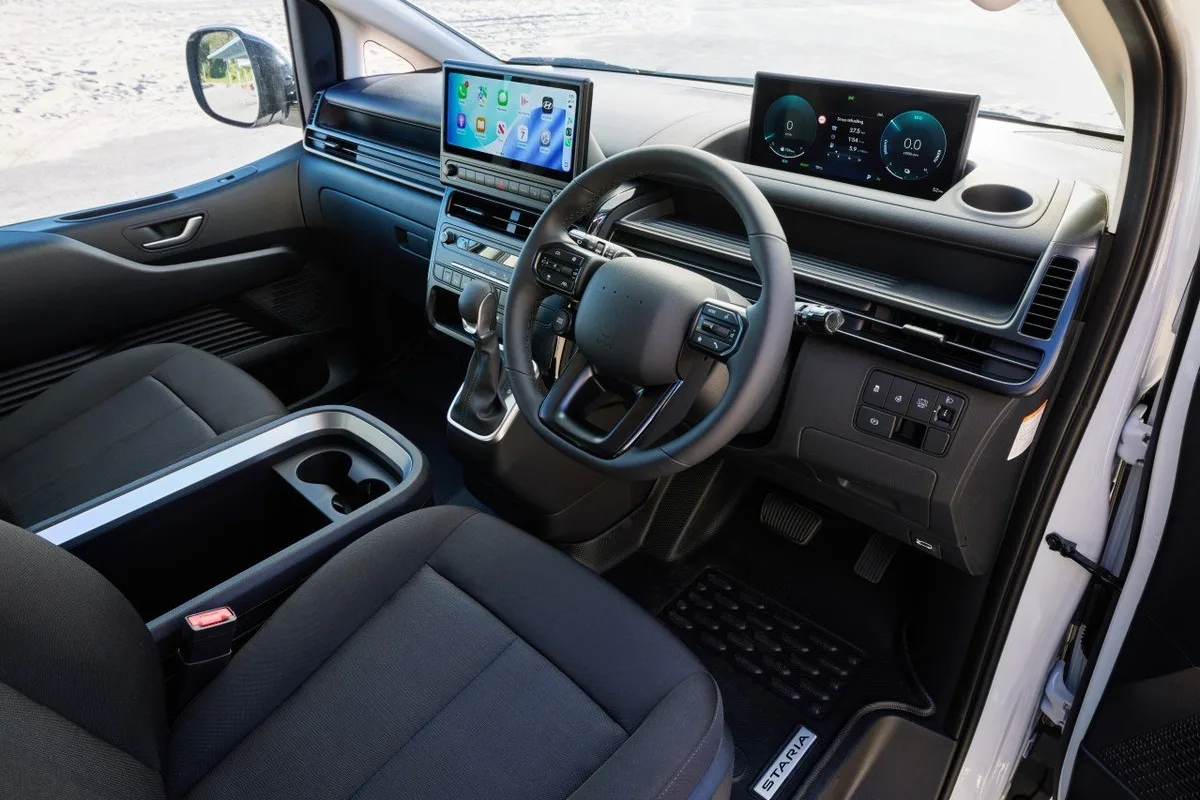


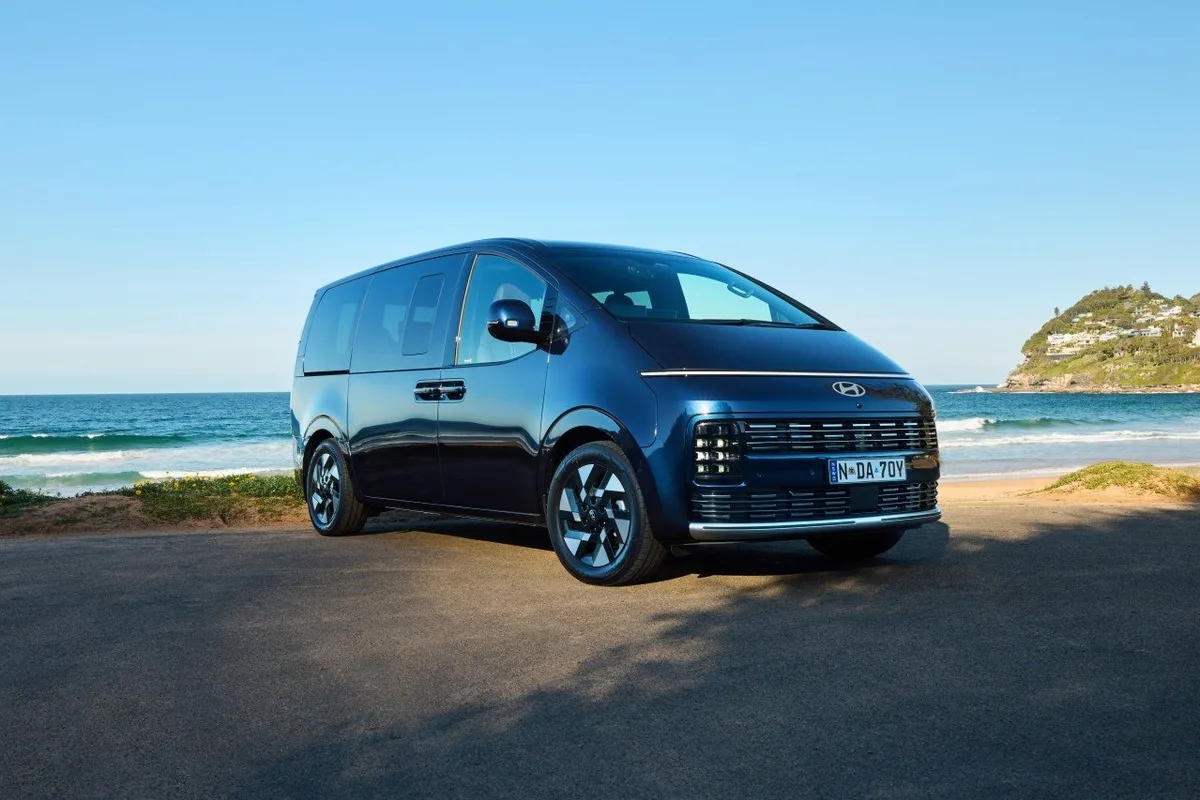
ABOVE: 2027 Hyundai Staria, Staria Lounge, and Staria Load
The hybrid also introduces Hyundai’s latest “e-Motion Drive” technology. As passenger cars and SUVs have already discovered, the electric motor can help manage body movement over bumps and improve stability when cornering or making sudden avoidance manoeuvres. It makes a noticeable difference in a tall, heavy vehicle carrying a full load of VIP passengers or even more important cargo.
2027 Staria has suspension revisions aimed at improving comfort and refinement. New front subframe bushings, revised rear hydro bushings and additional noise suppression measures have been introduced across the range. One of the few criticisms of the current Staria has been that it occasionally feels more delivery van than Van Morrison. Any improvement in ride quality and cabin quietness will be welcomed.
The most interesting addition is the new Staria Lounge, now the flagship of the range to shift the Staria further into luxury territory. Instead of eight seats, it is a seven-seat luxe limo-cum-VIP-transport. Individual second-row relaxation seats create a cabin experience akin to an airport business-class lounge more than a dull, lifeless people mover.
The specification list is suitably extensive.
Nappa leather upholstery, heated and ventilated seats for both front and second-row passengers, suede-trimmed pillars and headlining, privacy glass, dual sunroofs and a powered tailgate all come standard.
Acoustic laminated glass for the windscreen and front side windows should also make the cabin noticeably quieter than lower-grade models. For families with teenagers, grandparents or frequent road-trip passengers, the second-row relaxation seats could become the star attraction. Long-distance comfort has always been one of the Staria’s strengths, and Hyundai appears determined to push that advantage even further.
The Lounge is also the first Staria to feature Hyundai Digital Key 2, allowing owners to unlock and start the van using a compatible smartphone. The digital key can be shared with up to 15 devices. That could prove useful for large families, airport shuttle operators or businesses where multiple drivers need access to the same vehicle.
Outside, the changes are subtle but effective.
A revised grille, updated front bumper and integrated horizon lighting sharpen the Staria’s already distinctive appearance without altering its unique silhouette. The futuristic “spaceship on wheels” look remains intact. The original Staria design was polarising when it launched, but it has aged remarkably well. In a sea of anonymous SUVs, the Staria still stands out.
Commercial buyers haven’t been forgotten.
The Staria Load continues with its enormous 4,935-litre cargo capacity, while hybrid models increase payload slightly compared with diesel versions. Diesel Staria Load models can carry up to 997kg, while the hybrid stretches that figure to 1,039kg. Towing capacity remains strong for diesel and petrol models at 2,500kg braked, although the hybrid drops to 2,000kg. For many businesses that will be a reasonable trade-off in exchange for lower fuel consumption.
The arrival of an electric Staria Load later in 2026 could prove even more of a game changer, price depending.
The EV version will use a 160kW electric motor and an 84kWh battery pack. Range figures have not yet been confirmed, but the specification suggests it could become a serious contender for urban delivery fleets and service operators looking to electrify. Given tightening emissions regulations and growing pressure on businesses to reduce operating costs, an electric Staria Load feels like a logical next step.
Technology gets a big boost.
All 2027 Staria models gain Hyundai’s latest Connected Car Navigation Cockpit infotainment system with a new-generation user interface, expanded Bluelink connected services and over-the-air software updates. The latter feature is becoming increasingly important as vehicles become more software-dependent. Owners can receive updates for vehicle systems without visiting a dealership, keeping features and functions current throughout ownership. It also allows for pay-as-you-go features, something not quite so fabulous. We’ll be keeping an eye on that.
Safety equipment remains comprehensive, with Hyundai SmartSense driver-assistance systems fitted across the range, including blind-spot collision avoidance, lane following assist, adaptive cruise control and forward collision avoidance technology.
Pricing is from $54,300 before on-road costs for both petrol and diesel Staria eight-seat models, with hybrid-powered Staria Lounge from $73,740 plus on-road costs.
Staria Load pricing starts from $49,990 for the diesel, rises to $53,490 for the hybrid, and reaches $61,240 for the fully equipped Staria Load Premium Hybrid.
The updated Staria is less mid-life facelift and more strategic repositioning. The market has changed, a lot. Chinese brands have the luxury VIP market to themselves with the Mercedes van feeling decidedly functional by comparison.
The hybrid powertrain addresses efficiency concerns, the Lounge targets buyers wanting genuine luxury without stepping into premium European territory, and the forthcoming electric model positions Hyundai for the next stage of commercial transport.
Most importantly, Hyundai has resisted the temptation to dilute what makes the Staria unique. It still looks like a space ship from the future, offers cavernous space, but now has the powertrain choices to appeal to more than one market corner. For families wanting something more interesting than another three-row SUV, and businesses looking beyond traditional diesel vans, the 2027 Staria could challenge the Chinese stranglehold.
More Hyundai Stories
- Hyundai Reveals New Staria People Mover for Later in 2021
- Hyundai Staria Gets CNCAP 5 Star Safety rating
- Hyundai IONIQ 9 Powers Australia’s First True Vehicle-to-Grid Run
Help Support Gay Car Boys Subscribe to our Youtube Channel by SMASHING THE BUTTON ABOVE

Alan Zurvas is the founder and editor of Gay Car Boys, Australia's leading LGBTQI+ automotive publication. Before launching GCB in 2008, Alan's automotive writing was published in SameSame.com.au and the Star Observer. With over 16 years of hands-on car reviewing experience, Alan brings an honest, irreverent voice to every review — championing value and innovation over brand loyalty.
Leave a Reply