Jaguar Classic: limited number “C-type Continuations” is nearing reality.
70 years after its 1st Le Mans 24 Hours win, C-type Continuations will officially reak cover at the Concours of Elegance at Hampton Court Palace on Friday 3 September.
The C-type Continuation will be hand-built at Jaguar Classic Works in Coventry, to the specification of the 1953 ‘works’ C-types that dominated that year’s Le Mans 24 Hours, scoring the C-type’s second Le Mans win and continuing a run of motorsport success for the company.
The Jaguar Classic team researched the C-type’s history to bring the modern car to life, using the original specification. Although a brand new car, it is made using authentic 50’s materials
Dan Pink, Director, Jaguar Classic, said: “The C-type is one of the most iconic cars in Jaguar’s illustrious racing history, driven by some of the most-admired drivers in history. The C-type Continuation keeps Malcolm Sayers’ iconic and advanced design alive thanks to the first application of 3D CAD drawings by Jaguar Classic, marrying design and motorsport heritage with the very latest engineering tools.”
Above: This Week Goodbye 2021 LC200 LandCruiser Sahara, Hello LC300 FULL Review

Help Support Gay Car Boys Subscribe to our Youtube Channel
- Top GayCarBoys Stories:
- Sexy Men Drive 2021 Toyota Yaris Cross
- 10 Sexiest MotoGP Motorcycle Riders
- DON’T Drive YOUR CAR until you’ve Checked if your AIRBAG will KILL YOU
- 10 Hottest Racing Drivers
- Top 12 Best Gay Lesbian LGBTI Luxury Cars
- Top 10 Gay Lesbian LGBT Cars
- Top 10 Gay Lesbian LGBT Sports Cars
- Top 15 gay and lesbian LGBT SUVs
- Talented Twinks – Callum Ilott Virtually Races Arthur Leclerc


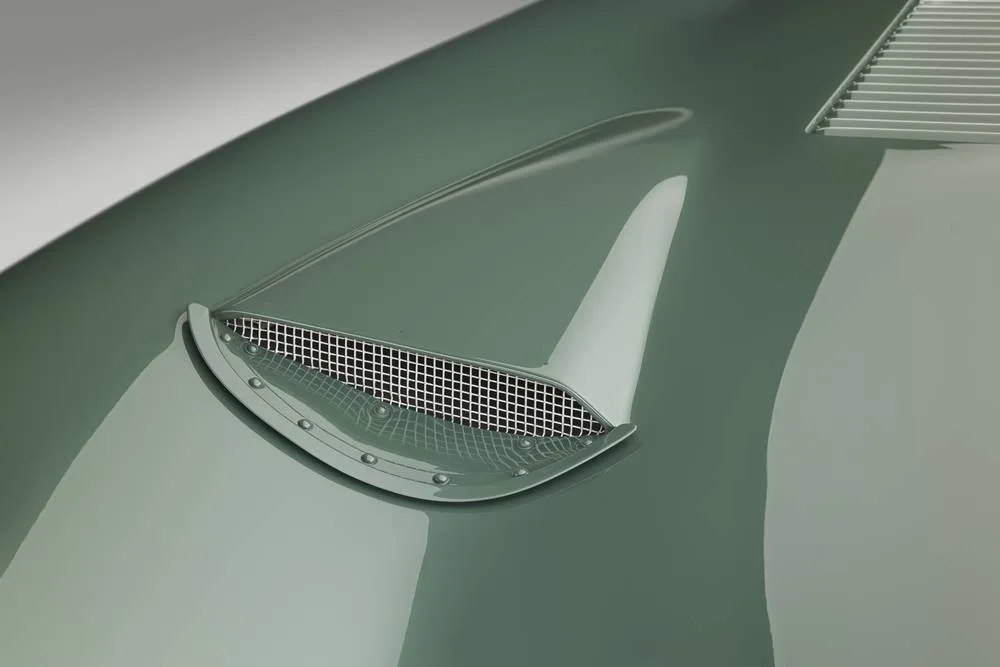


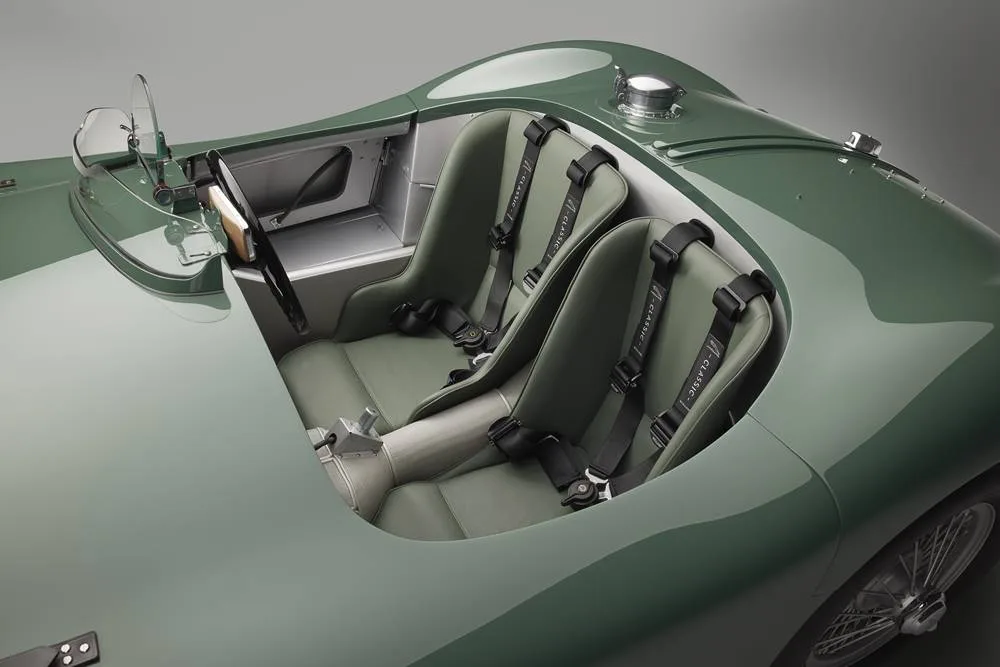

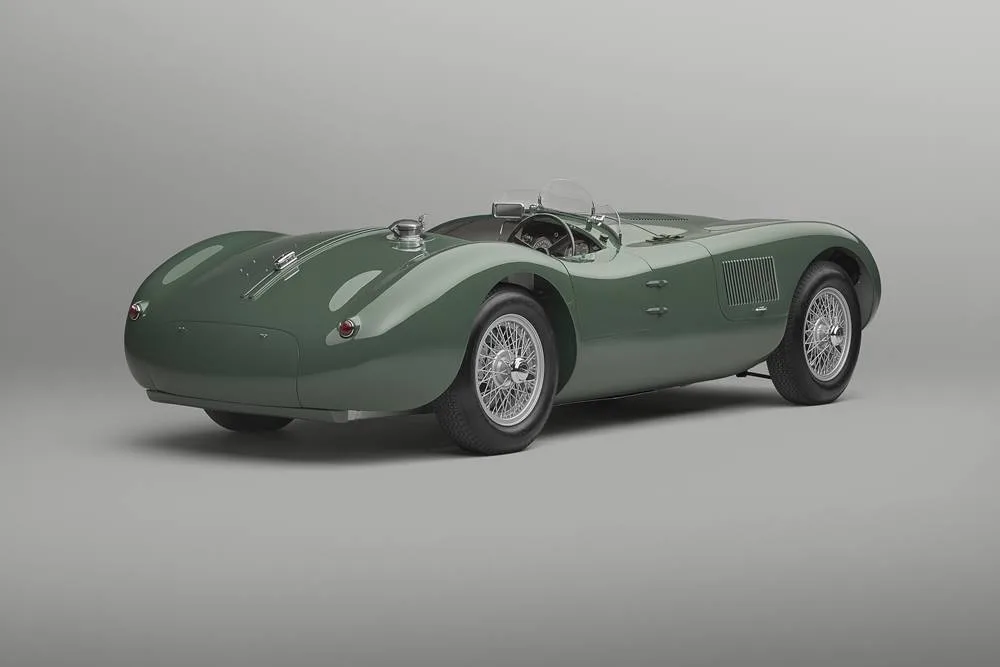
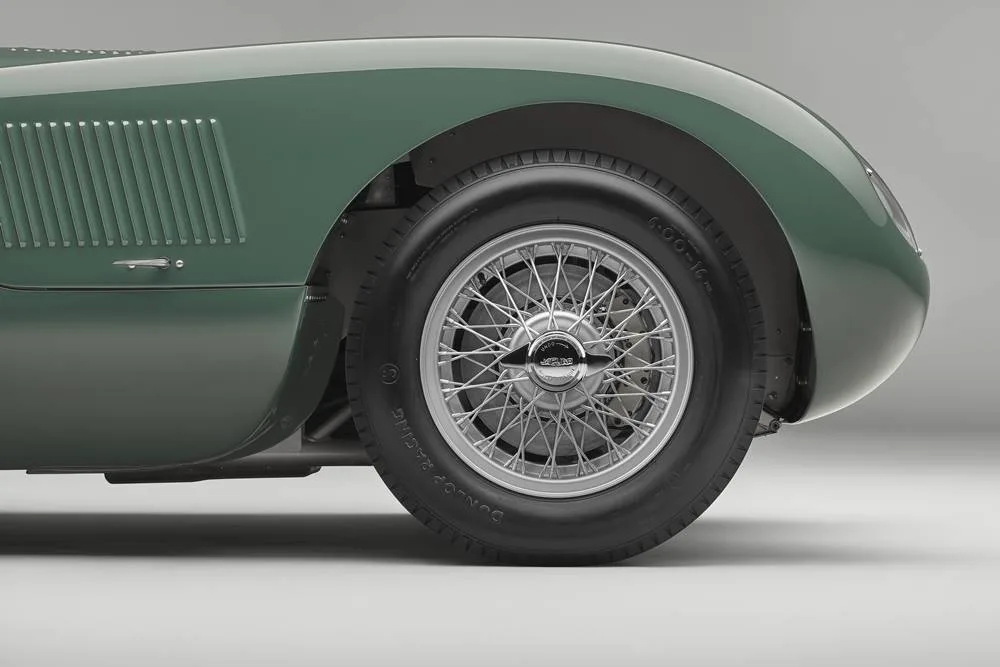

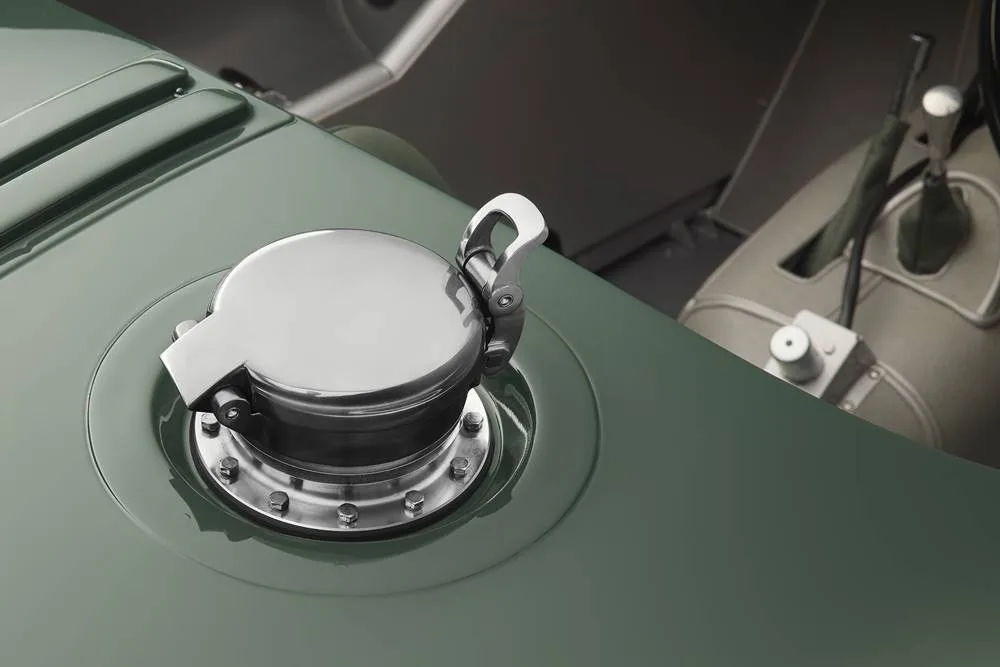
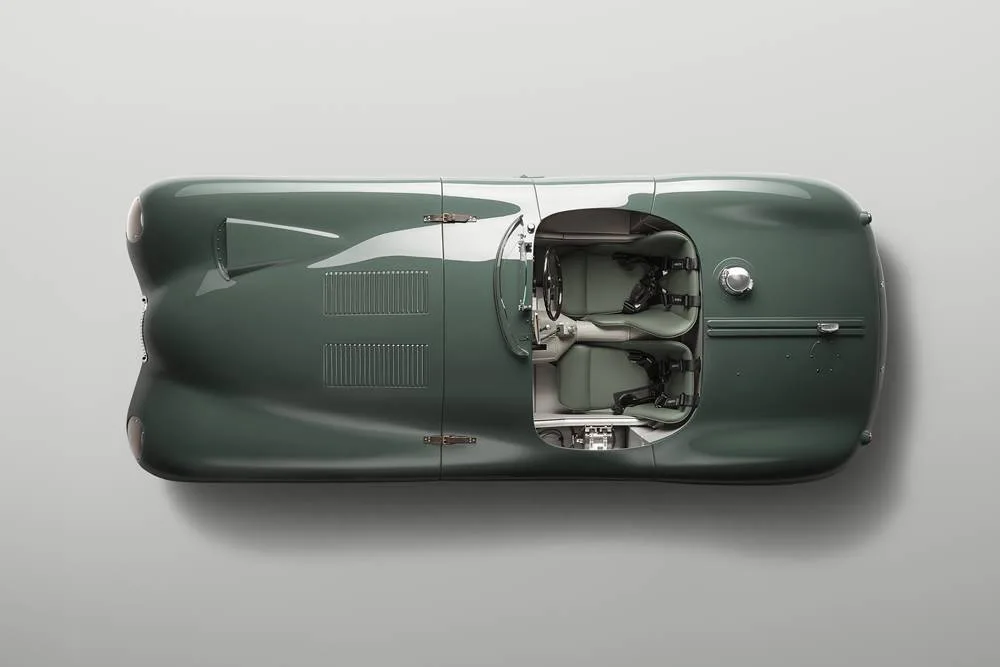
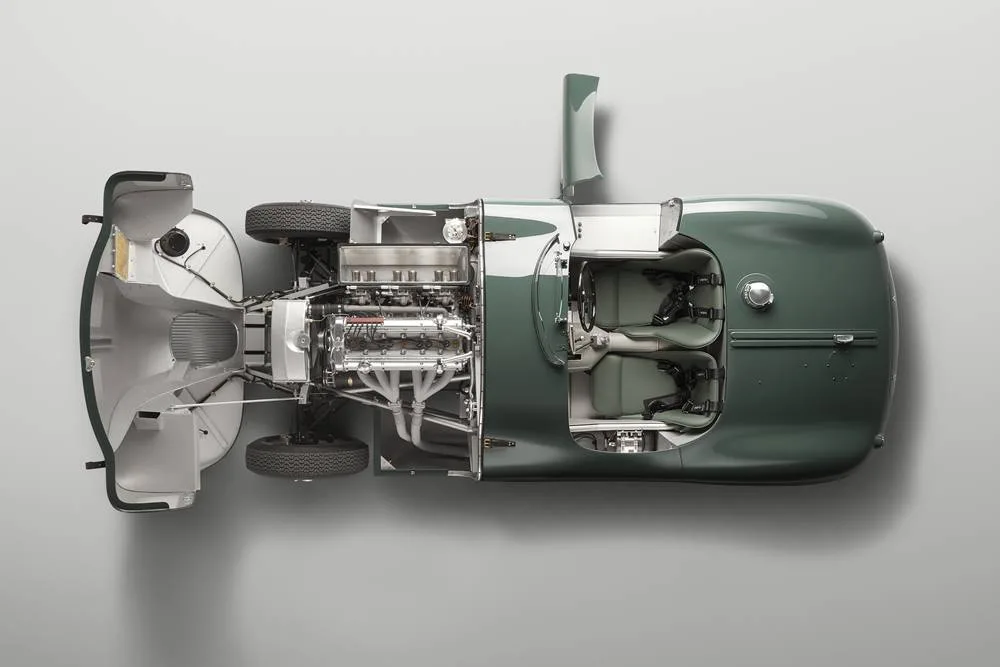
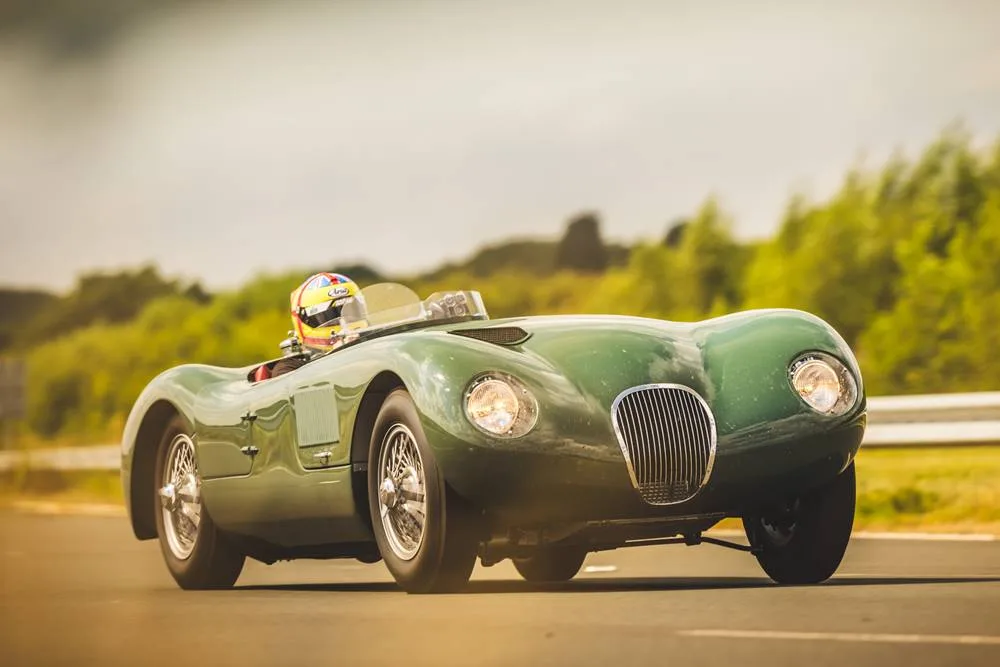
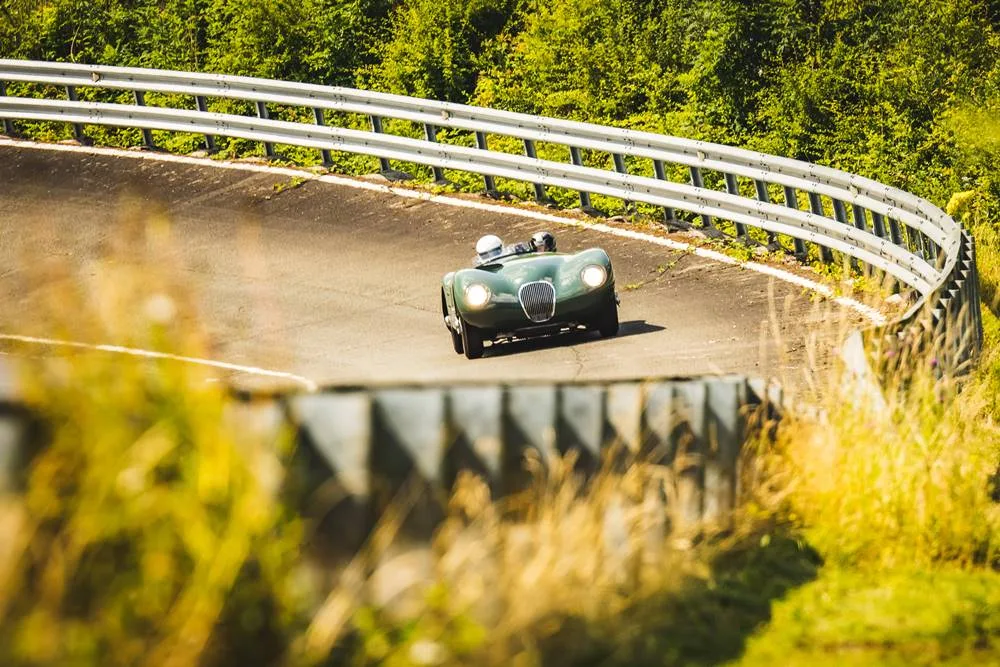
ABOVE: Jaguar Classics S-Type Continuations
The C-type’s motorsport history
The original C-type most notable for it aerodynamic shape, designed by Malcolm Sayer, who was recruited by William Lyons in 1950. The car was called the XK120C at first. It was based in the now iconic XK120.
Without knowing it, C-type went on to beone of the most important cars in Jaguar’s history.
The C-type had the XK120’s engine, transmission and suspension. Malcolm Sayer used complicated mathematic formulae to create the three-dimensional curves.
It was a rush job, being designed, engineered and built in only 6 months. It all came together to carry 12 Jaguar people in 3 C-types to the 1951 Le Mans 24 Hours. The competition cars were driven overnight from the UK to compete. That’s something you’re unlikely to see today..
1951, was the 1st the C-type Le Mans 24 Hours win, but it was only the 1st of many Jaguar motorsport victories. The drivers of the 3 cars were Sir Stirling Moss and Jack Fairman, Leslie Johnson and Clemente Biondetti and race winners, Peter Walker and Peter Whitehead.
In 1953, Le Mans 24 Hours, saw an updated C-type blast through the 100mph 24-hour average speed record at 105.85mph. Previous races had a C-Type record at 93.49mph average speed set in 1951.
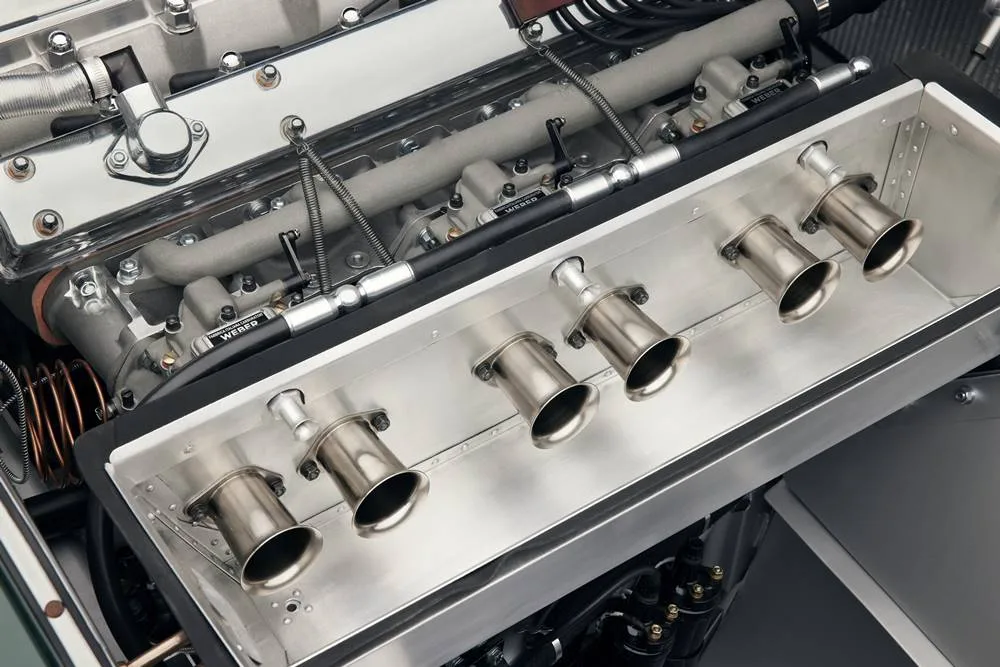
The 1953 car had three Weber 40DCO3 carburettors which increased the power output from the 3.4-litre straight-six engine from 200bhp to 220bhp. This power boost, the first use of disc brakes, and the lightweight body all contributed to the Jaguar’s second Le Mans triumph.
The 1953 winning car was driven by Duncan Hamilton and Tony Rolt, and this started a trend for the use of disc brakes for race and road use.
A treasure hunt for authenticity
To keep the car totally authentic, 2 years of searches into Jaguar’s archives, drawings, documents and pictures, showed the builders how to create this i50’s car in the 21st century.
Construction used original drawings and period parts, and the original engineering ledger. The records were digitised, with more than 2,000 original ledger items involved.
Norman Dewis OBE (1920 – 2019), one of the former test driver/ engineers for Jaguar, was able to give tips into the build process. An original example C-type, photographs, and Malcolm Sayer’s notes were used to build ‘Car Zero’,
All of this data was then used to create a 3D CAD (computer-aided design) model, and for the first time ever, a Jaguar Classic Continuation was created in this way.
C-type Continuation specification
53 original Jaguar C-types were made in the 1950s. 43 went to private owners, and production C-type specification was more like that of the 1951 Le Mans competing cars, limited to drum-braked cars with twin SU carburettors and 200bhp.
The first C-type Continuation cars will be built for the celebration event for their owners in 2022. Each car is true to the 1953 Le Mans-winning works team car specification: 3.4-litre straight-six engine, triple Weber 40DCO3 carburettors, 220bhp, and disc brakes.
Each 3.4-litre straight-six engine takes nine months to construct, and original Weber carburettors are refurbished to an exacting standard. The detail doesn’t stop there, Plessey hydraulic pumps are used on the gearbox that pumps hydraulic fluid into the brakes.
Other details retained from the original cars are the brake fluid reservoir, which on the original cars featured brackets that were designed for its application in another vehicle. They were not needed in C-type, but remained in the engine bay anyway.
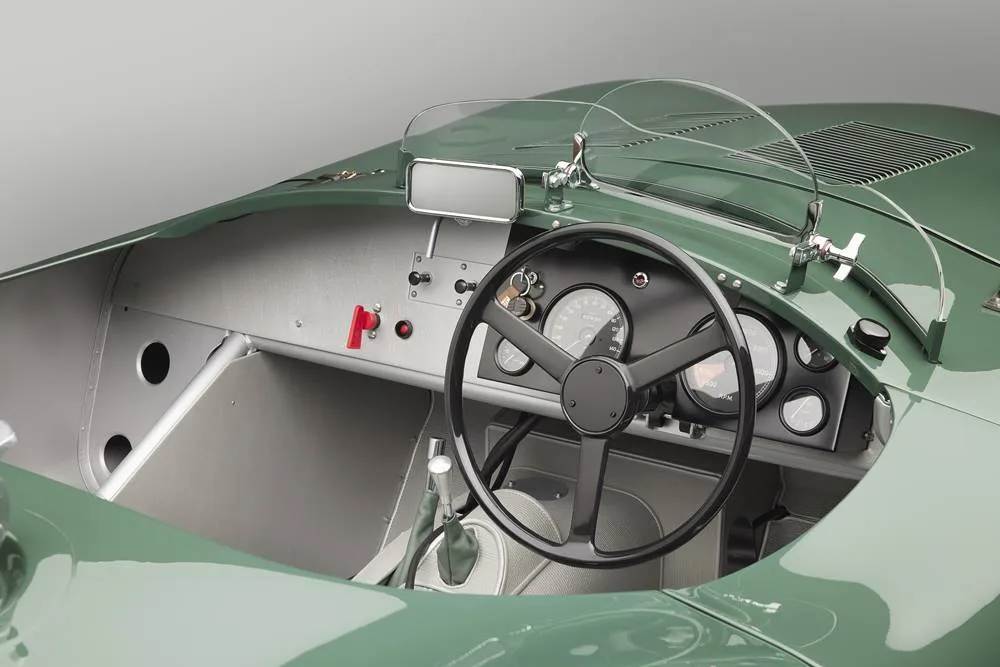
The 1953 C-types had a different Lucas fusebox cover to that used in 1951 and 1952 cars. Further detail was added by using original Lucas rear-view mirrors and a three-quarter Brooklands race screen, and Smiths clocks in the cockpit.
The original-spec clocks and gauges are an illustration of the hours of craftsmanship that go into creating a C-type Continuation. Not only are they faithful to the originals, but the way in which they are integrated – including the surrounding switches – is an example of the fine and delicate attention to detail that Jaguar Classic engineers employ to create the perfect example.
The ignition switch on the C-type Continuation is a precisely re-engineered component replicates the original’s start-up procedure, and the rev counter reads counter-clockwise.
The cabin uses Hardura trim in the cockpit, although this wasn’t found on the original C-type. Instead, it is trimmed in silver to evoke the period item.
The smell and feel of a 50’s car continues with Rexine fion the dashboard and side panels coming from the very last roll of this type of material available.
The seats are trimmed in one of 8 choices, and are upholstered by Bridge of WeirTM. The new cars come with racing harnesses attached to a new component behind the rear bulkheadin order to comply with FIA regulations. A Bluemel steering wheel is true to the original with no roundel affixed to the centre – it was omitted from the original race cars to reduce glare and reflections – however customers can specify the iconic Jaguar badging if they desire.
FIA also dictates things such as a fire extinguisher, with engine and footwell extinguishers, neatly controlled by in-period additional toggle switches in the cockpit.
The cars come in a palette of 12 colour choices including: Suede Green, Cream, Pastel Blue and British Racing Green. Owners can further specify door roundels in White or Old English White.
Painting takes one week to complete using modern water-based paint, while Jaguar badging can also be specified.
Jaguar C-type Continuation: technical specification
Powertrain and chassis
- Hand-built 3.4-litre DOHC in-line six-cylinder engine
- Produces 220bhp @ 5,800rpm
- Triple Weber 40DCO3 carburettors
- Four-speed manual transmission
- Plessey pump fitted to gearbox
Exterior
- Hand-rolled 16-gauge aluminium
- 12 exterior paint options
- Optional door roundels
- Optional Jaguar badging
- 16-inch, 60-spoke wire wheels
Interior
- Eight leather seat colour options
- Original Lucas rear-view mirror with three-quarter windscreen & Brooklands Aeroscreen
- Smiths clocks and gauges
- 15-inch Bluemel steering wheel
- Optional harness retention system
- FIA-approved fire extinguishing system
Other GayCarBoys Stories:

Alan Zurvas is the founder and editor of Gay Car Boys, Australia's leading LGBTQI+ automotive publication. Before launching GCB in 2008, Alan's automotive writing was published in SameSame.com.au and the Star Observer. With over 16 years of hands-on car reviewing experience, Alan brings an honest, irreverent voice to every review — championing value and innovation over brand loyalty.
Leave a Reply