It started as a request for a dashboard clock. It finished as two complete Porsche 911s, one coupe built in California, one cabriolet built in England.
The Louis Vuitton Singer Porsche 911 project is two cars, not one car and a set of posh luggage. Singer rebuilt a Type 964 coupe at its California workshop and a Type 964 cabriolet in England, the cabriolet to a specification set by Nicolas Ghesquiere, Louis Vuitton’s Artistic Director of Women’s Collections.
For those who have never heard of Singer, it set up in California in 2009 and rebuilds and personalises classic Porsche 911s to order. Such is its success that it is now working out of two facilities, one in California and one in England. So laudable are its creations that Goodwood Festival of Speed made it the featured brand this year. The Louis Vuitton Singer Porsche 911 pair is not only the first co-branded product Louis Vuitton ever made, but Singer’s first too.
Above: Haval H7 Vanta Review: Luxury Cabin, AI Styling
HavalH7Review, #GWMHavalH7, #HybridSUV, #CarReviewAustralia, #HavalH7Vanta, #GayCarBoys

Help Support Gay Car Boys Subscribe to our Youtube Channel by SMASHING THE BUTTON ABOVE


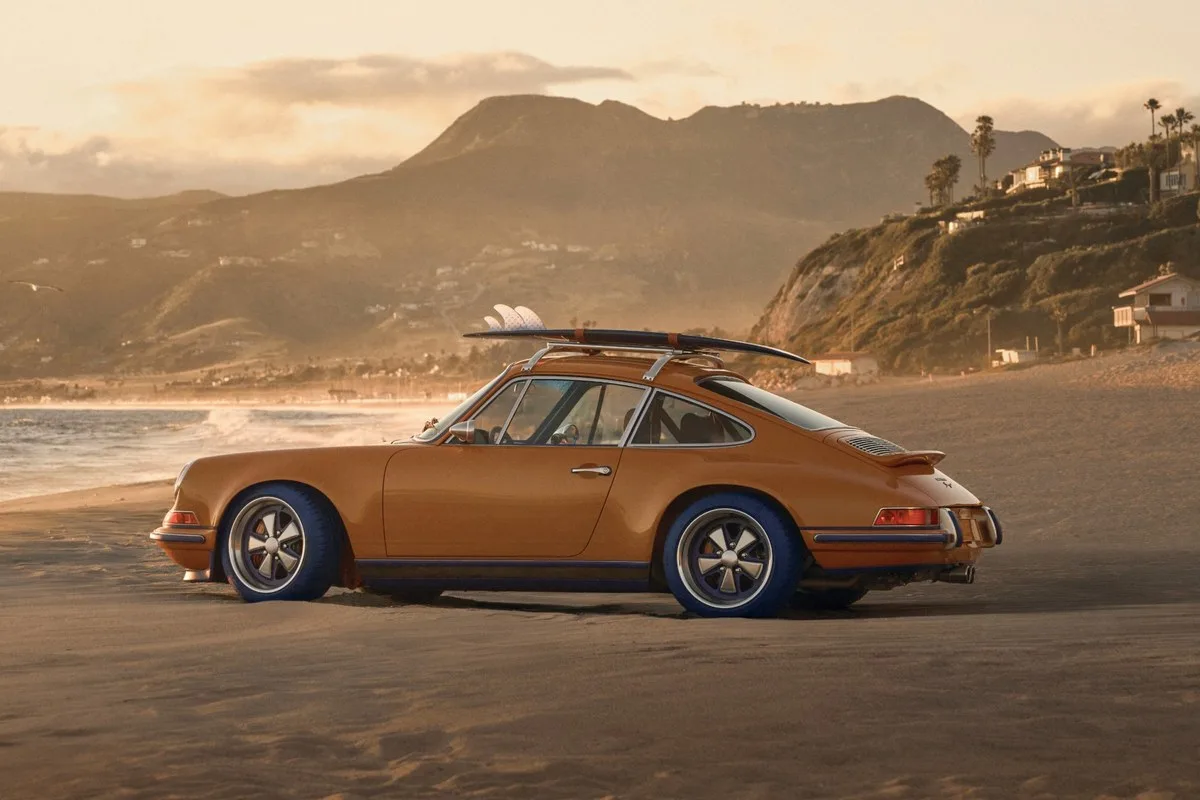
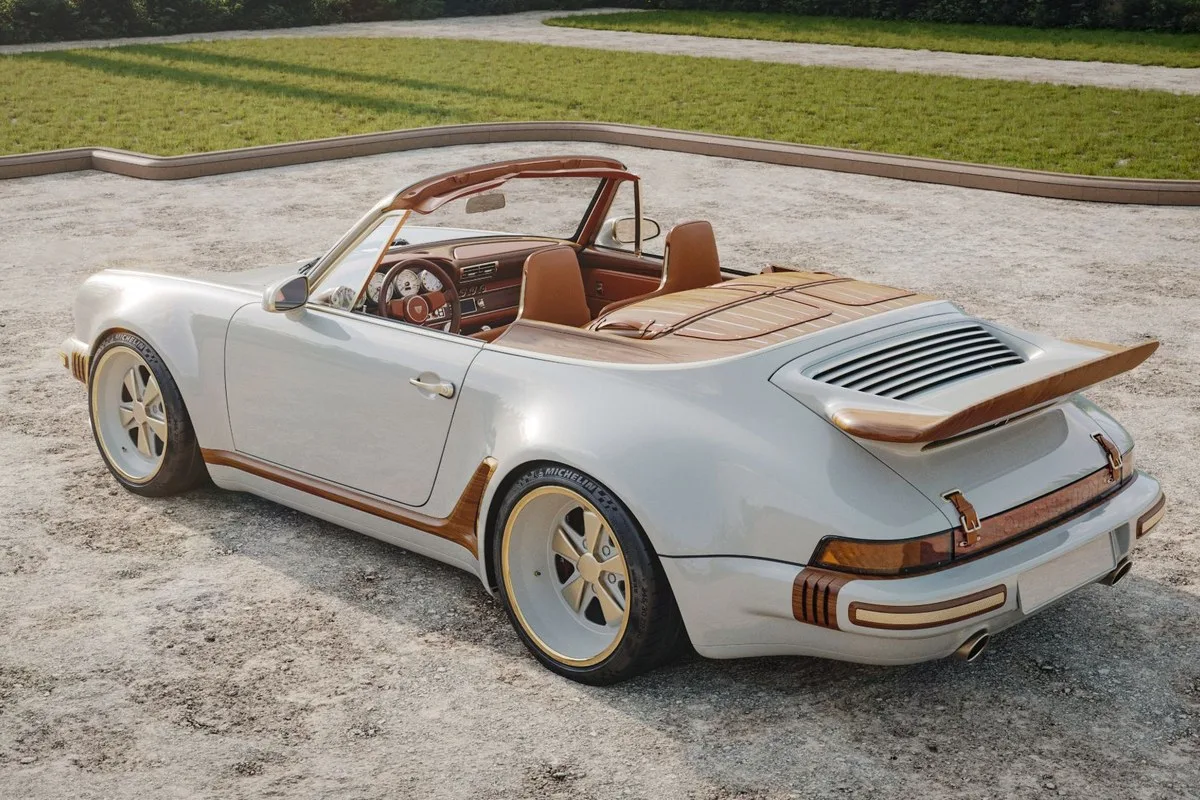
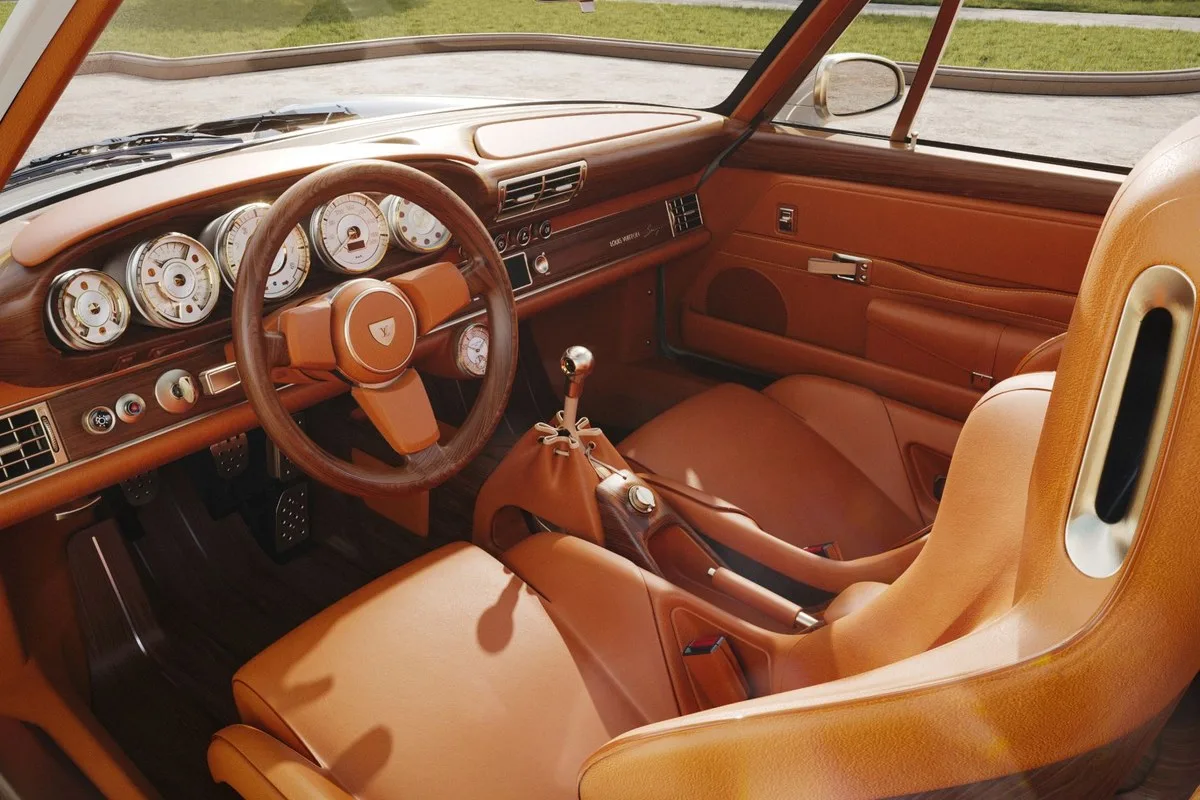
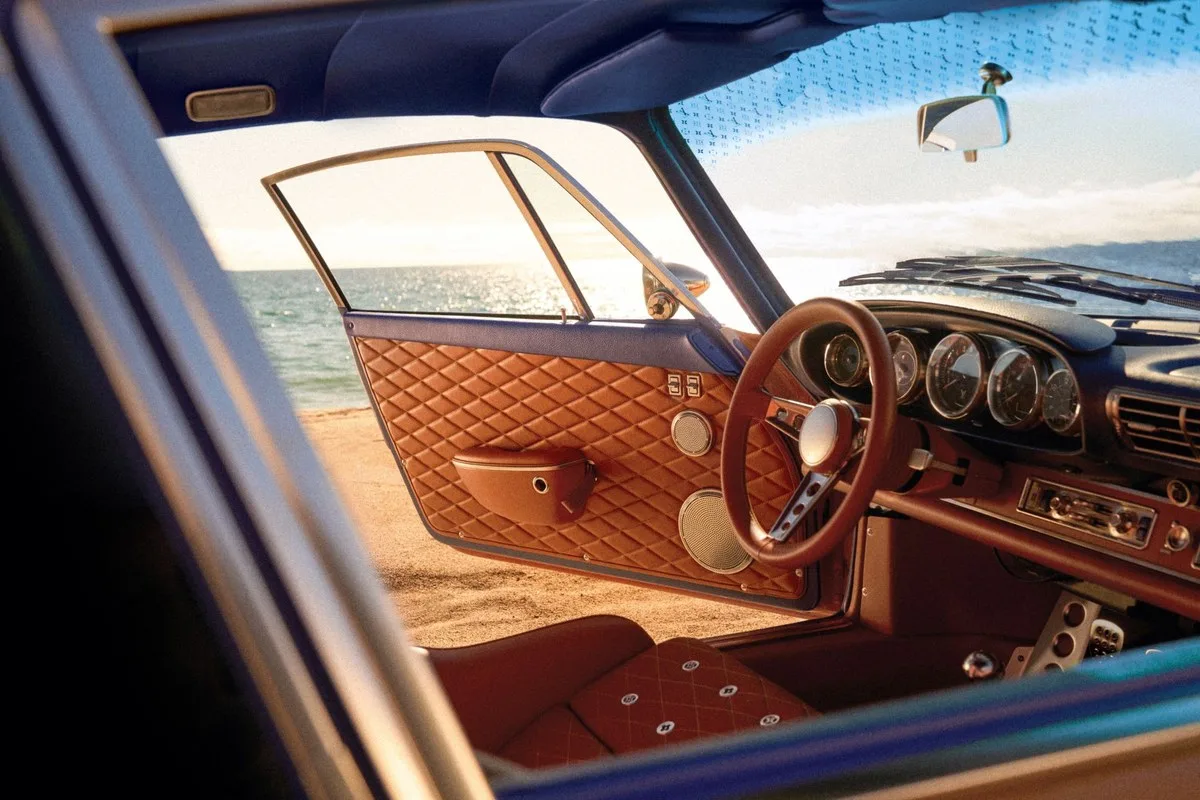
ABOVE: The 911 Reimagined by Singer
From a Dashboard Clock to Two Cars
The clock came first, and the rest of the car grew around it. La Fabrique du Temps Louis Vuitton built it in Switzerland, a mechanical timepiece that many see as a work of art. The design comes from the Tambour watch, the one you know by its shape and by the 12 engraved letters spelling out LOUIS VUITTON around the bezel. It detaches from the dashboard to double as a stylish desk clock.
Redrawing the rest of the instruments took a year. The speedometer, the tacho, and the smaller gauges all moved to Tambour graphics, cobalt blue with contrasting orange lettering. The cabriolet does it differently. Its clock doesn’t sit in the binnacle at all, it goes in the centre of the console, the gauges are gold, and the dial is painted to match the exterior, as is the ignition key.
Inside the Louis Vuitton Singer Porsche 911 Coupe
The colour is where the two names meet. The coupe’s bodywork is carbon fibre in saffron, and that particular shade isn’t a new one. It’s been in the Louis Vuitton archive for over 150 years and on the packaging for more than 20. It also sits close to Bahama Yellow, the colour tied to Singer’s early commissions, so one shade covers both names.
Cobalt blue does the highlighting, on the body and on the demonstration tyres. There’s a speed-activated rear wing. The rear engine air intake grille is adorned with an L and V.
The coupe uses a 4.0L naturally aspirated air-cooled flat six with a 6-speed manual, rear-wheel drive, and carbon-ceramic brakes. Porsche’s own current headline act is a 1,139 hp electric Cayenne Coupe, with the petrol cars dragging on behind it, in a foam of ICE irrelevance.
In true touring style, the roof rack takes luggage, a surfboard, or a smart pair of skis. The surfboard is made in Angers, then resin-coated and finned on the Atlantic coast, with monogram marquetry in blond oak and walnut. The skis come from the French Alps in wood, titanal, and steel. Each detail is a sign of glorious excess and quality that, in many ways, money can’t buy, unless you’re the one-off commissioner of course.
The cabin is trimmed in leather, diamond-pattern embossed on the seats, the front boot trim, and the rear engine bay. The seat ventilation eyelets carry the monogram flower, and so do the sun visor and the headrests. The door handle edges are dyed like a Louis Vuitton bag. The stitching is yellow throughout.
The plastic switchgear of a normal car interior simply would not have done. The knobs, the switches, and the vents are metal instead, mostly rhodium-plated and hand-finished. Even the fuel and oil caps use the typography from Louis Vuitton watch components. It could seem to some to be overdone, but, why go that far then stop, right?
Wood, Gold, and a Motorboat Deck
The Louis Vuitton Singer Porsche 911 cabriolet answers in white. Its carbon fibre body is painted Calcaire Lutetien, named for the white limestone of Parisian buildings, and it’s complete with a monumental whale tail rear wing. Beneath it lurks a 3.8L twin-turbocharged flat six with air-to-water intercooling, driving the rear wheels through a 6-speed manual with selectable drive modes. The job is finished off with carbon-ceramic brakes as a final seal of class, quality, and performance.
The interior is leather and wood, harkening back to those halcyon 50s motorboats. The luggage space behind the seats is varnished wood, built with the runabout deck technique, and it holds the tasty bespoke luggage and the soft top. Open it and there’s a teak-look deck. The wood continues through the engine bay, the front boot, and the bumpers, with gold accents over the top.
Leather strapped pin buckles hold down the bonnet and the engine cover, and the front boot takes a three-piece case set that slots together like a very expensive puzzle. That luggage is part of a bigger haul. Each Louis Vuitton Singer Porsche 911 comes with a capsule collection, and the pieces include a carbon and glass fibre jet helmet, driving gloves, and the LV Rally driving shoe. There’s a garment bag as well, luggage cut to fit each car’s boot, and a Tambour Automatic wristwatch in ceramic and yellow gold that matches the dashboard clock.
This is not a random confluence of ideas. Louis Vuitton was building car luggage from 1897, with patented locks and flat sides so the cases stacked. The canvas was waterproof and could be dyed to match the car. They were often strapped to the rear rack of the car, thus the American term “trunk” was born. In 1909 Pierre and Jean Vuitton built a car of their own on a Stabilia sports chassis.
Singer doesn’t sell cars. It rebuilds a client’s own 964, one commission at a time, which is why there’s no pricelist and no run to join. Both of these are one-offs, like every Singer before them.
Singer isn’t Porsche, and the two are having very different years. Porsche’s profits crashed 93% and it sold its Bugatti Rimac stake to raise new money for risks it wants to take. While Singer makes ICE-powered classics relevant again, Porsche struggles to work out its own direction as electronification takes dominance. Sadly, Porsche thoroughly botched the reading of its buyers against a fast-changing market. Next to Singer, Porsche looks rudderless.
Louis Vuitton Singer Porsche 911 Side by Side
| Classic | Classic Turbo | |
|---|---|---|
| Chassis | Type 964 coupe | Type 964 cabriolet |
| Bodywork | Carbon fibre, saffron with cobalt blue, speed-activated rear wing | Carbon fibre, Calcaire Lutetien white, whale tail rear wing |
| Engine | 4.0L naturally aspirated air-cooled flat six | 3.8L twin-turbocharged flat six, air-to-water intercooling |
| Transmission | 6-speed manual | 6-speed manual with selectable drive modes |
| Drive | Rear-wheel drive | Rear-wheel drive |
| Brakes | Carbon-ceramic | Carbon-ceramic |
| Built at | Singer, California | Singer, England |
More Porsche Stories
- Desperate Porsche Sells Bugatti Rimac for New Money to Take Risk
- 1,139 hp Porsche Cayenne Coupe Electric But Petrol Drags On
- MG TF Takes 1000 Miglia Ends in Taranto Italy
Help Support Gay Car Boys Subscribe to our Youtube Channel by SMASHING THE BUTTON ABOVE

Alan Zurvas is the founder and editor of Gay Car Boys, Australia's leading LGBTQI+ automotive publication. Before launching GCB in 2008, Alan's automotive writing was published in SameSame.com.au and the Star Observer. With over 16 years of hands-on car reviewing experience, Alan brings an honest, irreverent voice to every review — championing value and innovation over brand loyalty.
Leave a Reply