The all-new Hyundai Tucson broke cover in New York, and it looks more like a Kia than any Tucson before it. Hyundai Tucson Hybrid is the only version coming to Australia, from mid-2027, with no petrol-only or plug-in option on the local list.
Hyundai calls the new design language Art of Steel. That means square, muscular fenders, flat door panels, crisp clean body lines and an upright, boxy design. The new front lights are called H-Edge, a strip of indirect lighting running along the centre and down the edges to make the nose look wider.
It’s a big departure for Hyundai designs like the unloved Santa Fe and the awkward Kona. The new car is slab-sided and square-shouldered, with more than a touch of daughter company Kia about it, and it shares a lot of its silhouette with Kia’s recent upright SUVs. Hyundai owns about a third of Kia, the pair share platforms and engines, and Kia’s Sportage is the Tucson’s sister car under the skin.
Hyundai design already collected Red Dot design awards this year, and the Tucson brings the Art of Steel look to Hyundai’s best-selling SUV.
Above: 2026 GAC Emzoom Luxury Pretty but Flawed
#gacemzoom, #gac #miniSUVReview, #byd, #GayCarBoys

Help Support Gay Car Boys Subscribe to our Youtube Channel by SMASHING THE BUTTON ABOVE


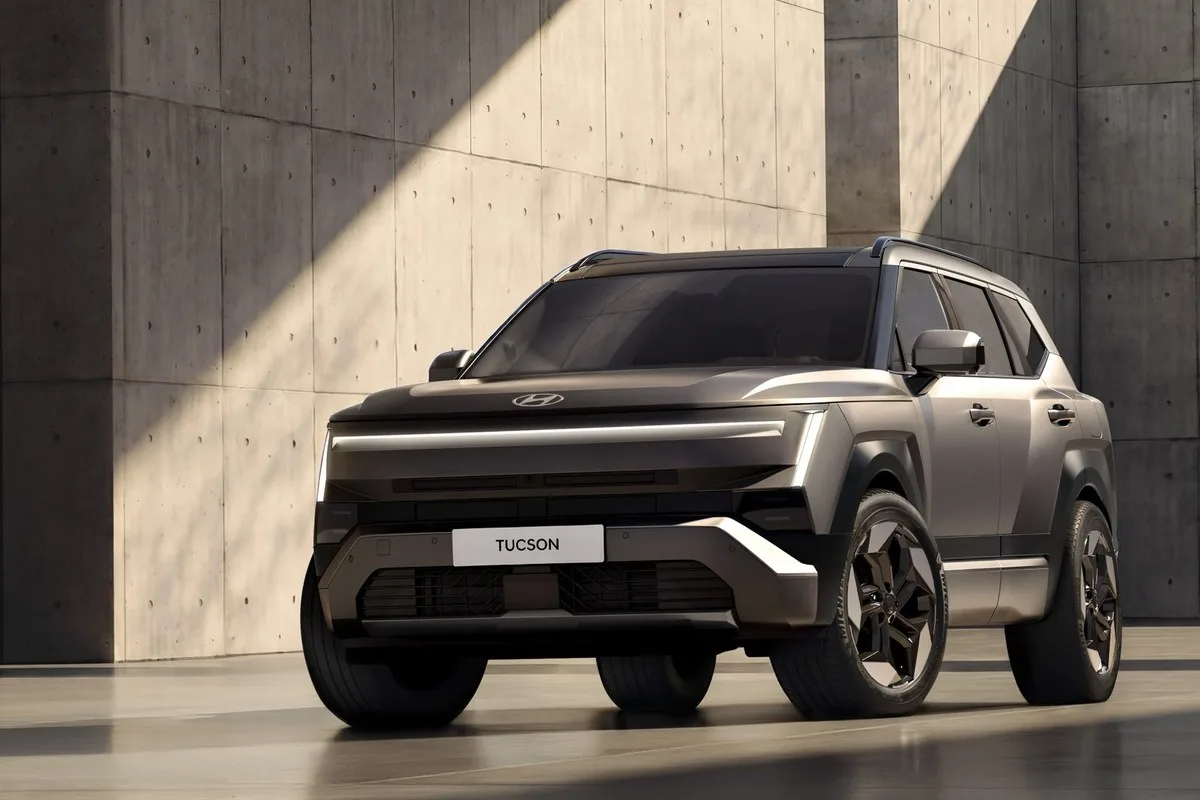
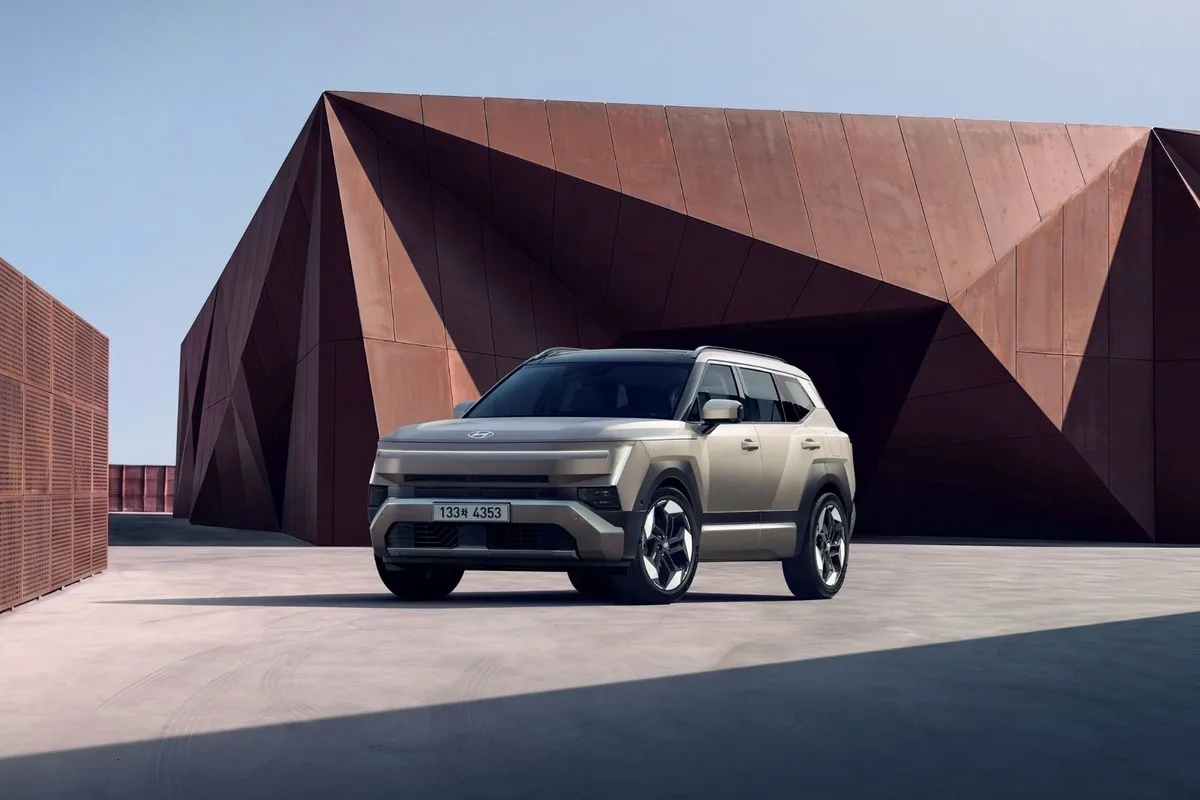


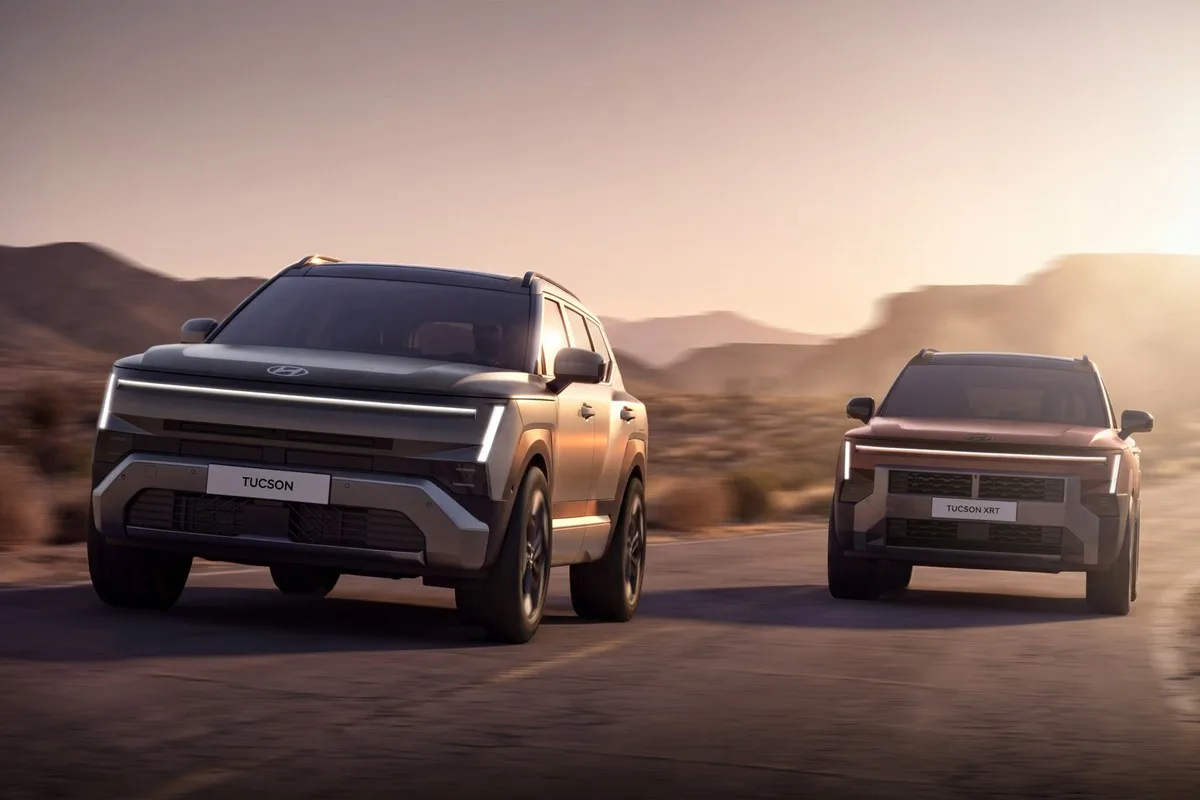


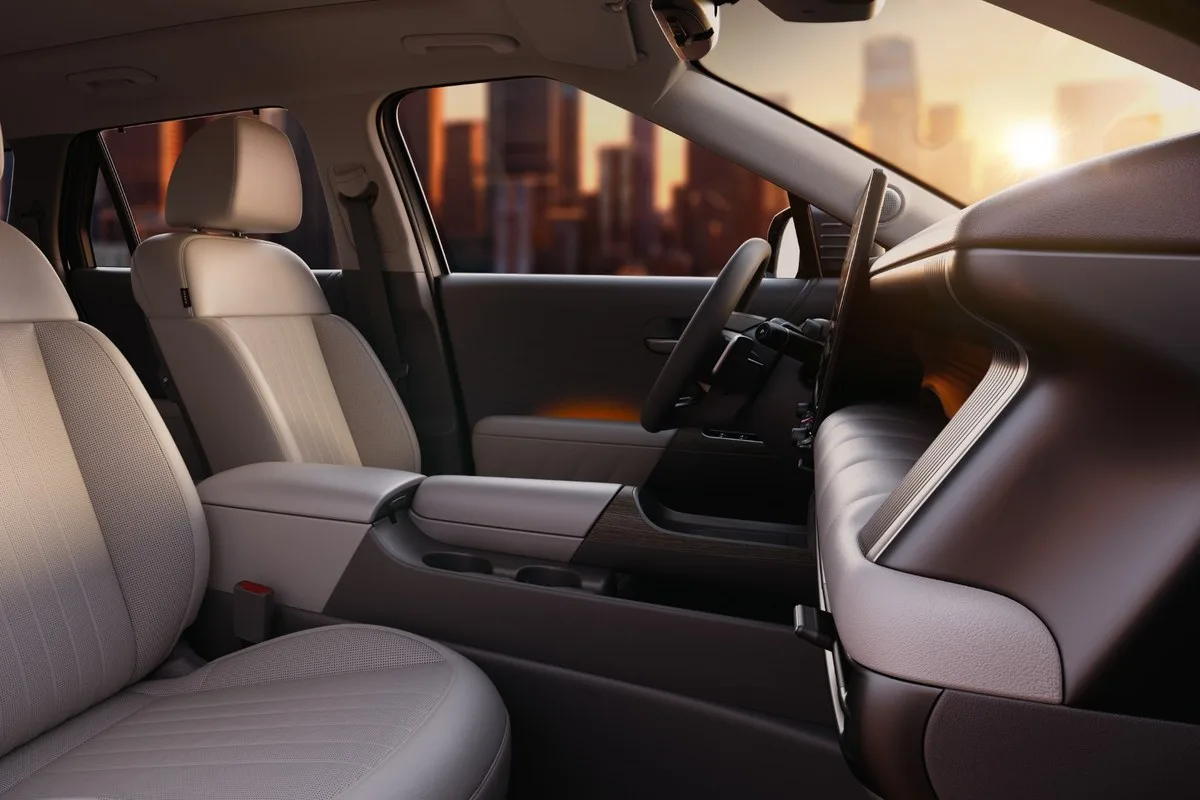
ABOVE: Above, the all-new Hyundai Tucson and Tucson XRT, then the cabin
China Gives You More for Tucson Money
The hybrid-only line-up puts the Tucson up against Toyota’s RAV4, which recently copped a price rise, and the Honda CR-V e:HEV, but the stiffer competition comes from China. The current Tucson Hybrid costs $48,350 to $59,850 plus on-roads, and the new one won’t be cheaper.
Chinese brands fill that price band with plug-in hybrids and all-wheel drive. Haval’s H7 Vanta launched at $43,990 drive-away with heated and ventilated leather seats and a panoramic glass roof as standard.
Further up, the IM6 Performance we drove has four-wheel steering with a crab-walk mode, air suspension, heated, cooled and massaging front seats and a 20-speaker stereo for $80,990 drive-away. Denza’s B8 has a fridge, freezer and oven warmer you can reach from the front or second row.
Hyundai hasn’t released prices or a full equipment list for the new Tucson. Four-wheel steering, air suspension and a fridge don’t appear anywhere in its release.
| Model | Price | Power | AWD | Plug-in hybrid |
|---|---|---|---|---|
| Toyota RAV4 Cruiser Hybrid AWD | $60,340 plus on-roads | 143kW | Yes | No |
| Kia Sportage GT-Line Hybrid | $60,370 plus on-roads | 173kW/367Nm | Yes | No |
| Honda CR-V e:HEV RS | $64,400 drive-away | 135kW/335Nm | Yes | No |
| Nissan X-Trail e-Power e-4ORCE | $48,915 to $58,215 plus on-roads | 157kW | Yes | No |
| Mitsubishi Outlander PHEV | $58,990 to $74,490 plus on-roads | 221kW | Yes | Yes |
| Subaru Forester AWD Hybrid | $46,990 drive-away | 145kW | Yes | No |
| BYD Sealion 6 Premium | $57,642 drive-away | 238kW | Yes | Yes |
| GWM Haval H6 Ultra PHEV AWD | $50,990 drive-away | 268kW/760Nm | Yes | Yes |
| GWM Tank 300 Hi4-T Ultra | $61,990 drive-away | 300kW/750Nm | 4WD | Yes |
| Jaecoo J7 SHS Summit AWD | $47,990 drive-away | 260kW/490Nm | Yes | Yes |
| Geely Starray EM-i Inspire AWD | $44,990 plus on-roads | 220kW/412Nm | Yes | Yes |
| Denza B5 | $74,990 plus on-roads | 400kW/760Nm | Yes | Yes |
| Model | Price | Power | AWD |
|---|---|---|---|
| Geely EX5 Inspire | $45,990 plus on-roads | 160kW/320Nm | No |
| MG S5 EV Essence 62 | $46,990 drive-away | 150kW/350Nm | No |
| BYD Atto 3 Premium | $46,990 plus on-roads | 230kW/380Nm | No |
| Leapmotor C10 Design Long Range | $50,990 drive-away | 220kW | No |
| Leapmotor C10 AWD Sports+ | $53,888 drive-away | 440kW/720Nm | Yes |
| BYD Sealion 7 Premium | $54,990 plus on-roads | 230kW/380Nm | No |
| Kia EV5 Air | $56,770 plus on-roads | 160kW | No |
| Tesla Model Y RWD | $58,900 plus on-roads | Not published by Tesla | No |
| BYD Sealion 7 Performance | $63,990 plus on-roads | 390kW/690Nm | Yes |
| Tesla Model Y Long Range AWD | $68,900 plus on-roads | Not published by Tesla | Yes |
Hyundai Tucson Hybrid gets bigger in every direction
Australia takes the long-wheelbase car, built in Korea and the US. The short-wheelbase version is for Europe. The long-wheelbase body measures 4,700mm long, 60mm more than before, and it’s 40mm wider at 1,905mm and 20mm taller at 1,685mm. The wheelbase grows 30mm to 2,785mm.
The doors now open to 83 degrees, up from 73, which makes loading a child seat or a grandparent easier. Rear legroom is 1,064mm and cargo space is 1,067L on the SAE measure Hyundai quotes for Korea. Ground clearance is 180mm on the standard car.
The Tucson Hybrid pairs a 1.6-litre turbo petrol engine with 2 electric motors, a 13kW P1 unit and a 47.7kW P2 unit, fed by a 1.49kWh battery through a 6-speed automatic. Korean figures put combined output at 174-180kW/380Nm. The US targets of 42mpg and 0-60mph in 8.5 seconds are American numbers, and Australian fuel and acceleration figures haven’t been released.
HEV Stay Mode keeps the air conditioning, heating and audio going with the engine off, handy while you wait outside school. E-Traction, fitted only to the hybrid, trims torque to the wheels in corners to cut wheel slip.
The Cabin, its Screens, AI and a tasteful column shifter
Hyundai’s Pleos Connect infotainment runs on Android Automotive, with either a 17-inch or 12.9-inch touchscreen and a 9.9-inch slim display above the steering column. It takes over-the-air updates and comes with Gleo AI, a voice assistant designed to understand plain conversation. Hyundai’s own example is asking it to find a hiking trailhead with parking within 30 minutes.
The gear selector moves to a stalk on the steering column, which frees up the console. Hyundai kept physical buttons for the climate and audio controls below the centre screen. Available Micro Pixel Lighting uses 25,600 individual LED pixels to shape the headlight beam.
The XRT grade is confirmed here, with extra black cladding, bolder bumpers and a skid-plate look. The tougher XRT PRO stays in North America, unlike the Palisade XRT Pro, which is sold here. The Tucson also gets Hyundai’s first Smart Terrain Assist, which reads traction and slip and shows a green, orange or red stuck score on the screen. A sport-inspired version debuts at the Paris Motor Show on 12 October.
Hyundai’s CEO José Muñoz called it the best Tucson Hyundai has built, and said it opens a run of more than 100 new and refreshed Hyundai models globally by 2030.
The Tucson launches in Korea later this year, with North America, Europe and other markets to follow in 2027. Prices and further specification details are to follow. The Tucson went on sale in 2004, and global sales now exceed 11.1 million.
Hyundai Tucson Hybrid
| Spec | Detail |
|---|---|
| Australian launch | Mid-2027 |
| Price | To follow |
| Powertrain | 1.6-litre turbo petrol hybrid, 6-speed automatic |
| Combined power/torque | 174-180kW/380Nm (Korean figures) |
| Electric motors | P1 13kW, P2 47.7kW |
| Hybrid battery | 1.49kWh |
| Length | 4,700mm (+60mm) |
| Width | 1,905mm (+40mm) |
| Height | 1,685mm (+20mm) |
| Wheelbase | 2,785mm (+30mm) |
| Ground clearance | 180mm |
| Wheels | 17 to 20-inch |
| Cargo | 1,067L (SAE) |
| Screens | 17-inch or 12.9-inch touchscreen, 9.9-inch slim display |
| Door opening | 83 degrees (was 73) |
| Towing | Australian figure to follow |
| Safety | 5-star ANCAP target |
| Grades confirmed | XRT among them |
More Hyundai Stories
- 2027 Hyundai Staria Load Electric Tows What the Hybrid Won’t
- Hyundai Palisade XRT Pro Wants $3,400 to Drop the Hybrid
- Hyundai Australia Turns 40 After 2.2 Million Cars Sold

Alan Zurvas is the founder and editor of Gay Car Boys, Australia's leading LGBTQI+ automotive publication. Before launching GCB in 2008, Alan's automotive writing was published in SameSame.com.au and the Star Observer. With over 16 years of hands-on car reviewing experience, Alan brings an honest, irreverent voice to every review — championing value and innovation over brand loyalty.
Leave a Reply