Audi A2 e-tron can power appliances off its battery. With a compatible bidirectional DC wallbox, it can power the house as well.
It’s Audi‘s first all-electric entry model in the compact class. Audi CEO Gernot Döllner said it was developed “with a clear focus on Europe” when the car made its debut in Paris.
Production is in Ingolstadt, with orders open in Europe but no word on Australian models so far. Audi is part of the Volkswagen Group, a brand which is painfully restructuring around EVs.
Powering Appliances and the House
For V2L, an adapter plugs into the AC charging socket to power external devices, with a second 230V outlet in the boot.
V2H needs that wallbox, and Audi’s diagram shows it connected straight to the car’s CCS socket, with the high-voltage battery acting as a buffer store for the household. Audi calls the car a mobile energy storage system.
Feeding power back to the public grid, V2G, is promised for a sometime in the future. It depends on market regulations, compatible charging hardware, and a matching electricity tariff. Everything has to come together for the blossoming technology, but moreover, the blossoming idea. It is a hard sell for some and for others a home run.
Above: Geely EX5 Inspire Review
#GeelyEX5, #Geely, #EVReview, #TeslaModelY, #GayCarBoys

Help Support Gay Car Boys Subscribe to our Youtube Channel by SMASHING THE BUTTON ABOVE


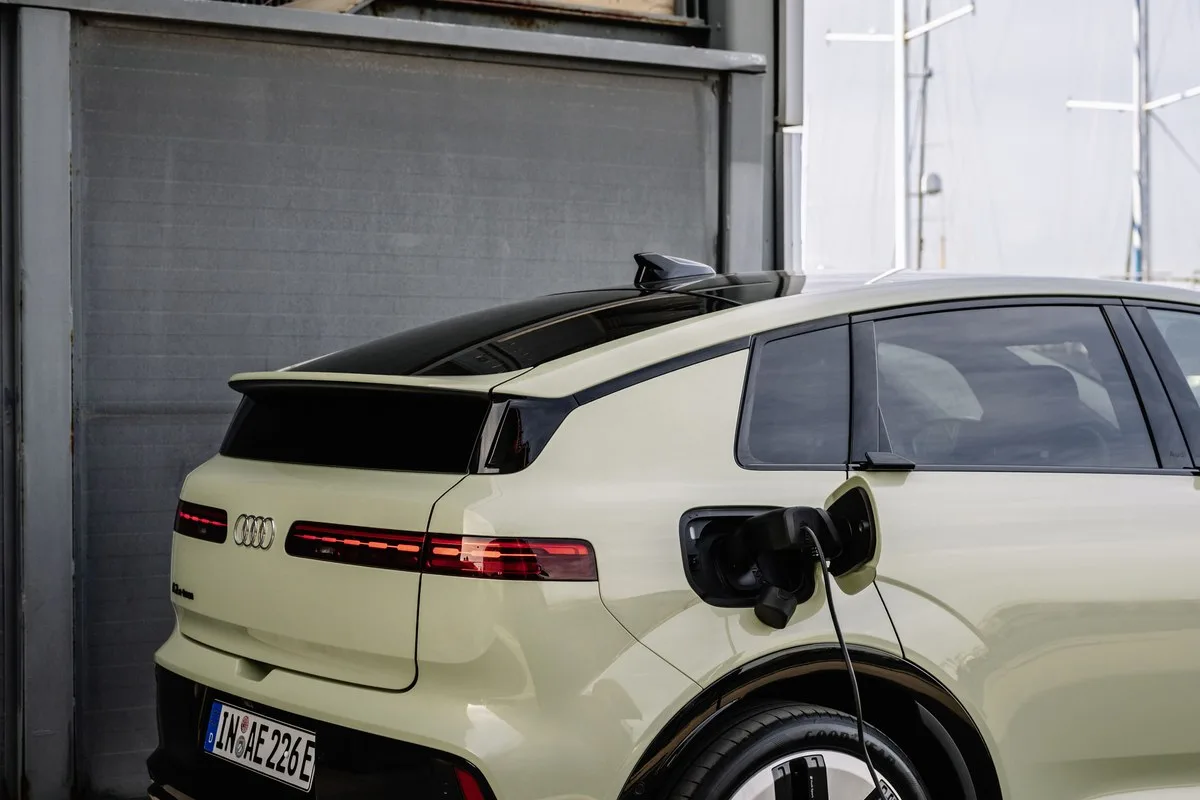

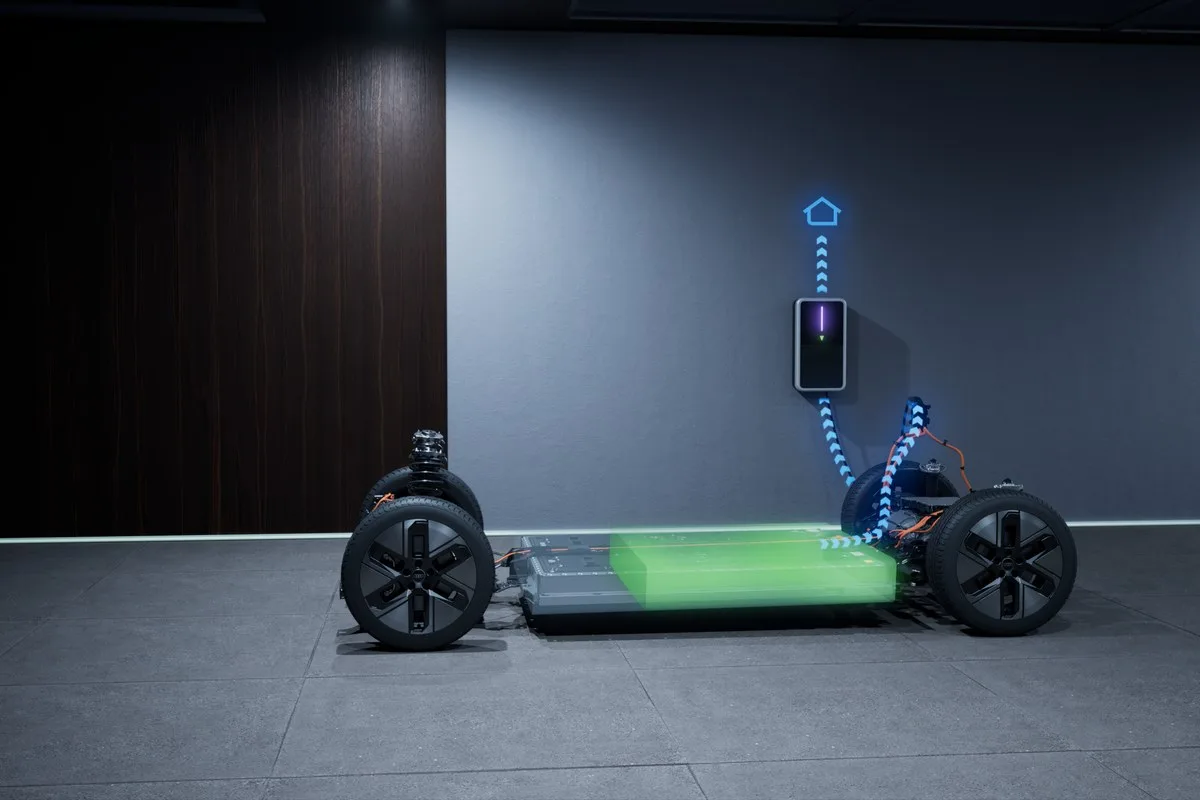
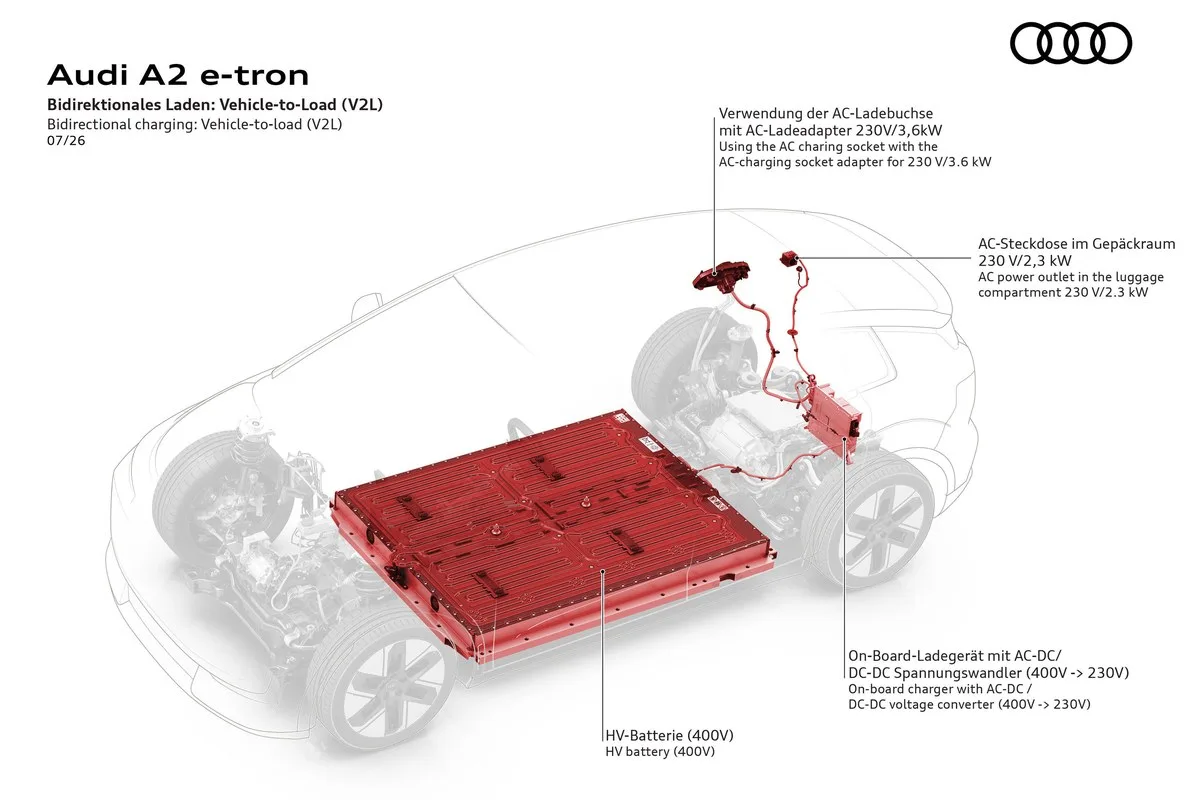
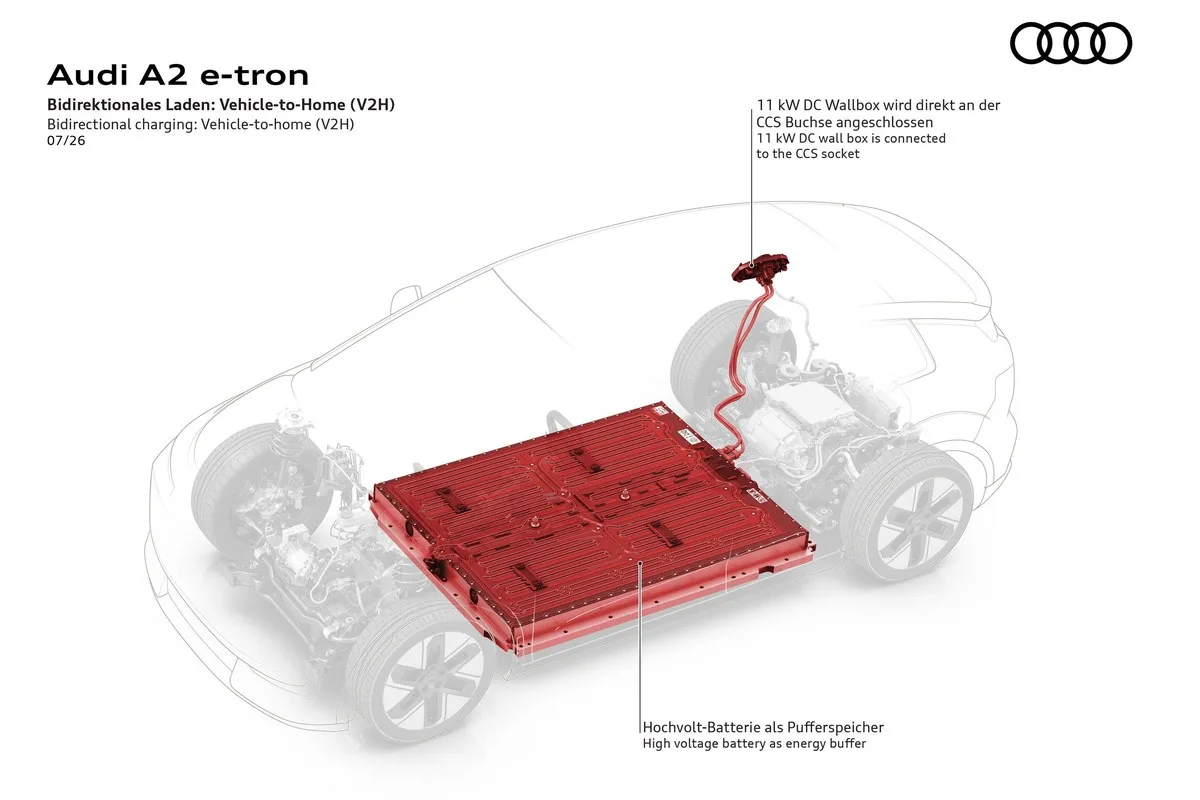
ABOVE: Audi A2 e-tron bidirectional charging
Batteries and Charging
Two of the 3 batteries use LFP cells in a cell-to-pack design, with the cells going straight into the pack for more energy in less space. The largest battery is NMC.
LFP cells have a flat voltage curve, which makes state of charge and battery ageing difficult to read. Audi uses an adapted algorithm in the battery management controller to read them. These results feed the range figure and the charging and operating strategies with far ranging reach for future networks.
Thermal management coordinates battery temperature and current flow with how full the battery is while charging and when discharging.
OCDC 2.0 combines the on-board charger and the DC/DC converter in a single unit. The second-generation unit uses more MOSFETs and adapted AC output management, and bespoke software modifcations.
Audi’s 10-80% DC times apply under defined test conditions, but real times depend on battery temperature, charge level and the charger used.
Döllner called the A2 e-tron the most efficient Audi ever built. The 140kW model’s best figure is 12.8kWh/100km WLTP, from a body with a 0.24 drag coefficient. The 170kW model uses 15.7 to 13.9kWh/100km WLTP combined. A smaller usage number means a smaller battery, less cost, and less cost.
Audi A2 e-tron
| Spec | Detail |
|---|---|
| Batteries | 52kWh LFP, 61kWh LFP, 84kWh NMC |
| Battery voltage | 400V |
| Peak DC charging | 100kW to 183kW |
| 10-80% DC, 125kW with 52kWh | 24 minutes |
| 10-80% DC, 140kW with 61kWh | 26 minutes |
| 10-80% DC, 170kW with 84kWh | 29 minutes |
| 10-80% DC, 240kW with 84kWh | 29 minutes |
| V2L | 230V/3.6kW via AC charging socket adapter, 230V/2.3kW outlet in the boot |
| V2H | 11kW bidirectional DC wallbox via the CCS socket |
| V2G | Promised for a future date |
| Range | Up to 646km WLTP |
Above: 70mai A900 Dashcam + 4G Hardwire kit Unboxing and Review
#70maiA900, #70mai, #DashCam, #RedtigerF77, #GayCarBoys
More Audi Stories
- World-First Audi Spotify App Needs No Phone, Just A Data Plan
- 2027 Audi A6 allroad Goes Plug-in Hybrid From $127,900
- Audi A2 e-tron Debuts in Paris With 646km

Alan Zurvas is the founder and editor of Gay Car Boys, Australia's leading LGBTQI+ automotive publication. Before launching GCB in 2008, Alan's automotive writing was published in SameSame.com.au and the Star Observer. With over 16 years of hands-on car reviewing experience, Alan brings an honest, irreverent voice to every review — championing value and innovation over brand loyalty.
Leave a Reply