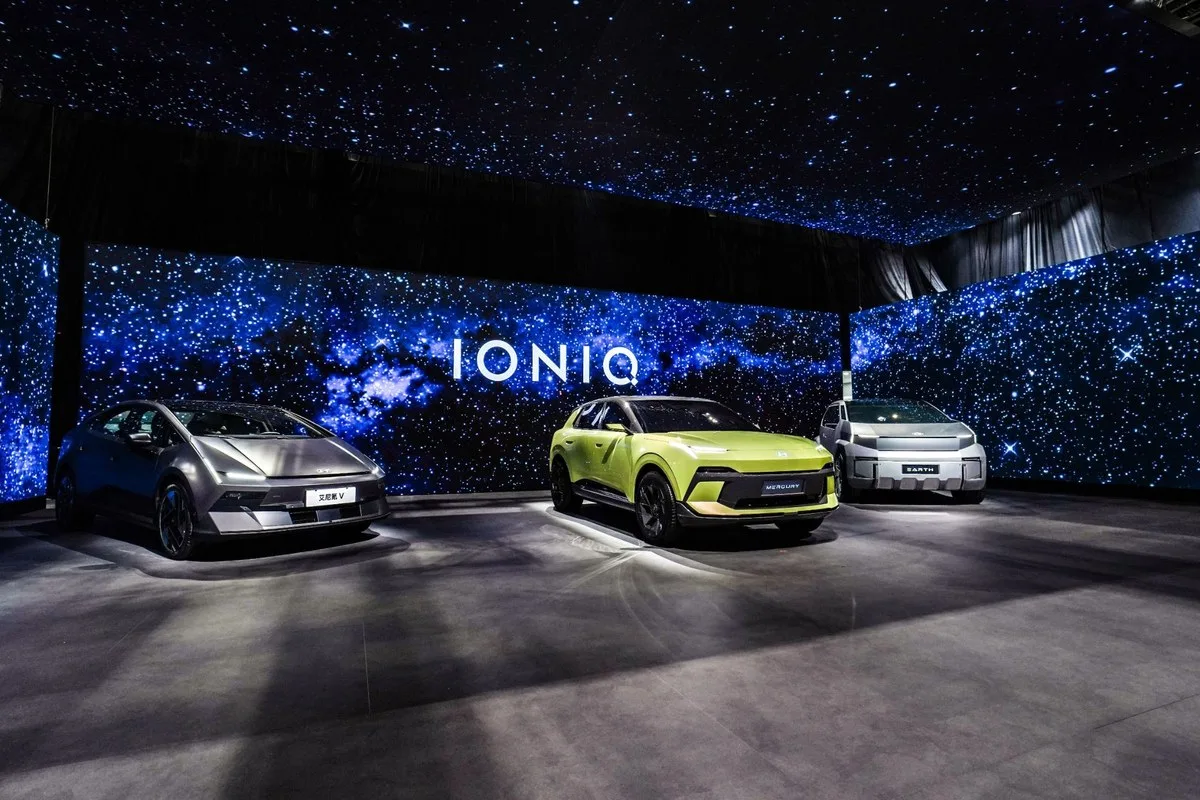
Hyundai has 2 outrageously handsome, Ioniq concepts for China at Auto Guangzhou. Hyundai Ioniq Mercury, a small SUV, and Earth, a mid-size SUV, are set for production by 2028.
For legacy carmakers, sashaying up to Chinese buddies is about the last real option left, and Hyundai is doing it via a 50/50 joint venture with BAIC called Beijing Hyundai. Like many legacy makers, its China deliveries are dropping off the perch. In this case falling 46.8% on this time last year, down to 6,610 in July. It plans 20 battery-electric and extended-range models there over 5 years and if these offerings signal a direction, the path might be a little more promising.
The show runs from November 27 through to December 6, 2026, giving Hyundai a chance to show the world a teaser of the future. Also on the stand is the new Palisade hybrid, Ioniq 5 N and Elantra N.
Mercury Opens the Ioniq Range
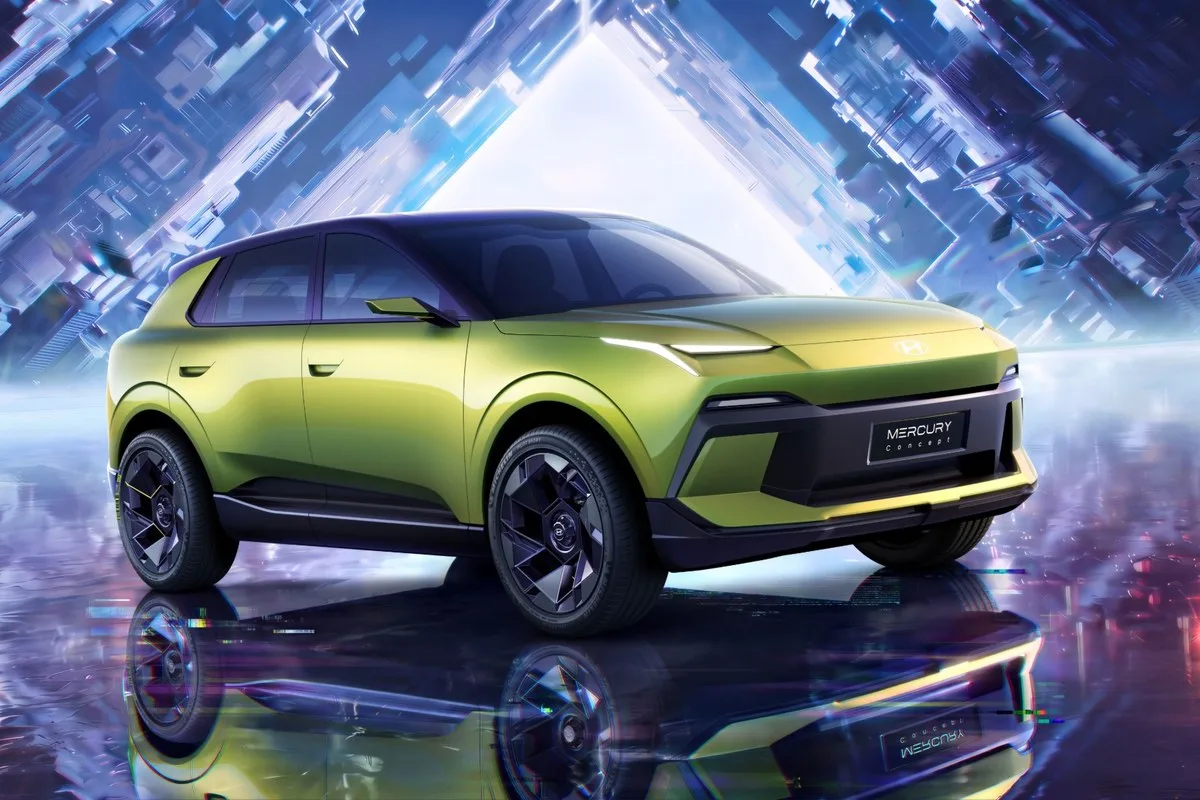
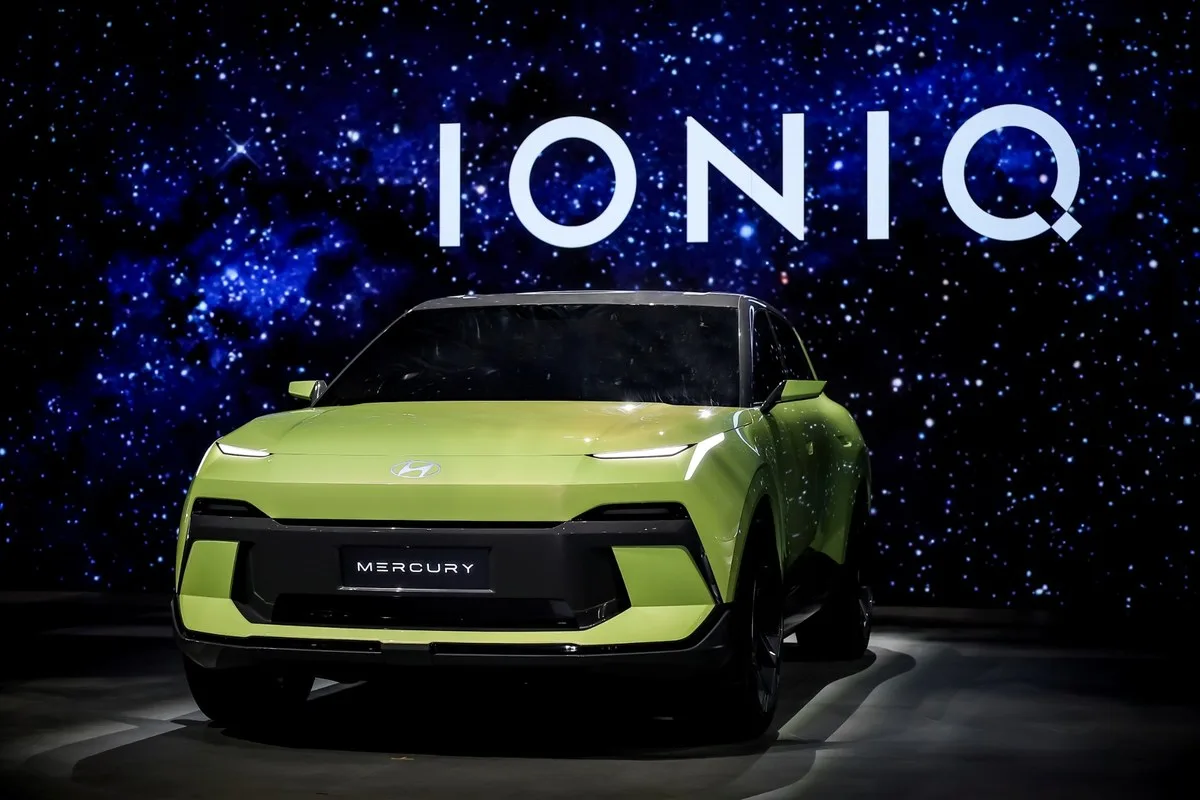
Mercury, a B-segment premium SUV built around city commuting, is the entry to Ioniq. It has a low shark nose, edge lighting that forms an “H”, a steeply raked windscreen and an integrated rear spoiler, polished off with a coat of Citrine Neon yellow-green paint. Hidden “M” emblems are tucked about the car as Easter eggs. It’s nice to see adventurous colours sneaking back into the automotive landscape, long a sea of ubiquitous beige and grey.
Hyundai names its China concepts after planets. Mercury follows Venus, shown in Beijing in April, and gets its sharp lines from the planet’s quick orbit.
Above: 2026 Mercedes-Benz CLA 200 Electric Video Review
#MercedesBenzCLA, #MercedesBenz, #EVReview, #TeslaModel3, #GayCarBoys

Help Support Gay Car Boys Subscribe to our Youtube Channel by SMASHING THE BUTTON ABOVE




ABOVE: Ioniq
Hyundai’s Chinese design and engineering team developed Mercury, which is built for China, but never say die. Its driver assistance is Zhuoyu L2++ and the cockpit uses an ByteDance’s Doubao AI model.
Answering many of the charging worries that still trouble shoppers, a battery-swap version is planned with CATL. If the production version, due in 2027, is anything like the concept, things are really looking up.
Earth Has an Off-Road Look
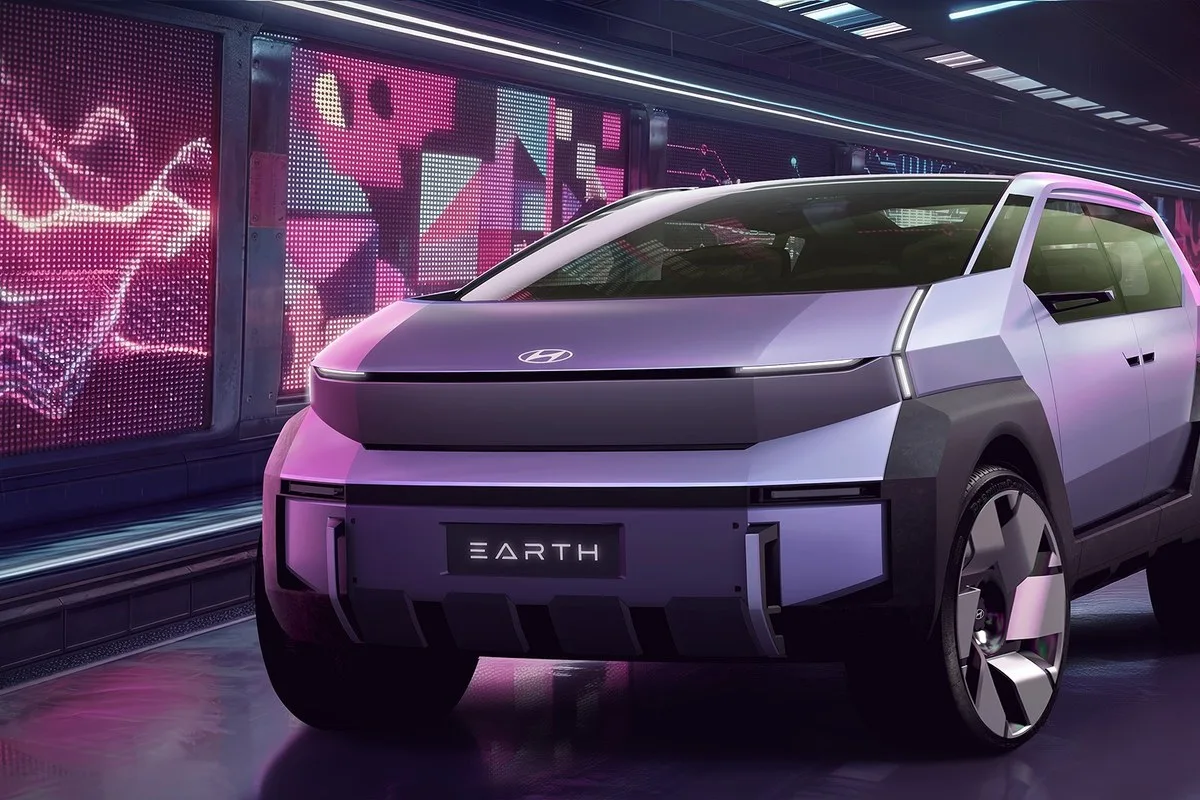
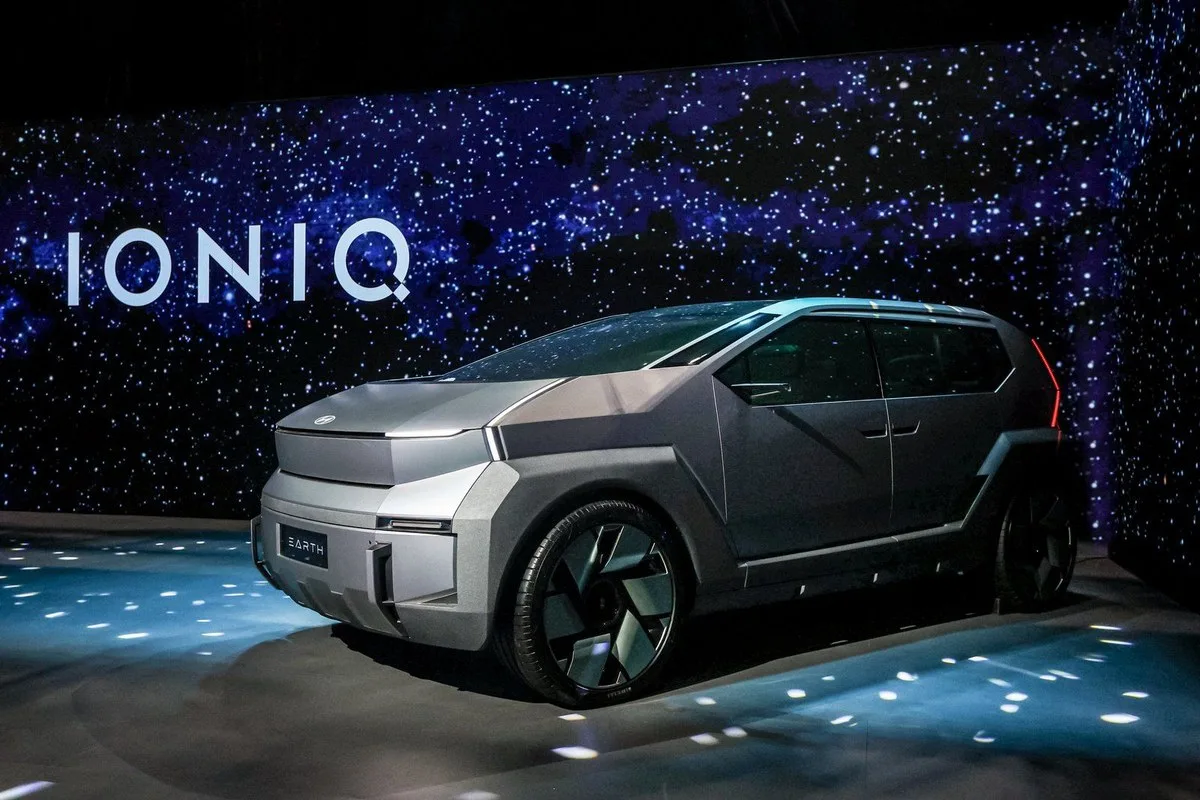
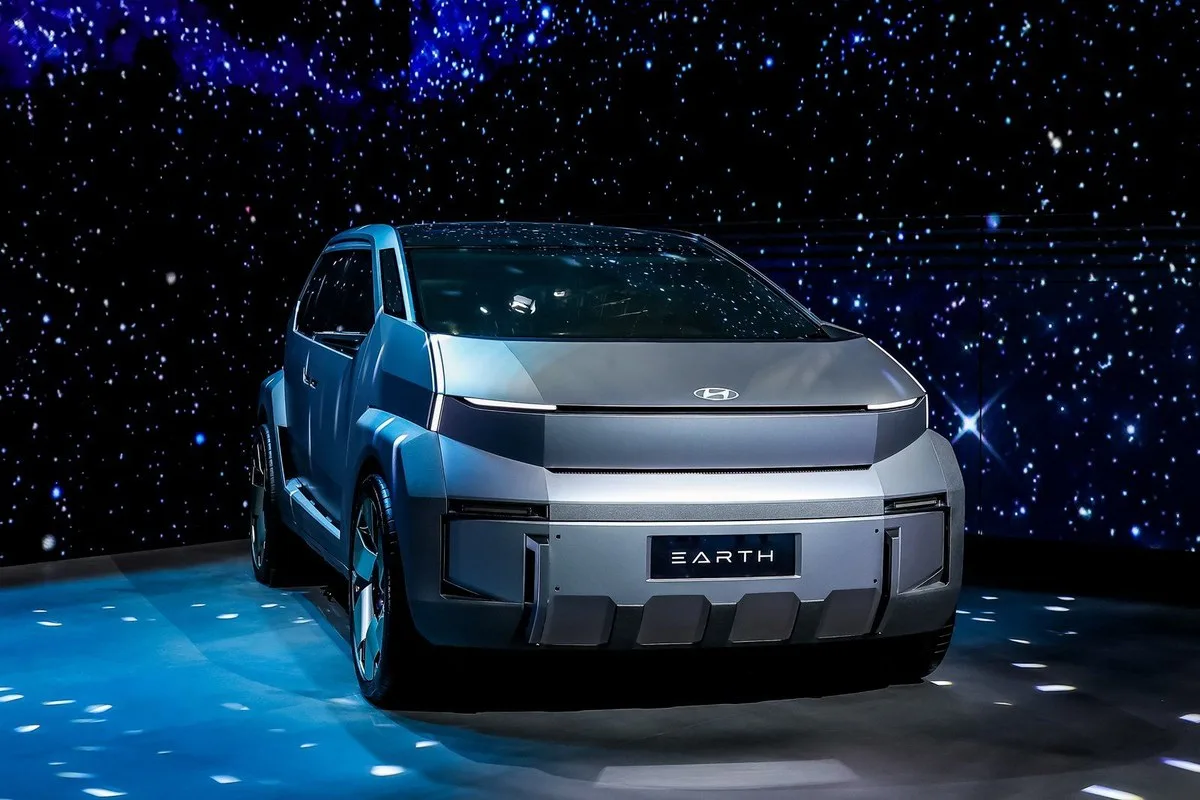
Earth is a mid-size electric SUV with a rugged-ish look and feel. Its rock-guard cladding, exposed bolts, crystalline character, and Aurora Shield finish make for a deliciously sexy action-man EV. It not all practical storage and frisky performance though. For no good reason, the lightweight glass roof has an illuminated “H” between integrated roof racks, and the rear-hinged coach doors feel integrated in the body moulding rather than merely portals of necessity.
For lovers of 60’s Sci-Fi, there is more than a hint of lunar explorer you might find on Moonbase Alpha.
The cabin gets the same Sci-Fi look and feel with “Air Hug” seats for passengers of all ages, foliage-inspired ambient lighting, and a stylised map of Beijing. Perhaps the latter is slightly less Sci-Fi but imagine that deftly changed for other markets? Imaginative design opens a world of lusty fun that’s been sadly missed, and is something that until recently, seemed unachievable in a world of belt tightening and bean counting.
Legacy Makers Now Build on Chinese Platforms
Ioniq V is another 60’s Sc-Fi creation from Hyundai’s China design centre. Hyundai styled it as an interstellar shuttle, down to the blade headlamps and star-track tail-lights. This one isn’t a concept though, it went on sale on the 29th of September as the first Ioniq developed in China for mass production. It’s well-priced at 109,900 yuan (about $25,000) but there’s a limited-time offer from 99,900 yuan (about $23,000). An extended-range Ioniq V follows in 2027 alongside Mercury. Earth goes into production in 2028, there there are 2 more new-energy models coming along in 2029.
Hyundai isn’t the first to do this. For decades, China made foreign car makers team up with a local company to build cars there. The foreign brand brought the designs and know-how, while the Chinese partner supplied the factory and learned the trade. Now the Chinese partners have the better EV tech, so the deal is running backwards, with foreign brands building on Chinese platforms and software. Some call it a joint venture in reverse.
Australia already gets 2 cars made the old way. Hyundai’s Elexio comes out of the Beijing Hyundai factory, but it uses a 400V version of E-GMP, the EV platform Hyundai designed in Korea. Kia’s EV5 is the same deal, with Korean engineering under a Chinese-built body. The new Ioniq models flip that around.
Volkswagen’s ID.UNYX 08 has a platform shared with Xpeng, which also helped develop the software for Volkswagen’s China EVs. Then there is Toyota’s bZ3X is built by GAC-Toyota. It sells for about US$15,000 (about $23,000) in China and was China’s best-selling joint-venture EV for 7 straight months.
Other examples include Audi. which set up a separate China-only brand with SAIC for the E5 Sportback on a jointly developed platform. Then there’s the Nissan’s N7 which came out of a partnership with Dongfeng.
Closer to home, Mazda’s CX-6e and 6e both come from its Changan joint venture, making the 6e the first China-built Mazda sold in Australia. Mazda pushed its first in-house EV back to 2029, so for now its electric cars are Changans. Stellantis went further, taking 21% of Leapmotor, plus 51% of Leapmotor International, the arm that sells the cars outside China. That’s why Stellantis sells the Leapmotor C10 and B10 in Australia.
Hyundai Ioniq V
| Spec | Detail |
|---|---|
| Maker | Beijing Hyundai (Hyundai and BAIC 50/50) |
| Length | 4,900mm |
| Width | 1,890mm |
| Height | 1,470mm |
| Wheelbase | 2,900mm |
| Battery | CATL |
| Range (CLTC) | 520 to 650km |
| Driver assistance | Momenta |
| Screen | 27-inch 4K, plus head-up display |
| Chip | Qualcomm Snapdragon 8295 |
| Features | Frameless doors, four-zone voice control, Dolby Atmos, pet and motion-sickness modes |
Above: 70mai A900 Dashcam + 4G Hardwire kit Unboxing and Review
#70maiA900, #70mai, #DashCam, #RedtigerF77, #GayCarBoys
More Hyundai Stories
- 2027 Hyundai i30 Sedan Revealed With Hybrid-Only Power
- 2026 Hyundai i30 Sedan N Monochrome Limited to 200 Cars
- Hyundai Tucson Hybrid Goes Square and Looks Like a Kia

Alan Zurvas is the founder and editor of Gay Car Boys, Australia's leading LGBTQI+ automotive publication. Before launching GCB in 2008, Alan's automotive writing was published in SameSame.com.au and the Star Observer. With over 16 years of hands-on car reviewing experience, Alan brings an honest, irreverent voice to every review — championing value and innovation over brand loyalty.
Leave a Reply