Britain’s EV market has just had its best month ever, and still managed to look faintly inadequate. That takes talent. March 2026 delivered 380,627 new registrations, up 6.6%, and battery electric volume hit a record 86,120. Lovely. Splendid. Someone somewhere is already drafting the ministerial self-congratulation.
Then reality taps on the window with a ruler. BEVs took 22.6% of the market in March and 22.4% year to date. The 2026 ZEV mandate target is 33%. So yes, the UK is posting record EV numbers, but it is still lagging its own official ambition by a margin wide enough to drive a bus through, preferably electric, if the charging works.
That is the real point of this release. This is not a victory lap. It is a celebration with a limp. Carmakers are discounting heavily, the government has added support, and the market is still not moving at the pace policymakers imagined when they were drawing arrows on PowerPoint slides.
Above: Geely Starray and Which Driveline Is Best for You
#GeelyStarray #PHEVReview #GayCarBoys #CarNews

Help Support Gay Car Boys Subscribe to our Youtube Channel by SMASHING THE BUTTON ABOVE


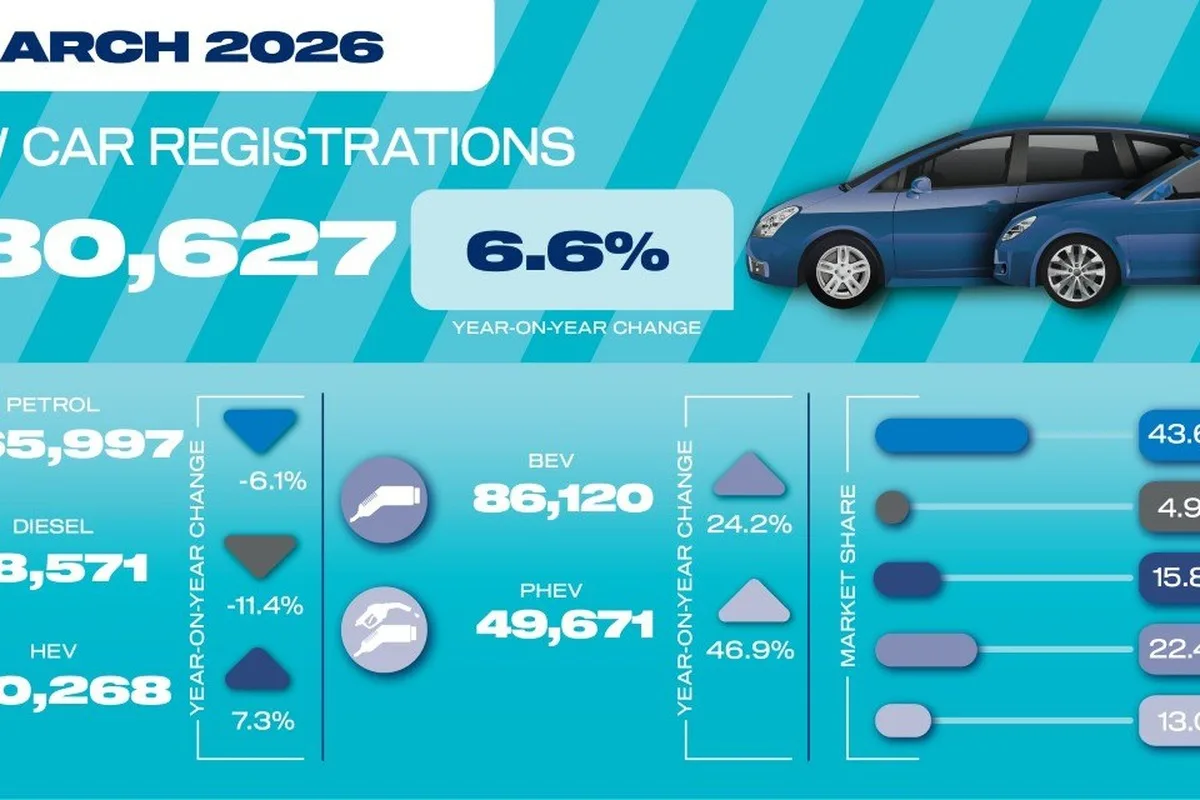

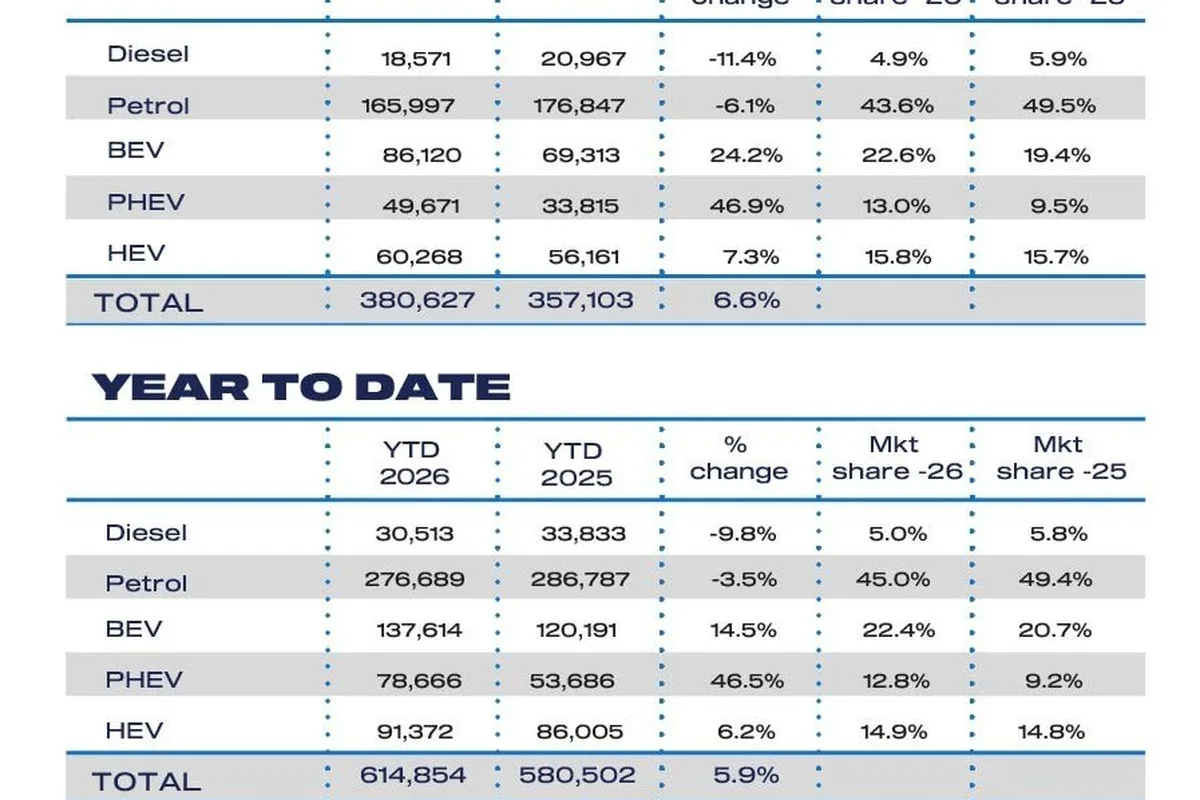
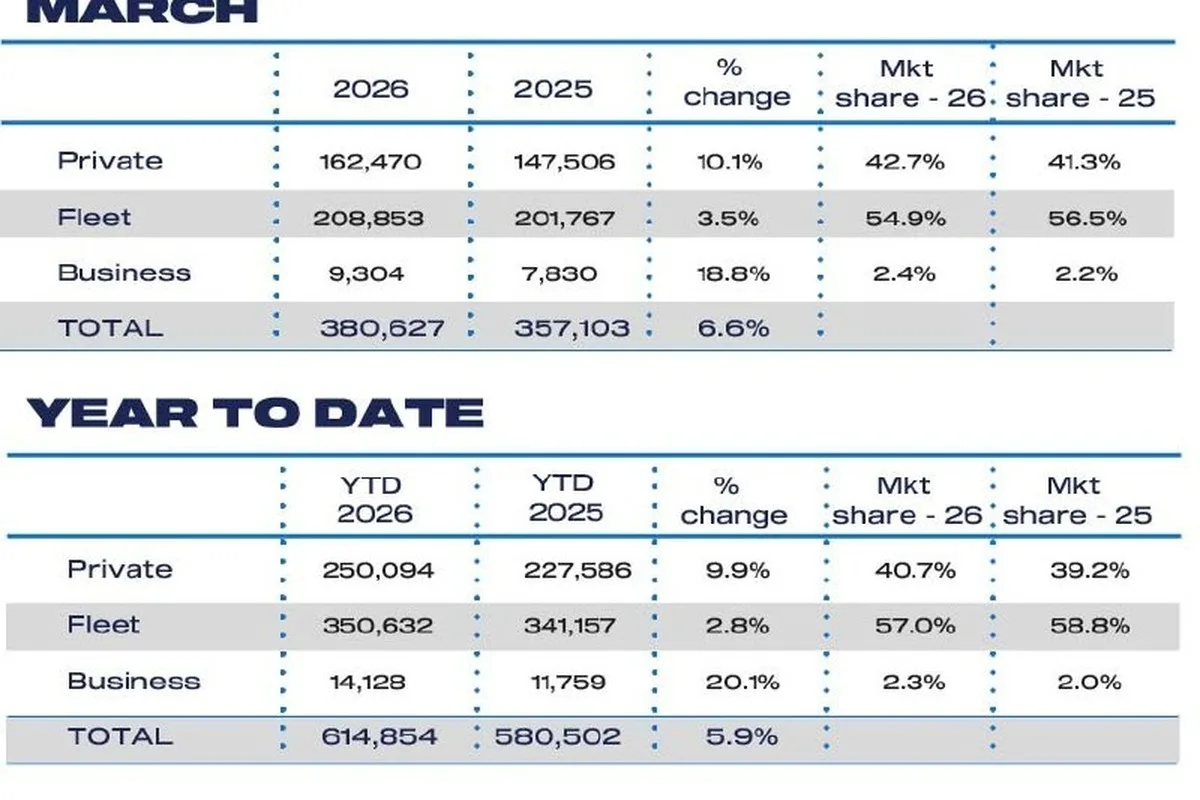

ABOVE: SMMT’s March 2026 charts show the UK’s record EV month, the powertrain split, and the shape of the wider market.
The March numbers
Private demand rose 10.1% to 162,470, fleet increased 3.5% to 208,853, and the smaller business segment climbed 18.8% to 9,304. Plug-in hybrids jumped 46.9% to 49,671, hybrids rose 7.3% to 60,268, and petrol plus diesel kept shrinking in the way old habits do when they know the future is peering over the fence. The topline is strong. The composition is changing. But the pace is still not what the rulebook demands.
Why the industry is getting twitchy
The SMMT’s complaint is not subtle. Battery costs are reportedly more than 30% above expectations, industrial energy is around 80% above 2021 levels, and public charging can cost more than 140% more than it did five years ago.
In Britain, even the bowser is having a breakdown. Super unleaded 98 RON is sitting at about 174.2 pence per litre, or roughly A$3.33, while diesel is nearer 189.7 pence, about A$3.63 in our money. Suddenly the local servo feels less like daylight robbery and more like a minor administrative inconvenience. If the Iran crisis keeps leaning on energy markets, that little horror show may yet get worse.
Then the US-created Iran crisis arrives to make everything even more rancid. The industry’s argument is that mandate settings were built for a calmer, cheaper world than the one buyers and manufacturers are now blindly stumbling through. There is some truth in that, even if trade groups are never exactly shy about a lobbying opportunity.
One might have hoped the world learnt something after Covid nearly collapsed civilisation, at least for the middle classes, but here we are again. The same people making the same mistakes, trying to convince the poor that the middle class is the issue. It is the ultra-rich making all the profit, and as they did from Covid, they’ll also profit from the war, and the EV take-up.
The awkward comparison
This is where poor old Blighty starts to look like a pimply teen caught between ambition and reality. China continues to treat EVs as normal life. Europe at large still produces more EV heft simply through market scale, breadth, and the fact that several countries have managed to build stronger consumer momentum. The United States remains a bit of a late arvo soap opera, part policy, part culture war, part Tesla fatigue. Mostly, the North American basket case has nukes and a bad case of time warp, caught firmly in the 1950’s. Britain, by contrast, has record EV volume and yet still finds itself being told, correctly, that record volume is not enough. That is rather the problem with targets, they are unmoved by good intentions.
None of that alters the bigger truth. If we do not transition, there will not be any comfortable little middle-class arguments left to have. No tidy rows about who paid too much for a charger, or whose monthly payment went up, because climate collapse does not pause for affordability concerns. The transition is necessary. The obscenity is that the people with the least power are always the ones told to pay for it first.
The takeaway
Like the figures for Australia we talked about here, March was unquestionably strong. Best month overall since 2019, best EV month on record, and a healthy retail lift to boot. But it is also a warning that the transition is becoming more expensive, more politically awkward, and more dependent on incentives than anyone would like. Incentives I hear you say? Yes, just like the tax-dodging energy companies get. While oil moguls have PR spivs on speed dial, EVs are still at the whim man-babies for whom infinite billions are still insufficient to sustain their bottomless greed. Britain’s EV market is growing, yes, but the mandate is still striding off ahead in expensive shoes, expecting everyone else to keep pace.
Perhaps humanity will surprise me, but I hate most people and I suspect they will only succeed in living up to my low expectations.
Britain can keep pretending this is a simple motoring transition if it likes, but it plainly is not. EV uptake is bound up in energy costs, wages, housing pressure, and whether the middle classes can still absorb one more expensive moral obligation disguised as progress. The ultra-rich will make money regardless, as they did during Covid, and as they will from war, energy shocks, and the forced march to electrification. Everyone else is left arguing over the scraps, while being told they are the problem. That is not a car story. It is a class story with number plates.
More Stories
- FCAI Paid Lobbyists Face Reality as March EV Sales Figures Explode
- 2026 GAC Aion UT Price Australia, $30,990 Drive-Away for the First 600 Buyers
- 2026 Subaru Uncharted, Japan’s Answer to Chinese EVs Arrives Three Years Late
Help Support Gay Car Boys Subscribe to our Youtube Channel

Alan Zurvas is the founder and editor of Gay Car Boys, Australia's leading LGBTQI+ automotive publication. Before launching GCB in 2008, Alan's automotive writing was published in SameSame.com.au and the Star Observer. With over 16 years of hands-on car reviewing experience, Alan brings an honest, irreverent voice to every review — championing value and innovation over brand loyalty.
Leave a Reply