
This is my first ever drive of an Eclipse Cross. I admit to a not inconsiderable amount of trepidation at the thought of driving a car to whom I had a less than a lukewarm attraction.
NOTE: We mistakenly referred to the CVT in other Eclipse models tested the same day, as also being in the PHEV. the PHEV has a 1-speed “automatic”.
Trepidation managed, I collected the keys for my first look.
The first thing to note is Eclipse Cross has had a bit of a neaten up. The catastrophic rump with its ghastly 2-piece-glass hatch has been banished to the automotive naughty step. In its place is a neat, conventional hatch, clasped gently by a couple of large tri-foil LED tail lights. Our Exceed is the top of the 3-tier PHEV lineup, and there is a range of petrol-only models.
The front end is typically Mitsubishi, with a huge in-your-face grille flanked by LED DTRLs. The headlights are below, looking far more like fog lights. The side profile also takes some getting used to, and has had to find a way to work harmoniously with the redesigned face and rump. In a strange way, the extreme-wedge looks more at home now than it did when it first landed.
By way of comparison, we drove a petrol-only Eclipse to get an idea of just how brilliantly innovative PHEV technology is when standing side by side.
Brochure and Specifications:22MY Eclipse Cross Brochure
Above: This Week – Is the 2021 Mitsubishi Eclipse Cross PHEV Worth the Money?
Help Support Gay Car Boys Subscribe to our Youtube Channel
- Top GayCarBoys Stories:
- Sexy Men Drive 2021 Toyota Yaris Cross
- 10 Sexiest MotoGP Motorcycle Riders
- DON’T Drive YOUR CAR until you’ve Checked if your AIRBAG will KILL YOU
- 10 Hottest Racing Drivers
- Top 12 Best Gay Lesbian LGBTI Luxury Cars
- Top 10 Gay Lesbian LGBT Cars
- Top 10 Gay Lesbian LGBT Sports Cars
- Top 15 gay and lesbian LGBT SUVs
- Talented Twinks – Callum Ilott Virtually Races Arthur Leclerc
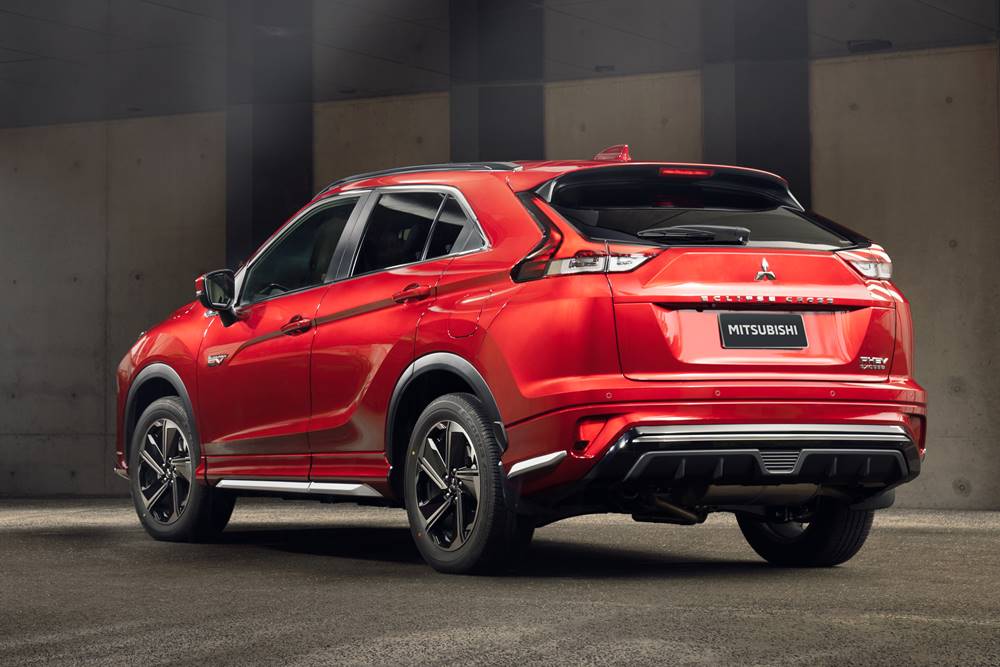
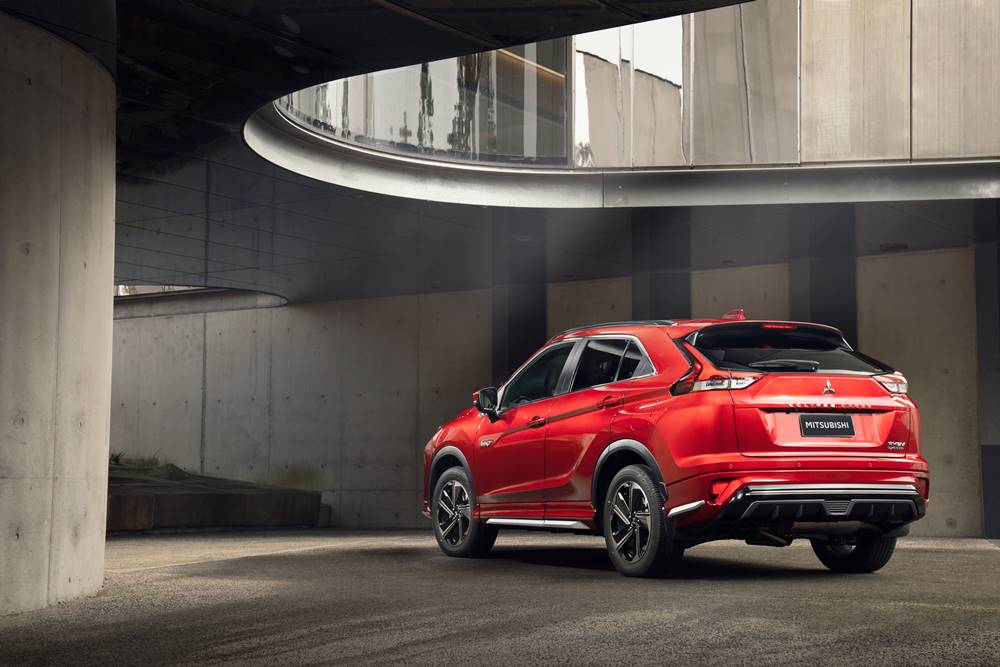
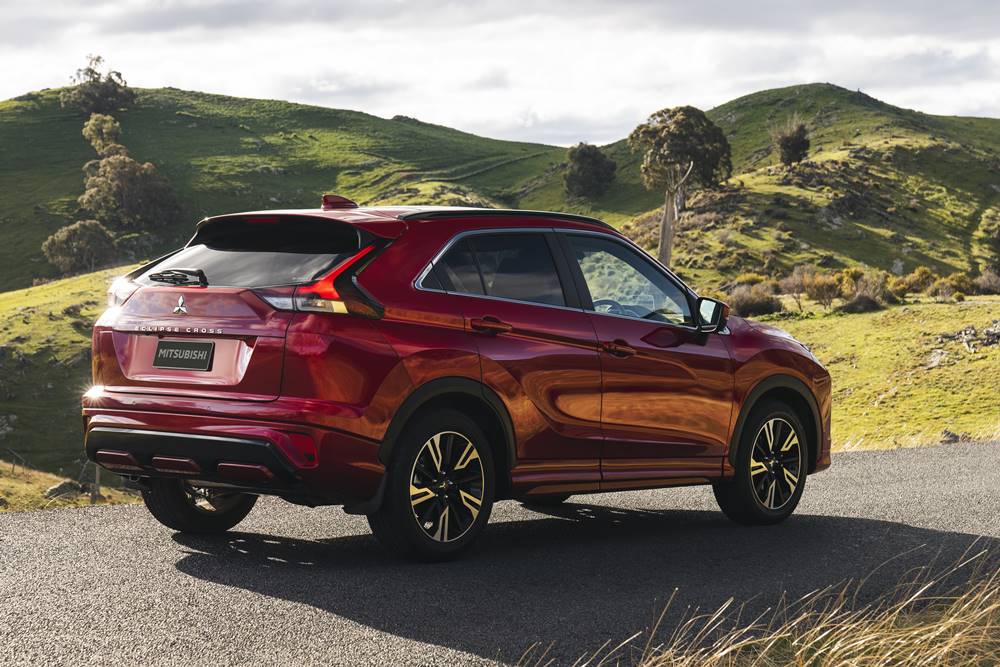
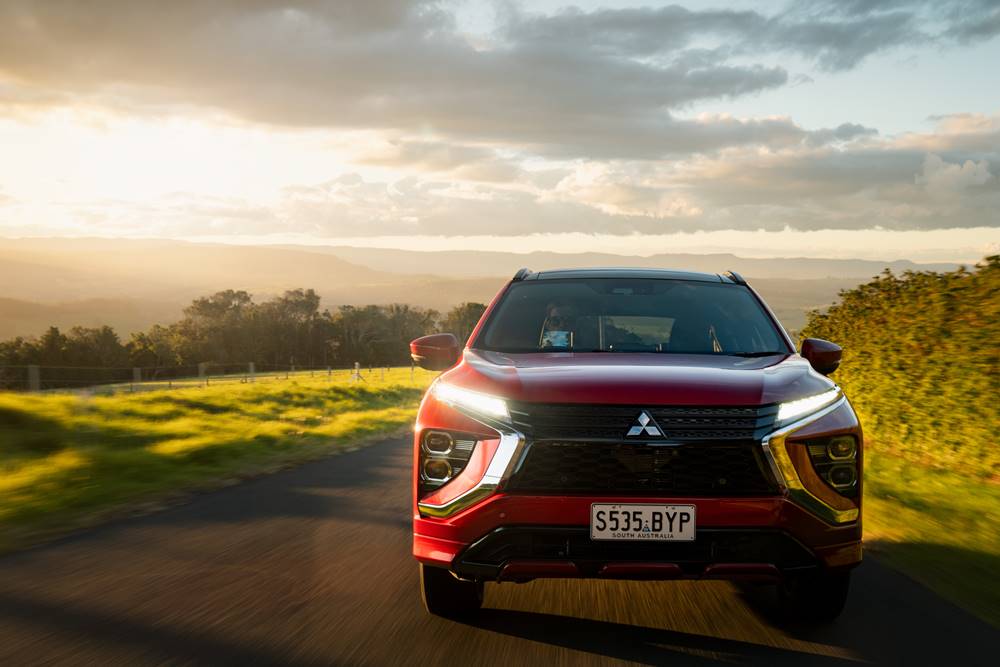

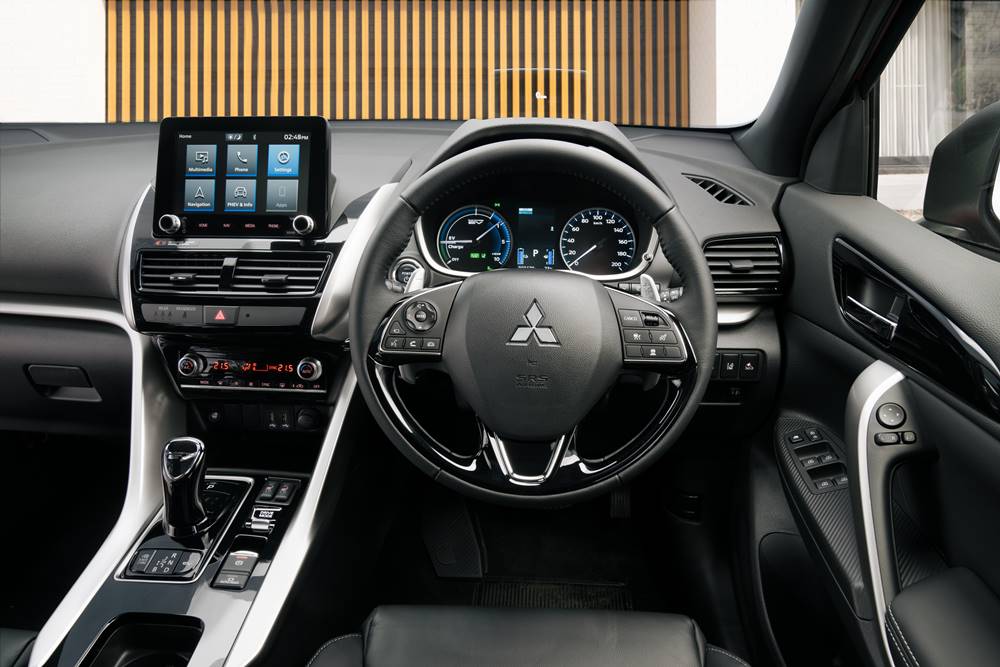
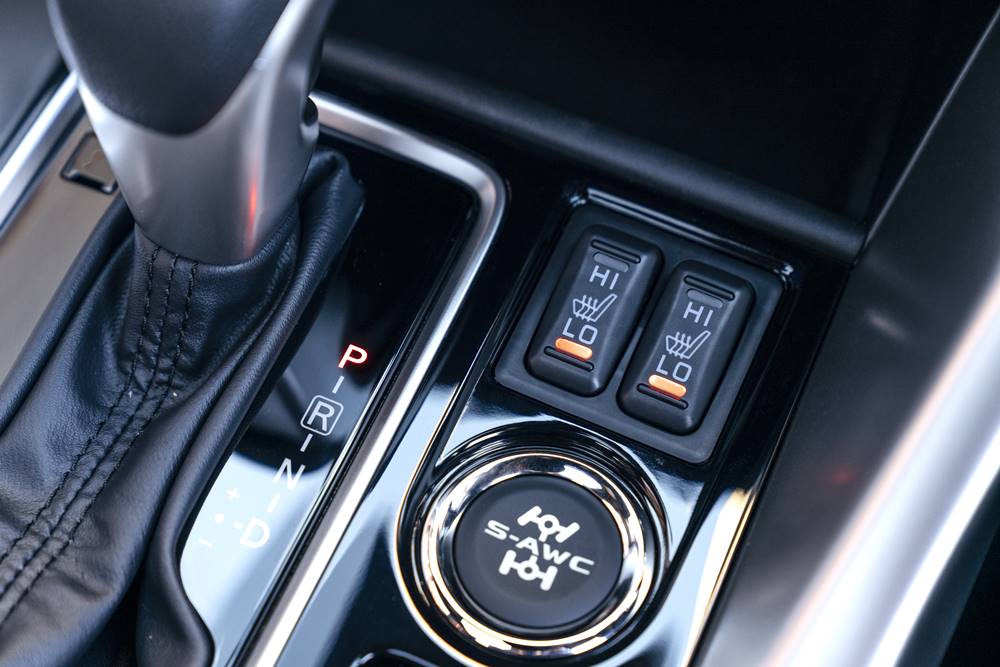


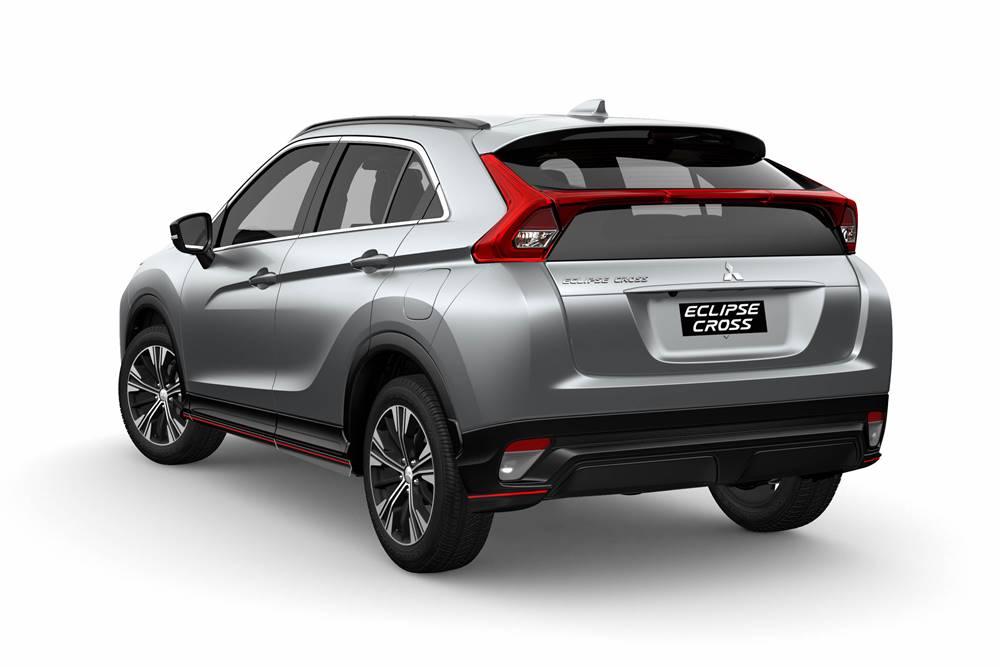
ABOVE: 2021 Mitsubishi Eclipse Cross PHEV (with old model bottom right for comparison)
How PHEVs work.
This is the true genius of the Eclipse Cross and although it is not alone in having this drivetrain, it is one of the most “affordable”. The true value is something only a buyer can decide. However, EVs of any kind, won’t be popular until the government backs future technology instead of fossil fuels.
Think of a PHEV as 2 systems tied to each other by necessity.
A 13.8 Kwh battery contains enough energy to power Eclipse Cross for around 55km, with a 20-minute charge costing us a princely $2.80. We used the local Chargefox 50kw outlet conveniently located at our local shops, having a coffee while we waited. There is a cord for charging at regular outlets, but you could also have a wall unit put in at home.
A full charge gives Eclipse Cross owners 55km of EV only driving around town, with the 2.4L petrol engine kicking in to provide extra oomph if needed. Once the main charge has been used up, the regular hybrid system magically takes over. It will charge and discharge its battery and will also spend time in pure EV mode. The Plug-in system will not recharge from the engine.
The latter is the main reason owners should top up their system now and then, even if they don’t fancy taking advantage of the stupidly cheap travel electricity provides.
A smart driver will treat Eclipse Cross PHEV as a “range extender”, meaning they drive in EV mode almost all the time, using the petrol engine infrequently.
Think of it this way, 550km of EV driving will cost around $28 dollars’ worth of power, but the same distance using bits of dinosaur is going to cost at least triple that. To sweeten the pot further, all of most public chargers use 100% renewable energy.
For the time being, this is perfect, and will take drivers as far as they want to go without having to wait for that pesky charge. While chargers are almost always available now, we are only one sensible policy decision away from an EV-geddon.
By the way, the PHEV is able to send electricity back to the network, to devices, your home, and other EVs, should the need arise.
The Cabin:
The blurb says the cabin is full of premium fittings and luxurious surroundings, but jumping into an Eclipse Cross PHEV expecting luxury, is going to leave you wanting. Instead, the cabin could be said to feel functional, comfortable, and spacious, especially for a small SUV.
There are acres of hard plastic, with the top of the doors and dash having a soft-ish-touch. On the bright side, the areas that take a beating should last a little longer. Sadly, the piano black on the centre console scratches easily, and our 5000km test car was starting to look tatty.
Seating has heating on the 4 outboard positions, but there are no air vents for travellers in the back. While we are in the back seats, the big front headrest and high window sills make the space in the rear, either cosy, or confined, depending on your mood.
The atmosphere creates an ambience that is dark and brooding, with most surfaces back, or black, with others being black.
The Drive:
If you have managed a charge, give yourself a pat on the back.
For $2.80 you’ll get around 50-55km of EV-only travel. If you shove your loafer to the floor, the petrol engine gives a temporary boost, but quickly cuts out again.
This is where a PHEV differs from a regular hybrid, such as Toyota’s Camry.
The Eclipse Cross will use the main battery around town, then switch to the regular hybrid system without the driver having to do anything.
Steering is very light, and for city use, that is perfect. Ride is soft, carrying the 1895kg Eclipse and its passengers comfortably. Cornering will see the old girl roll a little, even though the batteries are down low.
Highway travel is a quiet affair. We fettled the settings to make sure all the driver and safety systems were active, so the small SUV just wafted along happily. Just as in town, it gathers and stores energy when coasting or slowing down. For much of the week, we managed 0.9L/100k, with Mitsubishi publishing 1.9L/100k to err on the side of caution.
The transmission did its job, but it does create a bit of a hullabaloo at the lights. Flooring the accelerator makes the engine scream for mercy, but the din soon dies down as the system switches back to EV mode (if there is enough charge).
Conclusion:
The looks aren’t everyone’s cuppa, but the drive is cheap for those who have a charger nearby.
Other GayCarBoys EV Stories:
- We drive 2019 Jaguar I-Pace SE EV400 Electric car
- 2021 Hyundai IONIQ 5 EV Review
- Audi E- Tron 50 Review PT 1: EV Myths BUSTED!
- 2021 Audi E-Tron 50 Sportback Review: PT 2 The Drive
- 2019 Jaguar I-Pace SE EV400 Driven and rated in GALSTON GORGE Australia Video Review
- Nissan LEAF 2019: All New EV Powers Your Home VIDEO REVIEW
- Hyundai’s 2019 Electric Ioniq: The cheapest EV In Australia?
- New Nissan Leaf Could Power Your Home for a Week
- Tesla Model 3 Colors and Price
- Charging My tesla Model 3
- Tesla Model 3 Full Review Inside, outisde, and Roadtest
- Mini Cooper SE electric
- Karma Starts E-Flex Prototype Testing
- Is Karma Automotive’s New E-Flex Platform a Game Changer
Dimensions – Cargo
Cargo capacity (rear seat up) – litres (VDA) 359
Seating capacity – persons 5
Engine 2.4L + PHEV
Transmission 1 speed (CVT in other Eclipse models)
Displacement – cc 2,360
Compression ratio 12.0:1
Bore and stroke – mm 88.0 x97.0
Fuel consumption – L/100km (combined) 1.9
CO2 – g/km (combined) 43
Engine Max power (kW @ rpm) 94kW/4,500rpm
Engine Max torque (Nm @ rpm) 199Nm/4,500rpm
Electric Motor Max power (kW @ rpm) 60kW front /70kW rear
Electric Motor Max torque (Nm @ rpm) 137Nm front /195Nm rear
Wheels / Tyres
Wheel type Alloy
18×7.0J
225/55R18 98H
Wheel size
Tyre size
PRICES
Model* RRP
- Eclipse Cross ES 2WD 1.5L CVT $30,290
- Eclipse Cross LS 2WD 1.5L CVT $32,590
- Eclipse Cross LS AWD 1.5L CVT $35,090
- Eclipse Cross Aspire 2WD 1.5L CVT $34,990
- Eclipse Cross Exceed 2WD 1.5L CVT $38,290
- Eclipse Cross Exceed AWD 1.5L CVT $40,790
- Premium drivetrain range:
- Eclipse Cross ES PHEV $46,490
- Eclipse Cross Aspire PHEV $49,990
- Eclipse Cross Exceed PHEV $53,990
Key specifications:
Twin motor Plug-in Hybrid with
S-AWC
8” Smartphone touchscreen
audio
Forward Collision Mitigation
18” alloy wheels Apple CarPlay/Android Auto Lane Departure Warning
Charger lid locking system Bluetooth connectivity Rear view camera
Paddle shift Audio streaming and voice control
Active Stability Control
LED Daytime Running Lamps
(DRL)
DAB+ radio Active Traction Control
Rear roof spoiler USB media control (2x USB input) Active Yaw Control
Cruise control 4 speakers Hill start assist
Cargo blind Luggage/cable floor box 7 airbags
Chrome belt line moulding Charger cable Climate control air conditioning
ASPIRE
Specifications above ES:
Micro-suede/synthetic leather
combination seat trim
Mitsubishi Power Sound System
with 8 speakers, 4 tweeters
Adaptive Cruise Control with stop
& go
LED headlamps Multi Around Monitor Rear Cross Traffic Alert
Heated front seats Blind Spot Warning Front parking sensors
PVC leather door inserts Lane Change Assist Power driver’s seat
EXCEED
Specifications above ASPIRE:
S-AWC (AWD models) Leather seat trim Ultrasonic mis-acceleration
Mitigation System
LED headlamps Power passenger seat Built-in TomTom navigation
Double sun roof Driver’s seat back pocket Head-up display
Heated steering wheel Heated seats Black interior headlining
Tags: gay suv, mitsubishi eclipse cross phev, phev review, ev review, gay mitsubishi, dog friendly SUV, electric suv, how does a PHEV work,
Discover more from Gay Car Boys
Subscribe to get the latest posts sent to your email.









Leave a Reply