Toyota Hilux BEV joins five-star club alongside Subaru’s new EVs, while BMW just misses top mark
ANCAP’s latest safety results are in, and there’s a bit of movement at the station across the board that actually says something about where the market is heading, rather than just repeating the usual script.
The Toyota Hilux BEV has picked up a five-star rating, sitting alongside the diesel Hilux. That alone is going to ruffle a few pub-table arguments, because the idea of an electrified ute still sends some people into reflex mode. ANCAP didn’t treat it as a free pass either. The electric Hilux went through additional frontal offset (MPDB) and oblique pole testing to specifically check how the battery and high-voltage systems behave when the impact is properly severe.
It comes through clean as a whistle. Battery integrity is maintained, crash performance tracks closely with the diesel, and Toyota can now point to a consistent safety outcome across the range. That means every Hilux except Rugged X sits on five stars. Isn’t that nice?
So much for the idea that plugging something in automatically makes it fragile.
Above: 2026 Leapmotor B10 – Possibly the best value EV ever, and at $42,000 is cheaper than ICE SUVs with the same space
#leapmotor #ElectricCars #ev #leapmotorB10

Help Support Gay Car Boys Subscribe to our Youtube Channel by SMASHING THE BUTTON ABOVE


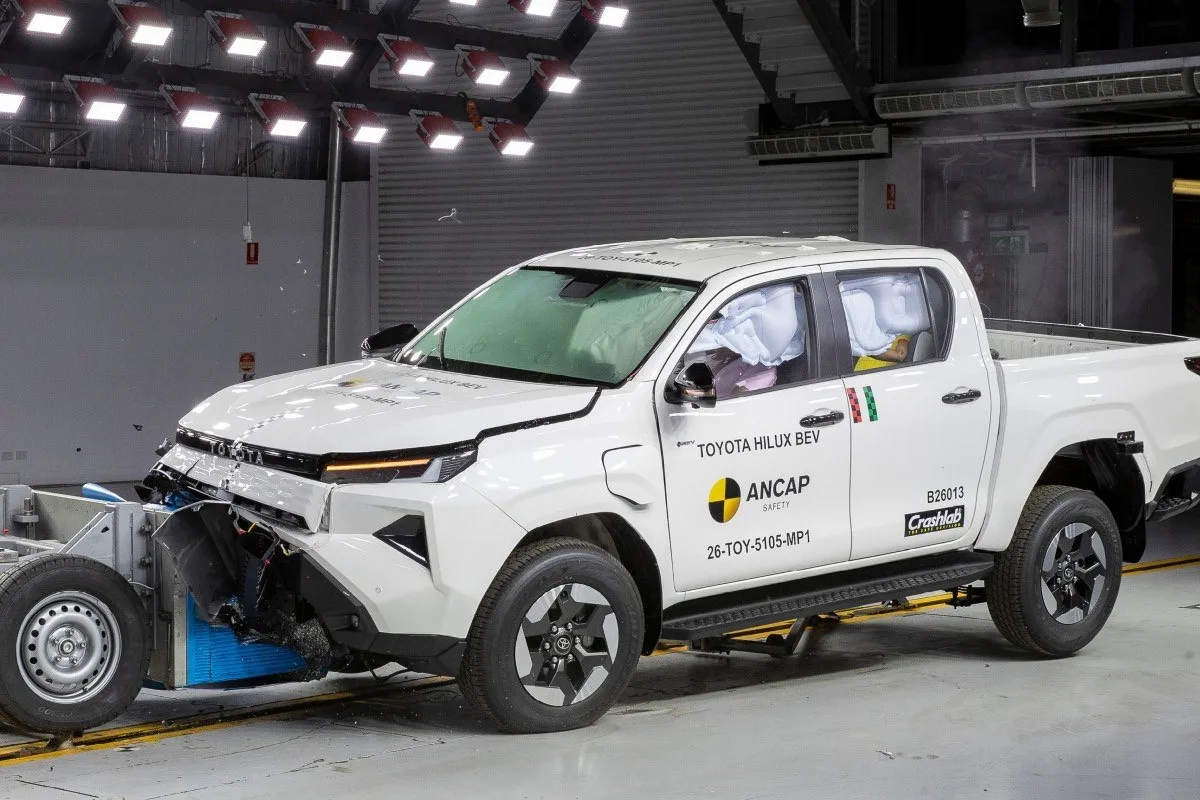
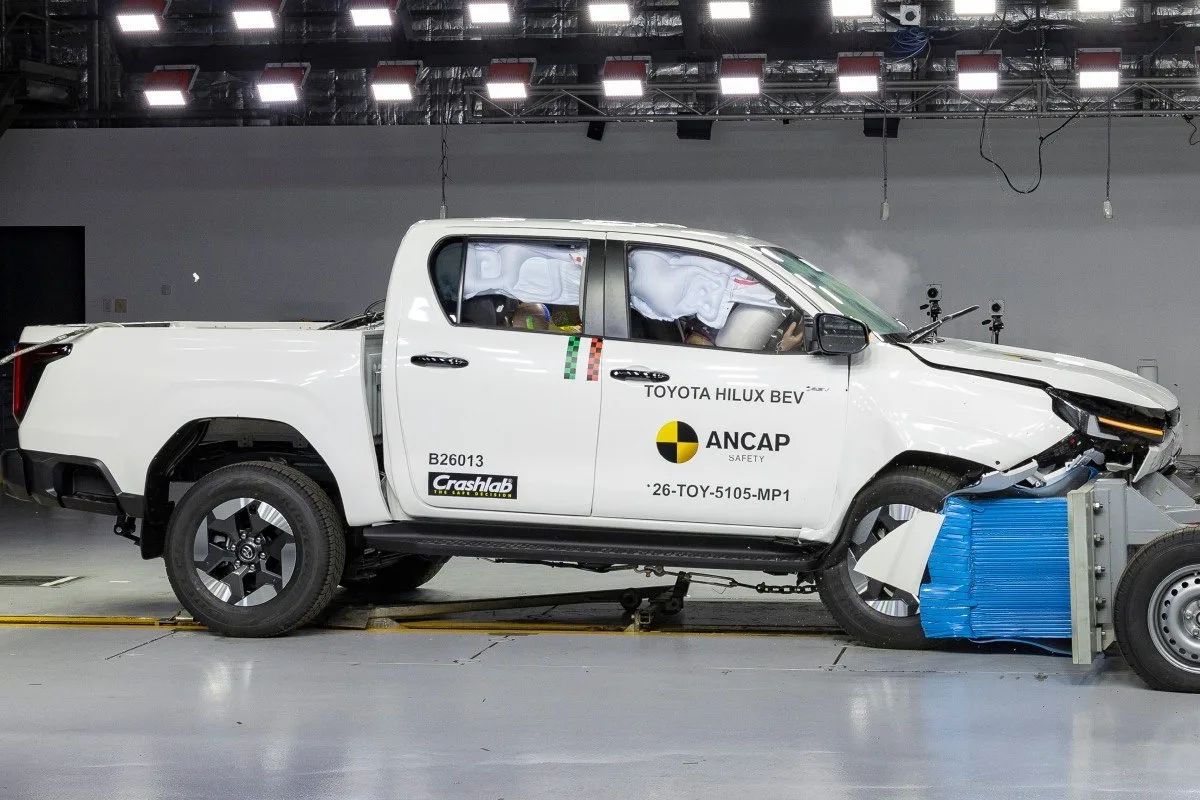


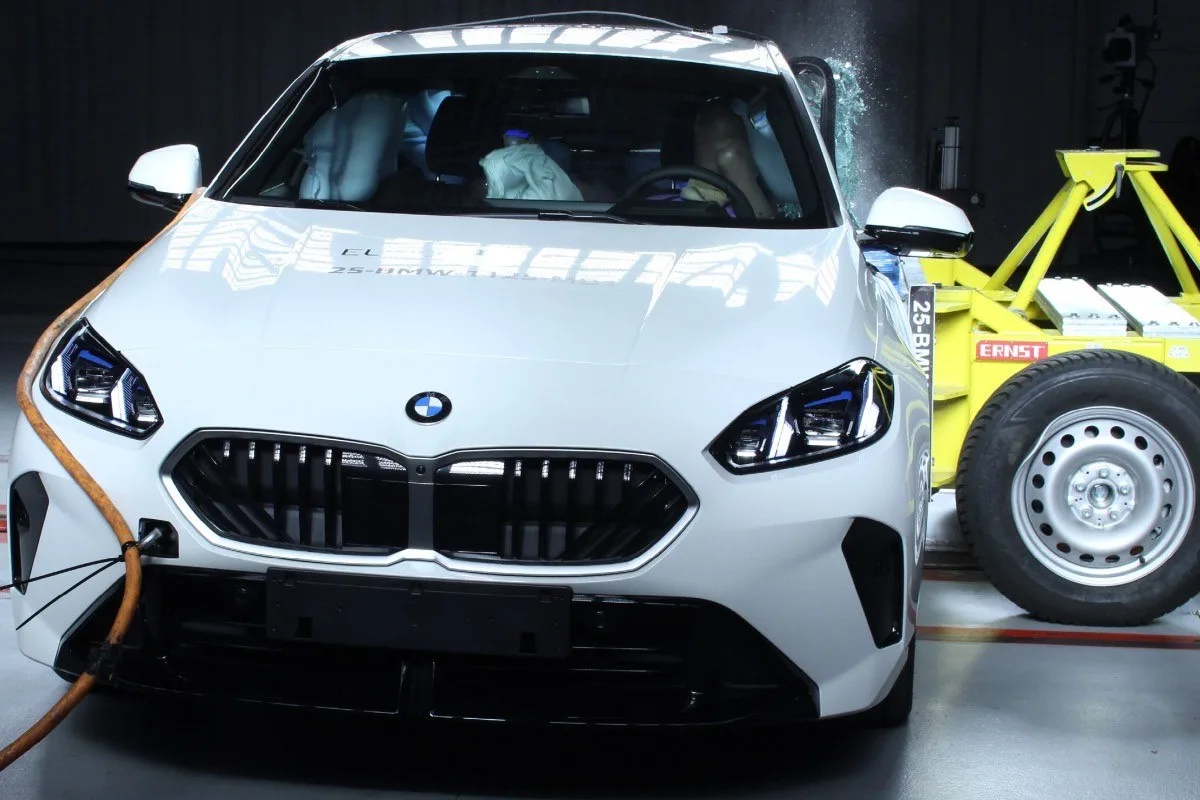
ABOVE: Toyota Hilux BEV and BMW 1 Series ANCAP crash testing
Subaru has also had a solid result with the Trailseeker and Uncharted both scoring five stars. These sit on shared underpinnings with Toyota’s bZ4X, but ANCAP still ran them through extra checks rather than simply assuming everything carries over neatly.
What you end up with is two new electric SUVs that don’t try to reinvent anything about the safety conversation. They just pass. No drama, no headlines about “new benchmarks”, just straightforward results that tick the boxes buyers actually care about once the marketing dust settles.
Carla Hoorweg, ANCAP Chief Executive Officer, framed it in fairly measured terms, pointing out that buyers now have more choice in alternative powertrains without giving up top-level safety performance. Which is true, but the more direct read is that electrified models are no longer being treated as special cases in testing. They’re just cars now. They stand or fall on the same criteria.
Then there’s BMW.
The 1 Series and 2 Series Gran Coupe both get a respectable four stars. Not disastrous by any means, but not where a premium badge will want to be. The structure is based on the 1 Series, with additional side impact assessment for the 2 Series due to differences in body design, and the results split right where it counts.
Crash avoidance systems perform well, which is consistent with BMW’s current focus on preventing impacts in the first place. But once the testing moves into crash phase, the numbers ease back. There’s elevated chest injury risk for the driver in the MPDB test, and for both front occupants in the full-width frontal test. Dashboard structures also contribute to upper leg injury risk in certain scenarios.
The Adult Occupant Protection score lands at 78%, just under the 80% threshold required for five stars.
Taken together, the results show a market that’s ever chasing perfection. Electrification isn’t being treated as an exception anymore so is an important shift buried in all of this. The Hilux BEV and Subaru models don’t get any special treatment in the final scoring. They just meet the bar. BMW doesn’t miss it because of powertrain complexity or electrification growing pains, but because injury metrics in crash testing don’t care about positioning or pricing.
Brands must face that the rules are getting simpler, not more flexible.
We try to focus not on who got five stars or who didn’t, but that the system is increasingly indifferent to what badge is on the bonnet or what powers it. It either holds up under testing, or it doesn’t.
More Car Safety Stories
Help Support Gay Car Boys Subscribe to our Youtube Channel

Leave a Reply