Modern automotive engineering has morphed into a high-stakes compliance racket. To dodge severe European regulatory penalties, OEMs cheat. Failing fleet-wide target thresholds triggers a devastating multi-million euro penalty structured at €95 per gram over the limit for every single vehicle registered, manufacturers are not engineering better cars. They are deploying fragile, low-cost hardware optimised solely to satisfy a laboratory chassis dynamometer.
The Worldwide Harmonised Light-vehicle Test Procedure (WLTP) is a predictable, clinical, and synthetic simulation. It rewards lightweight components, minimal internal fluid resistance, and immediate engine shutdown at rest. On a computer screen in Brussels, the resultant spreadsheet looks magnificent. But when this clinical laboratory tech encounters real-world driving infrastructure, the entire environmental illusion shatters, leaving the consumer to pay the mechanical bill for a high-strung, disposable powertrain.
Above: 2026 MG7 Essence Full Review – a Sweet Little GT Sports car
MG7Review #GrandTourer #Sedan #CarReview

Help Support Gay Car Boys Subscribe to our Youtube Channel by SMASHING THE BUTTON ABOVE


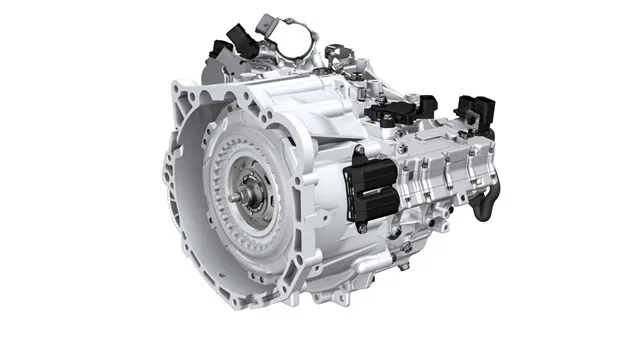





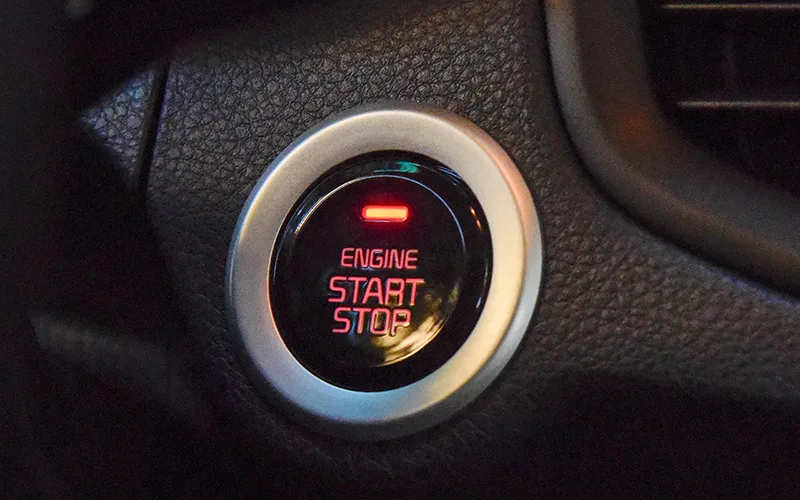

ABOVE: CVT and DCT hardware, stop-start hardware, and some sundry cars named ‘n’ chamed
The Continuous Variable Transmission (CVT) and Dry Dual-Clutch (DCT) Reality
A standard, modern hydraulic torque-converter automatic transmission is robust, but it experiences inherent energy loss and mechanical drag due to fluid coupling. To squeeze out fractional efficiency gains on a test bench, manufacturers have systematically replaced these reliable gearboxes with cheaper, highly sensitive alternatives.
| Transmission Type | Laboratory Incentive | Real-World Risk |
|---|---|---|
| Continuous Variable Transmission (CVT) | Eliminates fixed steps; holds engine at optimal laboratory RPM profiles. | Belt slippage, metal debris, high-thermal sensitivity, and protective limp home modes. |
| Dry-Clutch Dual-Clutch (DCT) | Zero parasitic fluid drag; air-cooled design reduces assembly weight. | Extreme clutch wear in stop-and-go traffic alongside high friction glaze. |
The Continuous Variable Transmission operates via a steel chain shifting across split pulleys. In a laboratory setting, it eliminates traditional shifts, holding the engine continuously at its precise peak efficiency node. In reality, the hardware is highly vulnerable. Under sustained stop-and-go conditions, fluid temperatures spike rapidly. When limits are exceeded, the transmission control unit triggers a protective “limp home” mode, aggressively cutting engine power to prevent the internal belt from slipping and scoring the pulleys. Once a chain slips, it generates sharp metal debris that destroys the internal hardware. Out of warranty, these units are strictly non-rebuildable; a complete factory replacement can easily cost $8,000 to $10,000, entirely wiping out any theoretical lifetime petrol savings.
The dry-clutch Dual-Clutch Transmission presents an identical compromise. Unlike heavy, durable wet-clutch systems that bathe their friction plates in cooling oil, a dry DCT relies entirely on ambient air cooling to shed weight and eliminate parasitic fluid drag. When forced into real-world traffic gridlock, these uncooled clutch packs constantly feather and slip to smooth out low-speed crawling. Without oil to dissipate the thermal load, the clutches bake, glaze, and shudder, treating a complex dual-clutch assembly as a premature wear-and-tear item with an industrial-grade labour bill attached.
The Hidden Wear of Stop-Start Systems
The integration of automatic engine stop-start systems is another direct product of the laboratory test optimisation. During the stationary segments of a standardised emissions test, turning the engine off registers a neat drop in localised fuel usage and tailpipe output.
In the real world, this micro-saving introduces an aggressive mechanical penalty. A standard vehicle starter motor is traditionally engineered to survive roughly 50,000 to 80,000 start cycles over its design life. A car equipped with an unyielding stop-start system exposes that same starter hardware to more than 500,000 cycles over an identical operational window.
While manufacturers reinforce the starter rings and upgrade to absorbent glass mat (AGM) or enhanced flooded batteries (EFB) to handle the constant, high-amp current draws, the laws of physics cannot be bypassed. The auxiliary electrical systems suffer accelerated fatigue, and the high-capacity batteries require frequent, expensive replacement. The minuscule volume of fuel saved sitting at a red light is completely eclipsed by the resource extraction and consumer cost required to manufacture, ship, and replace a premium lead-acid or lithium auxiliary battery every few years.
The Small-Displacement Turbocharger Illusion
The most severe engineering distortion occurs in the domain of engine downsizing. The market has been flooded with diminutive 1.0-litre three-cylinder and 1.2-litre four-cylinder engines, completely replacing larger, unstressed naturally aspirated powerplants.
On a gentle, low-load laboratory test cycle, these tiny engines operate efficiently off-boost, drawing minimal fuel because their physical displacement is small and internal pumping losses are low. This allows the vehicle to achieve a low official fuel-consumption rating on its window sticker.
| Testing Scenario | Engine Operating State | Injection Strategy & Climate Impact |
|---|---|---|
| Laboratory Testing (Low Load) | Engine stays off-boost. | Lean fuel mixture resulting in low recorded CO2. |
| Real-World Driving (High Load / Heat) | Turbo spools under heavy thermal load. | Safety over-fuelling initiates; raw petrol dumps into cylinders to cool the turbo. |
The moment that vehicle leaves the laboratory and enters real-world driving, climbing a steep grade, accelerating down a motorway slip road, or hauling a family with the air conditioning running, the small displacement becomes a distinct liability. Lacking natural atmospheric lung capacity, the engine must rely entirely on the turbocharger to force substantial amounts of compressed air into the combustion chambers just to keep pace with modern traffic.
When pushed hard, internal combustion temperatures inside the turbo housing and exhaust manifold spike rapidly to dangerous levels. To prevent the core components and the catalytic converter from physically melting under sustained load, the engine control unit initiates a process known as “component protection enrichment.”
This is the dirty secret of modern engine downsizing. The computer deliberately dumps an excessive volume of raw fuel straight into the cylinders. This extra petrol is not burned to generate power or forward momentum; it is used strictly as a liquid coolant to evaporate and lower internal temperatures. The engine is quite literally throwing unburnt fuel down the exhaust pipe to protect its own high-stress components from thermal destruction. Independent real-world driving emissions audits routinely show these downsized turbo units consuming 30% to 50% more fuel than their official laboratory ratings when driven normally on public roads.
That has certainly been our real world evaluation experience.
Engineering Compliance, Not Conservation
The ultimate consequence of this regulatory framework is a profound misallocation of resources. By forcing manufacturers to optimise exclusively for clinical test cycles, global environmental policy has institutionalised a generation of highly fragile, mechanically compromised vehicles.
A larger, under-stressed naturally aspirated 2.0-litre or 2.5-litre four-cylinder engine operating lazily within its comfort zone will frequently match or beat a downsized three-cylinder turbo’s fuel consumption in actual traffic. More importantly, the larger engine is built to last, avoiding the immense industrial and environmental footprint associated with premature transmission failures, battery degradation, and complex component replacements.
The current system serves as a compliance mechanism designed to satisfy administrative bodies, protect manufacturers from billions of euros in legal fines, and display pristine, unachievable metrics on marketing brochures. The real-world owner is left to pilot a tetchy, over-complicated machine, bearing the long-term financial and mechanical consequences of an engineering strategy that values laboratory compliance far above actual, durable sustainability.
Here is a breakdown of vehicles that perfectly illustrate this regulatory compliance trap, categorised by their specific mechanical compromise.
The Dry Dual-Clutch Disasters
To shave fuel economy figures on European test benches, these cars ditched heavy, oil-cooled automatic gearboxes for uncooled, air-cooled dry clutches. Real-world traffic turned them into expensive wear items.
- Ford Focus and Fiesta (LW/LZ/WT/WZ series): Fitted with the notorious 6-speed dry-clutch PowerShift transmission. Constant low-speed creeping in urban gridlock causes the twin clutches to overheat, shudder, and fail prematurely, often taking the electronic control module down with them.
- Volkswagen Golf and Polo (Mk6 and Mk7 variants): Paired with the 7-speed dry-clutch DSG (DQ200). While efficient on the highway, commuter traffic forces constant clutch feathering. This leads to friction glazing, severe low-speed shuddering, and fluid leaks from the over-stressed mechatronic unit.
- Hyundai i30 and Tucson (1.6-litre Turbo models): Utilise a 7-speed dry DCT. Driven on a clinical test cycle, it scores great numbers. In reality, stop-and-go commuting triggers rapid thermal spikes, forcing defensive software overrides that cause jerky take-offs and premature clutch wear.
- Kia Seltos and Cerato (1.6-litre Turbo variants): Sharing the same dry 7-speed DCT architecture as Hyundai, these models suffer identical high-temperature fatigue when forced to crawl through city traffic without oil to dissipate the heat.
The Fragile CVT Hall of Fame
These transmissions eliminate traditional gear steps to keep engines pinned to ultra-lean laboratory RPM profiles. When faced with actual tarmac, heat management fails.
- Nissan X-Trail and Qashqai (J11 and T32 generations): Equipped with Jatco-supplied CVTs. Under sustained highway speeds or stop-start stress, fluid temperatures skyrocket. The transmission slips into a protective limp home mode, aggressively pulling power to prevent the internal steel chain from destroying the split pulleys.
- Nissan Pulsar (B17 series): Fitted with the early CVT7 unit. A global legacy of premature belt slippage and internal mechanical disintegration turned these commuter cars into disposable items once the factory warranty expired.
- Subaru Impreza and XV: Rely on the Lineartronic CVT to meet stringent fleet emissions targets. The high hydraulic pressures required to clamp the steel chain eventually wear out the valve bodies, causing severe jerking and catastrophic internal chain slippage.
- Mitsubishi ASX and Lancer: Early iterations used Jatco CVTs that run exceptionally hot during summer highway driving. This accelerates fluid degradation, resulting in metallic whining and eventual internal hardware failure.
The Downsized Turbo Over-Fuelling Trap
These tiny engines look brilliant on paper, sipping fuel off-boost during laboratory testing. Once forced to pull real-world weight, they dump raw petrol down the exhaust pipe simply to keep from melting.
- Ford Fiesta and Focus 1.0-litre EcoBoost: The infamous three-cylinder “EcoBoom”. It runs under extreme thermal stress, relying on a complex wet-timing-belt setup that can degrade in the engine oil. Under load, it runs heavily rich to cool internal components.
- Peugeot 208 and 308 1.2-litre PureTech: Another downsized three-cylinder configuration. To meet tight Euro emissions brackets, the wet timing belt runs directly in the engine oil. The belt frequently dissolves over time, blocking the oil pickup and starving the turbocharger of vital lubrication.
- Renault Clio and Captur 1.2-litre TCe: This downsized engine suffers from notorious oil consumption and piston ring failure. When pushed on open motorways, the engine control unit aggressively dumps excessive fuel into the cylinders to prevent the turbo housing from warping.
- Nissan Juke 1.2 DIG-T: Sharing the Renault-developed 1.2-litre downsized architecture,this crossover lives permanently on-boost in normal traffic, leading to rapid timing chain stretch and excessive fuel usage that obliterates official laboratory stickers.
- Fiat 500 TwinAir: An ultra-downsized 875cc two-cylinder turbo engine. While built to ace European urban emissions metrics, real-world highway driving forces the tiny motor to work at its absolute limit, burning far more petrol than a relaxed, older 1.4-litre naturally aspirated engine.
- Jeep Compass and Renegade 1.3-litre MultiAir Turbo: A tiny power unit tasked with hauling a heavy, brick-shaped compact SUV. The engine spends its life heavily reliant on the turbocharger, invoking component protection enrichment and throwing raw fuel down the tailpipe during simple highway overtaking maneuvers.
- Holden Cruze 1.4-litre iTi Turbo: This downsized engine operates under massive thermal loads within a cramped engine bay. The extreme heat cycling regularly cracks piston lands and disintegrates plastic cooling system components.
- MG ZS 1.0-litre T-GDI: A pint-sized three-cylinder turbocharger pulling a small family SUV. Lacking natural atmospheric displacement, it stays pinned to high boost levels on hilly terrain, forcing the computer to dump raw petrol to cool down the catalytic converter.
More Opinion Stories
- GM Wants You Off Your Phone While Carmakers Shove Everything Into Screens
- Electric Cars, We Aren’t There Yet, What Bollocks
- 2026 Kia K4 S Hatch With Safety pack makes me eat my words
Help Support Gay Car Boys Subscribe to our Youtube Channel by SMASHING THE BUTTON ABOVE

Alan Zurvas is the founder and editor of Gay Car Boys, Australia's leading LGBTQI+ automotive publication. Before launching GCB in 2008, Alan's automotive writing was published in SameSame.com.au and the Star Observer. With over 16 years of hands-on car reviewing experience, Alan brings an honest, irreverent voice to every review — championing value and innovation over brand loyalty.
Leave a Reply