Tesla Cybertruck production ends by mid-2027, a fortnight after Tesla cancelled it for Australia and New Zealand, with deposits being refunded.
There is lots of Tesla news this week, but the soft cancel of the horrific Cybertruck can’t be a shock to anyone. Likewise, the continued rise of Model Y shows us, for the time being, that an EV can take on the fossils and win.
From January to October, Tesla Model Y outsold Toyota’s RAV4 to become Australia’s best-selling SUV of 2026. Within a fortnight, Tesla ended its most famous truck, and its most ordinary car topped the SUV chart.
On Friday the 6th of November, Elon Musk posted on X that Tesla will be “winding down production of the Cybertruck at Gigafactory Texas around the middle of next year” to “make room for increased Cybercab production”. He didn’t say whether it would be built anywhere else, meaning it is cancelled. That hideous monstrosity is finally being put out of its misery. Tesla shares rose 4.7% that day. Giga Texas was the only plant building it, but it also builds the Model Y and the Cybercab, so is safe for now. A few days later, the midterms and a GOP slide into irrelevance, saw Tesla shares take a tumble.
A user on X called it “the end of an era”. Musk replied, “True, but the Cybertruck fleet will be around for a long time.” He said nothing about how long parts and service continue for owners, or the recalls, or the trucks falling apart. I guess that’s how propaganda goes.
Above: Fitcamx for BMW G20 with Ryan
#FitcamX, #BMW3Series, #DashCam, #70maiA900, #GayCarBoys

Help Support Gay Car Boys Subscribe to our Youtube Channel by SMASHING THE BUTTON ABOVE


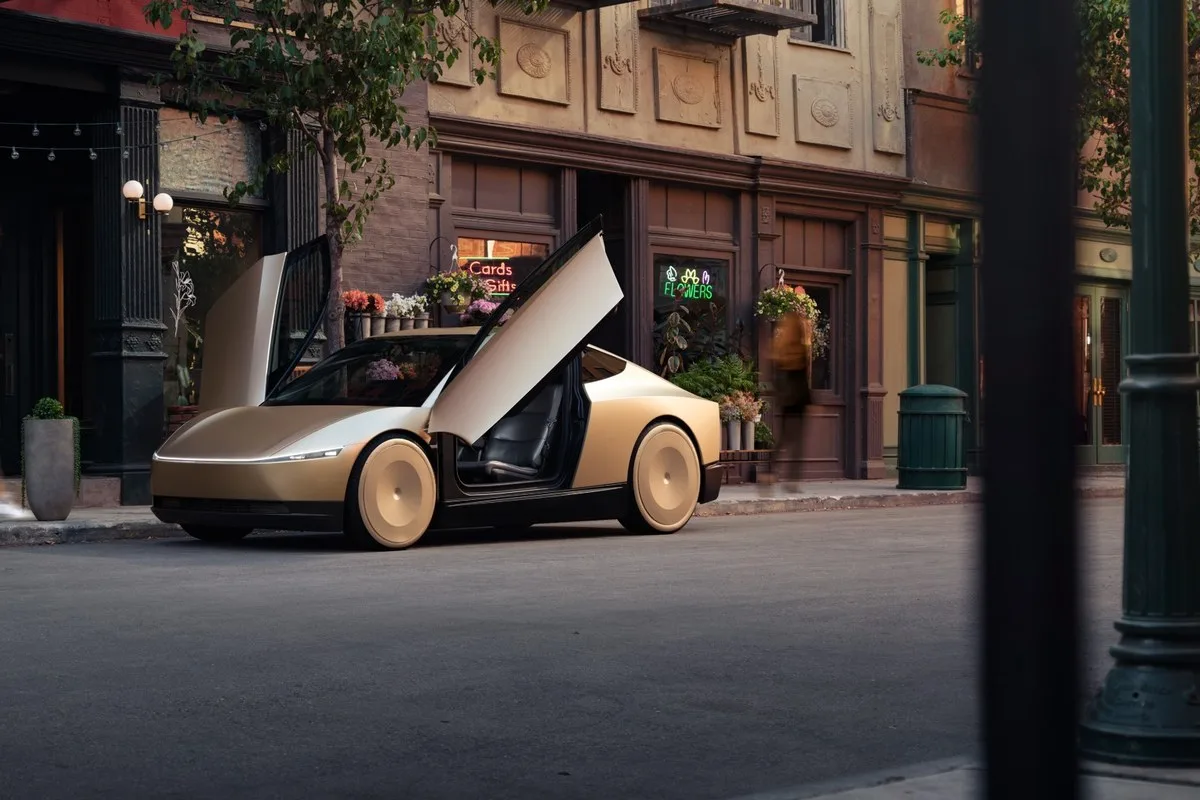

ABOVE: Tesla Cybertruck, Model Y and Cybercab
The difficult Cybertruck birth seems mirrored in the Cybercab. Like Cybertruck seemed like a terrible idea from day one, Cybercab has 2 seats and no steering wheel or pedals, and it’s built at Giga Texas on its own “unboxed” production line. By late October, 463 were registered in Texas, but carries paying passengers in Austin.
The Cybercab toured Australia too, just as Cybertruck did. Parading a king with no clothes around doesn’t make it a good idea. A camera-only Tesla with no steering wheel or pedals, when FSD (supervised) already runs lights and darts for side streets on a whim, means the humans inside and around it depend on programming already not performing well.
Tesla Cybertruck Sales Never Got Near 250,000
Tesla revealed the truck in November 2019, when a metal ball smashed its “armoured” window on stage. The demo was meant to show an unbreakable window and is as memorable as Steve Jobs’ Wi-Fi breakdown at WWDC 2010 during the iPhone 4 reveal. Deliveries began on the 30th of November 2023, 4 years after the reveal, 2 years after it was promised. Like every Tesla model, it was late. Perhaps it was trying to channel Boeing, especially the 777X disaster.
Before launch, Musk predicted 250,000 sales a year, and the line was built for the forecast number of cars. Miserable US sales were an estimated 38,965 in 2024 and 20,237 in 2025, down 48% (Cox Automotive). Tesla’s Q3 2026 deliveries of “Other Models” came to 8,295, down 48% and the lowest since Q2 2021. That was the total for Cybertruck, Model S, Model X, and Semi together. Sales since launch total an estimated 70,000, a miserable result by any measure.
Adding to the rapidly evaporating fantasy, some of those buyers were Musk’s own companies. SpaceX bought US$131 million of Cybertrucks at retail price in 2025. In Q4 2025, Musk’s companies bought 1,339 of them, about 19% of US registrations that quarter (S&P Global Mobility).
The dual-motor Cybertruck now starts at US$74,990 after a US$5,000 rise in August 2026. A cheaper rear-drive version launched in 2025 only to be pulled months later.
Cybertruck’s record reads Macbeth. There were 11 voluntary recalls in the US. Among them were an accelerator pedal pad that could stick, an inverter fault that could cut drive power, a light bar that could fall off, and sundry loose trim panels that would come adrift. Most were fixed with an over-the-air update or a free service visit, but it did not bode well for the doomed albatross.
Adding to the misery were owners who reported harassment and road rage tied to the truck’s looks and Musk’s politics. Cybertrucks and Tesla showrooms were firebombed or defaced during the 2025 protests over Musk’s DOGE role in the Trump administration. While that may be a different story, there is no doubt the truck’s ludicrous design sealed its death warrant long before the launch.
Australian Deposits Refunded After Nearly 7 Years
Tesla emailed Australian and New Zealand reservation holders on the 23rd of October to say plans to build the Cybertruck for both markets were discontinued and that deposits are being refunded. Reservations opened at the November 2019 reveal, nearly 7 years earlier. Reservation holders were offered a free year of FSD (Supervised) if they order a new Model 3 or Model Y. That’s not exactly an offer they couldn’t refuse.
The Cybertruck was only ever built in left-hand drive, no right-hand-drive version exists. Promises were made, money taken, and hope buoyed, but not a single right-hooker was made.
Model Y Outsells RAV4
From January to October, Ford’s Ranger 4×4 truck outsold the Model Y SUV, but for several months in 2026, Model Y was number one.
October alone was quieter for Tesla. HiLux sold 5,954 that month, Ranger 4,841, and RAV4 4,718, with the Model Y fourth on 3,105 and BYD’s Sealion 7 next on 2,524. Tesla sold 4,050 cars in October and 45,755 for the year to date.
June went the other way. The Model Y sold 8,072 that month, more than any other vehicle, with the Ranger 4×4 on 5,599, the HiLux 4×4 on 4,691, and the RAV4 on 4,115. Tesla ships cars to Australia in quarterly waves, so its monthly figures swing. Australian-market Model Ys are built in Shanghai.
Tesla no longer reports to the FCAI, so the FCAI’s VFACTS charts leave the Model Y off. Its figures come from the Electric Vehicle Council. Counting all sources, battery EVs were 23.1% of October new-car sales.
Toyota’s new-generation RAV4 went on sale in 2026, and after a long wait for stock, is Toyota’s best-selling SUV. As noted in previous stories, RAV4 is a heavy makeover of the previous model, and has a revised hybrid system which includes the PHEV.
Tesla added the 6-seat Model Y L to the Model Y range in 2026 following the earlier “Juniper” makeover.
Best Sellers, January to October 2026
| Model | Year to October | Built in |
|---|---|---|
| Ford Ranger 4×4 | 40,300* | Thailand |
| Tesla Model Y | 39,035 | China |
| Toyota HiLux 4×4 | 37,466* | Thailand |
| Toyota RAV4 | 35,927 | Japan |
| BYD Sealion 7 | 22,488 | China |
| Toyota Prado | 18,062 | Japan |
*4×4 models only.
Global Best Sellers, January to September 2026
The Model Y is also the world’s best-selling vehicle of 2026 to the end of September, and the only one of the global top five to grow.
| Model | Change on 2025 |
|---|---|
| Tesla Model Y | ~+8% |
| Toyota Corolla | ~-11% |
| Ford F-Series | ~-15% |
| Toyota RAV4 | ~-21% |
| Honda CR-V | ~-13% |
Sources: FCAI VFACTS, Electric Vehicle Council, Focus2Move.
Above: 70mai A900 Dashcam + 4G Hardwire kit Unboxing and Review
#70maiA900, #70mai, #DashCam, #RedtigerF77, #GayCarBoys
More Tesla Stories
- 2026 Tesla Model 3 RWD Now Costs Less Than a Mazda 6e
- Look, Ma, No Hands! Tesla’s Paint-Free Cybercab Tours Australia
- Tesla Guaranteed Future Value Finance Is No Discount

Alan Zurvas is the founder and editor of Gay Car Boys, Australia's leading LGBTQI+ automotive publication. Before launching GCB in 2008, Alan's automotive writing was published in SameSame.com.au and the Star Observer. With over 16 years of hands-on car reviewing experience, Alan brings an honest, irreverent voice to every review — championing value and innovation over brand loyalty.

Leave a Reply