
Hyundai N is the Korean brand’s super-dooper race department. Strong, handsome race drivers tell men in white coats what makes a car go faster, and the N people make it so. i30 N had a recent nip-and-tuck, and the result is extra poke, better suspension and handing, and most importantly, an 8-speed DCT automatic.
Many car makers have committed the cardinal sin of making a manual-only model, which has then failed miserably. Buyers want automatics, but they want it with the get-up-and-go of the hard-edged racers. That’s not really a great surprise, with most professional racers now using some kind of auto shifter in their day jobs.
What’s New in i39 N?
There’ve been subtle changes in the exterior, additions to equipment and safety, a DCT gearbox, and some extra power. It is enough to keep the hatch up to date, but boy-oh-boy does it look old compared to the sedan sister?
Power and torque are now 206kW and 392Nm, increases of 4kW and 39Nm respectively. I fancy I could tell the difference if I drove the old and the new back-to-back, but the old i30 N was epic anyway. The suspension had changes to its geometry, and the adaptive damping has been tuned to the DCT to aid the fancy self-shifters 3 modes, Grin Shift, N Power Shift and N Track Sense Shift.
The mysteriously named GRIN shift brings a “grin to your face”, but surely there is more to it than that?
It would be churlish to move on without mentioning the new forged alloys, developed in-house, to save 14.4kg in unsprung weight. There have been other savings in weight too, with the scales being tipped at 1447 – 1541 kg, depending on whether or not you get a sunroof and other such frippery.
Above: This Week – Accord VS Sonata VS Passat
Help Support Gay Car Boys Subscribe to our Youtube Channel
- Top GayCarBoys Stories:
- Sexy Men Drive 2021 Toyota Yaris Cross
- 10 Sexiest MotoGP Motorcycle Riders
- DON’T Drive YOUR CAR until you’ve Checked if your AIRBAG will KILL YOU
- 10 Hottest Racing Drivers
- Top 12 Best Gay Lesbian LGBTI Luxury Cars
- Top 10 Gay Lesbian LGBT Cars
- Top 10 Gay Lesbian LGBT Sports Cars
- Top 15 gay and lesbian LGBT SUVs
- Talented Twinks – Callum Ilott Virtually Races Arthur Leclerc


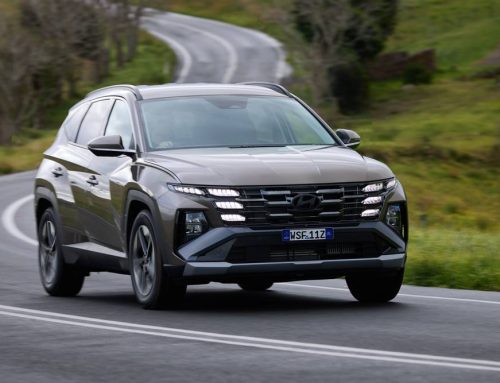
ABOVE: 2021 Hyundai i30 N
Inside, the cabin
There has been a substantial increase in the infotainment screen, to 10.25”, but with navigation built in, we still have to use USB for Apple CarPlay and Android auto.
There is a different ethos to that of Golf GTI and R models, but Hyundai has a considerably better reputation for reliability.
The cabin is comfortable, in that hard, sports car kind of way. You’re hugged, whether you want to be or not.
The posh model gets nicer seats with new Alcantara coverings too, but at heart, i30 N is still a driver’s car. To that end, the centre screen fettles settings in the new N Grin Control user interface, featuring a customisable layout and extra features.
Drivers can now select which gauges they want to see on the display, and access Launch Mode more easily. N Custom mode is also simpler to set up with all settings now accessible from a single screen.
The N Grin Control System gives the driver a choice of five distinct driving modes: Eco, Normal, Sport, N and N Custom.
The driving modes adjust the parameters of the engine, the suspension, Electronic Stability Control (ESC), N Corner Carving Differential (e-LSD), active variable exhaust, steering and transmission, to optimise them to suit the driving conditions.
Additional Safety Gear:
Hyundai expanded the Smartsense suite of safety equipment.
Lane Following Assist (LFA)
Lane Following Assist works in addition to Lane Keeping Assist (LKA) to monitor lane markings to determine the centre of the occupied lane, and provide steering assistance to keep i30 N positioned there. LFA is activated via a button on the steering wheel.
Blind Spot Collision Warning (BCW)
The Blind Spot Collision Warning system warns the driver when there is a vehicle in i30 N’s blind-spot zone via warning lights in the side mirrors. If the driver indicates to change lanes while a vehicle is detected, the BCW system will display a warning on the cluster, and issue an audible alert.
Additionally, N DCT variants gain Blind-Spot Collision-avoidance Assist (BCA-R) which can initiate an active avoidance measure to help avoid a collision with an approaching vehicle, next to or behind i30 N which it deems as being at a high risk of contact due to its proximity.
The system uses the Electronic Stability Control (ESC) system to apply a gentle braking force to the wheels on the side opposite to the potential collision point, to steer i30 N away from the other vehicle, reducing the likelihood of collision and/or mitigating damage.
Rear Cross-traffic Collision Warning (RCCW)
The Rear Cross-Traffic Collision Warning (RCCW) system monitors for traffic approaching on either side of i30 N when reversing out of perpendicular parking spaces. Should RCCW detect a vehicle approaching, an alert is sounded and a warning is displayed on the cluster.
N DCT variants feature, in addition, a Rear Cross-Traffic Collision-avoidance Assist (RCCA) system. If the driver does not respond to RCCA warnings, RCCA can activate the Electronic Stability Control (ESC) system to apply braking force and help avoid a collision with an approaching vehicle.
The Drive:
A quick stab of the button brings the engine to life, as it spits and farts, just to get attention.
Hot hatches can feel intimidating, with their brawny display, their shouty tone, and the rocks masquerading as springs. in the 2020’s, car makers have decided that organs don’t need to be rearranged in order to get a good drive.
Steering is as quick as ever, but the DCT is almost psychic. It selects gears it thinks you’ll need, as you pound the tarmac into submission, and it is pretty good at it too. There are paddles should you need them, but selecting the right drive mode usually does the trick.
While I adore loud, proud exhaust, it gets old fast. It sounds suitably robust on the track, but for god’s sake shut it up on the highway! I’d like a “silent” mode for the times when I want peace and quiet, to go with the reasonable smooth ride. Even in comfort mode, i30 N is still fairly firm. It would be nice for comfort mode to be gorgeously soft and luxurious, and the sport mode to be the only one to rattle your fillings loose, but alas. On the bright side, it is all very predictable. The last thing you want is your handling going all Bram-Stoker in the middle of a corner, trying to run you through the heart with a stake.
After a good night run at the local race track, a cuppa and a good lie-down sets things right. You’ll need to get your BP back to normal, believe me.
Conclusion:
In short, i30 N earns a worthy stall at the N stable, alongside i20 N and i30 N Sedan. There is a little piece of me that desperately wants AWD, but like hair loss, it is something is out of our control.
Like most hot hatches, i30 N is an escape pod. Load your gear in, and head out of town for the weekend, and you won’t be disappointed.
I love i30 N a lot, but it is not without its foibles. I said on my 1st drive, i30 N trounced the hot Focus, but with the new Scoob coming out in a jiff, i30 N might have to make room at the inn.
Price:
- I30 N 6 Sp Man $44,500
- I30 N 8 Sp DCT $47,500
- I30 N Premium 6 Sp Man $47,500
- I30 N Premium 8 Sp DCT N/A
- I30 N Premium w/sunroof 6 Sp Man $$49,000
- I30 N Premium w/sunroof 8 Sp DCT $52,000
Engine: 2.0 turbo petrol
Power: 206kw/392Nm
Econ: 8.5 L/100km (Combined)
Performance: 5.4 sec (DCT), 5.9sec (Manual)
Trans: 8 Speed DCT or 6 Speed Manual
Tags: 2021 hyundai i30 N dct automatic, gay Hyundai, gay hot hatch, gay favourite cars, Hyundai i30 n update,








Leave a Reply