By Luke
I grew up worshipping Japanese engineering. The precision. The reliability. The sense that someone in Hiroshima or Nagoya had sweated every detail so you would not have to. My first car was a clapped-out Integra Type R that I loved more than several family members.
So it gives me no pleasure to report that Mazda has looked at the Australian car market, watched China systematically dismantle Japanese dominance one affordable PHEV at a time, and responded by removing satellite navigation from its best-selling SUV.
I shall repeat that for those who thought they had misread.
The 2026 Mazda CX-5, arriving mid-year, will be the first Mazda sold in Australia in over a decade without built-in sat-nav. The company that once prided itself on premium-adjacent quality has decided that in an era of $35,000 Chinese SUVs bristling with technology, what Australian families truly need is a map-free cabin and a six-speed automatic transmission that would have felt agricultural in 2015.
And then there is the styling. Or rather, the lack of it. The new CX-5 looks so much like the outgoing CX-5 that even Mazda’s own press shots require squinting to spot the difference. It also looks like the CX-30. And the CX-50. And the CX-60. Mazda has spent the past decade perfecting a single design language and applying it to everything with such ruthless consistency that the entire showroom has become a game of spot-the-wheelbase. One wonders why they bothered with a new model at all. A press release and a price increase would have achieved the same effect
The Titanic Hits the Iceberg, Orders Another Round
The February 2026 VFACTS data reads like a coroner’s report for Japanese automotive supremacy. For the first time in nearly three decades, China has overtaken Japan as Australia’s largest source of new vehicles. February saw 22,362 Chinese-sourced cars sold, nudging past Japan’s 21,671.
And it is not just Mazda rearranging the deckchairs while the bow takes on water. The entire Japanese fleet is listing badly.
Toyota, the unsinkable flagship, has haemorrhaged 27.8 per cent of its February sales year-on-year. Nissan, already circling the drain after years of product neglect, collapsed 50.1 per cent. Mitsubishi dropped 22.3 per cent, continuing a decline so prolonged it has become background noise. Subaru fell 24.4 per cent. Suzuki tumbled 28.2 per cent.
The lifeboats are launching, and they are all painted Chinese red.
Mazda shifted 2,099 CX-5s in February. Respectable, until you notice that the Chery Tiggo 4 Pro, a vehicle most Australians had never heard of two years ago, sold 2,315 units. A budget Chinese SUV that costs from $26,990 driveaway is outselling Mazda’s hero product.
Meanwhile, the Koreans are watching from a safe distance, quietly hoovering up the survivors. Hyundai grew 4.5 per cent. Kia held steady. While Japan burns and Germany haemorrhages money on software that does not work, South Korea has positioned itself as the sensible middle ground: reliable, electrified, and priced to move.
The Europeans: Burning Money While Rome Burns
If the Japanese ship is sinking, the European fleet is on fire.
Volkswagen, once the byword for German engineering supremacy, has spent the past two years watching its factories idle while management argues about whether software engineers should be allowed to speak to hardware engineers. The ID range remains a cautionary tale of launch delays, software glitches, and pricing that assumes buyers have forgotten China exists.
Audi dropped 24.7 per cent in February. Porsche fell 27.5 per cent. Even BMW, the best of a bad lot, declined 9.5 per cent while Mercedes-Benz managed modest growth only by slashing prices to levels that would have caused boardroom heart attacks five years ago.
The premium German brands have spent decades convincing Australians that unreliability was a feature, not a bug. “Character,” they called it. “Driving dynamics.” What they meant was “you will spend a fortune at the dealer, and you will thank us for the privilege.”
That pitch worked when the alternative was a Camry. It does not work when BYD offers a Seal for sixty thousand dollars with a five-year warranty, technology that makes German infotainment look like Windows 95, and build quality that does not require a standing appointment with the service department.
Above: ICE, Hybrid, PHEV, EV — Which Drivetrain Is Right for You? Review
#EUFTA #LuxuryCarTax #FCAI #FreeTradeAgreement #AustraliaTrade

Help Support Gay Car Boys Subscribe to our Youtube Channel by SMASHING THE BUTTON ABOVE


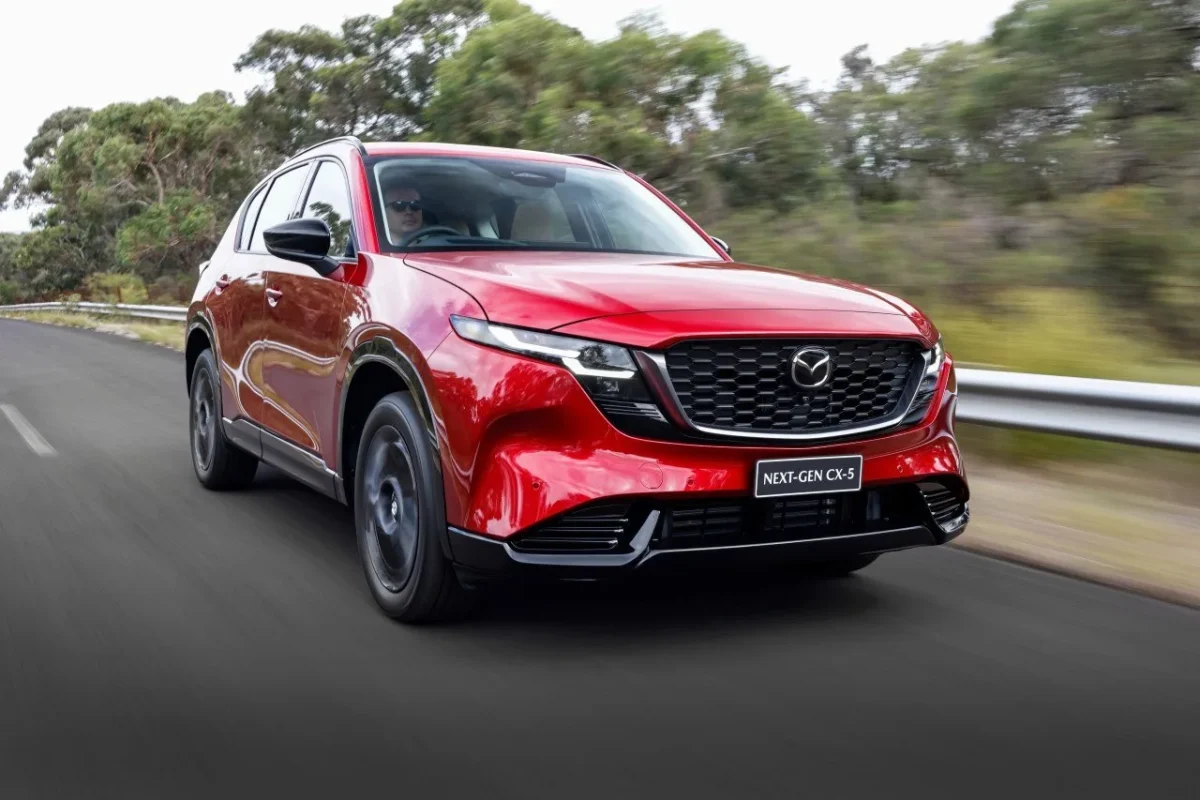
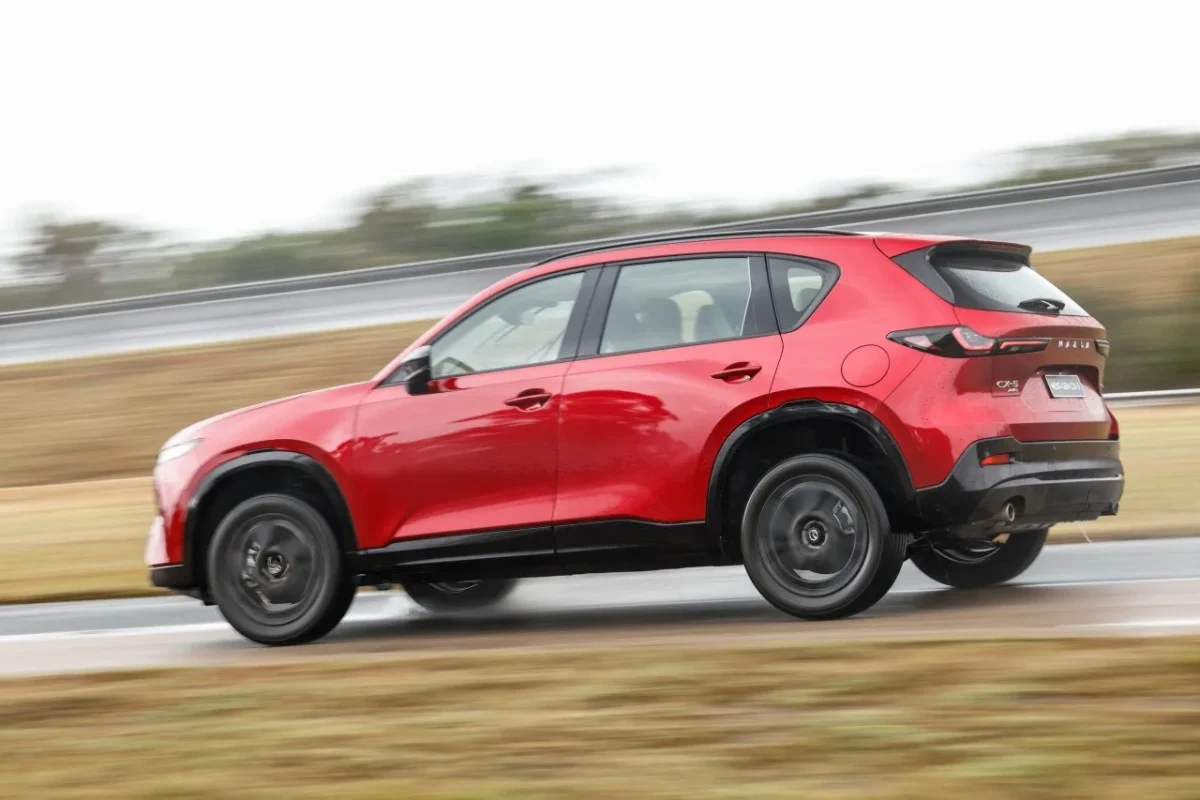
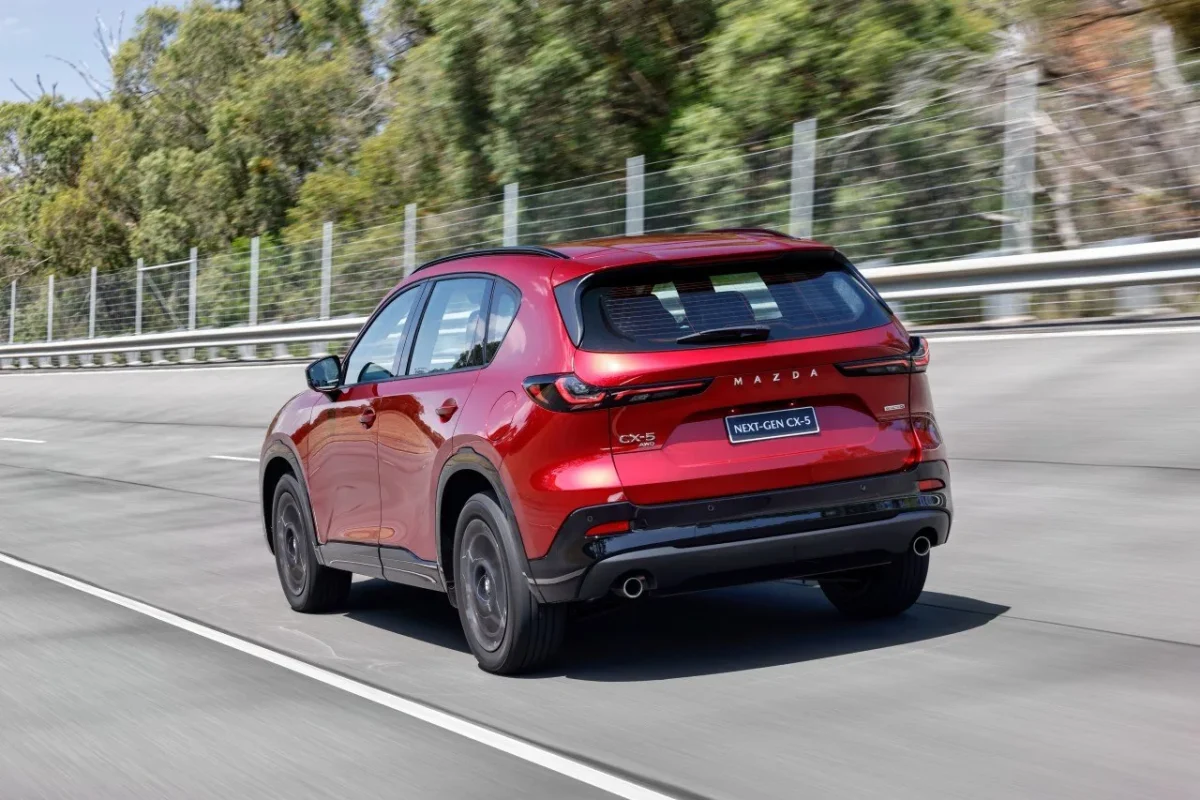


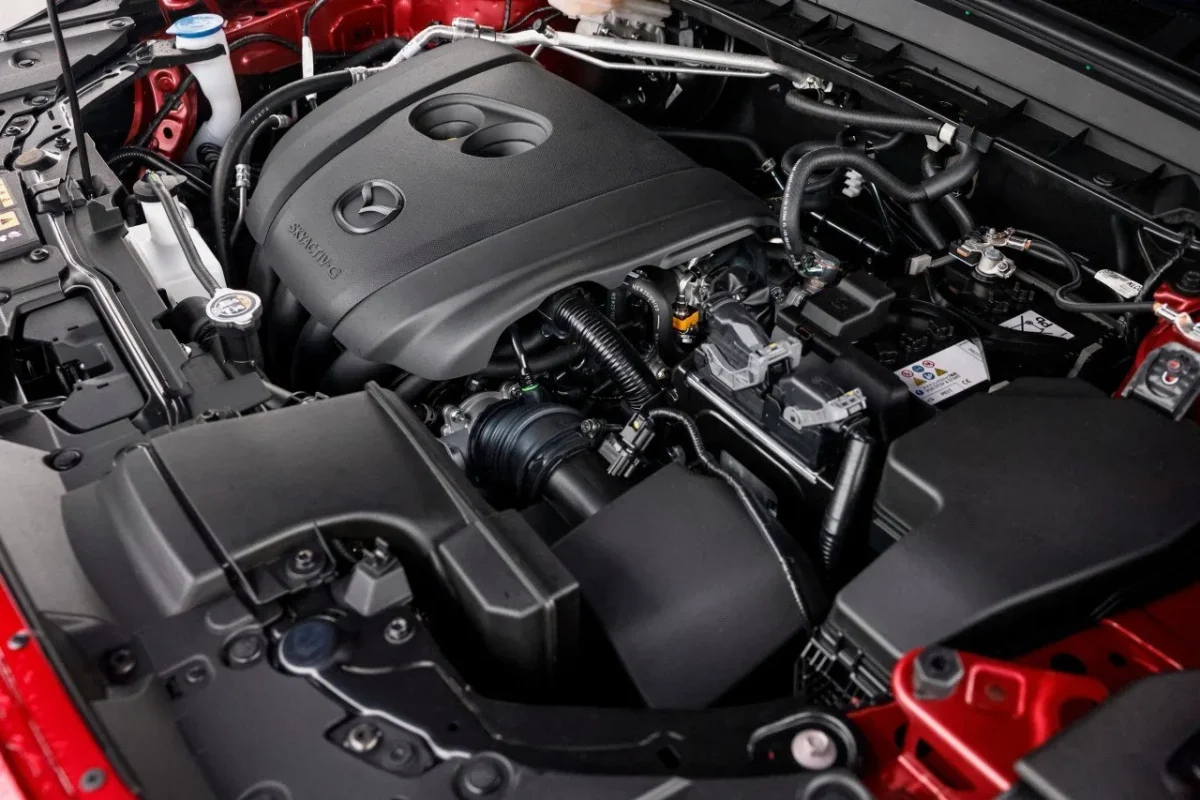
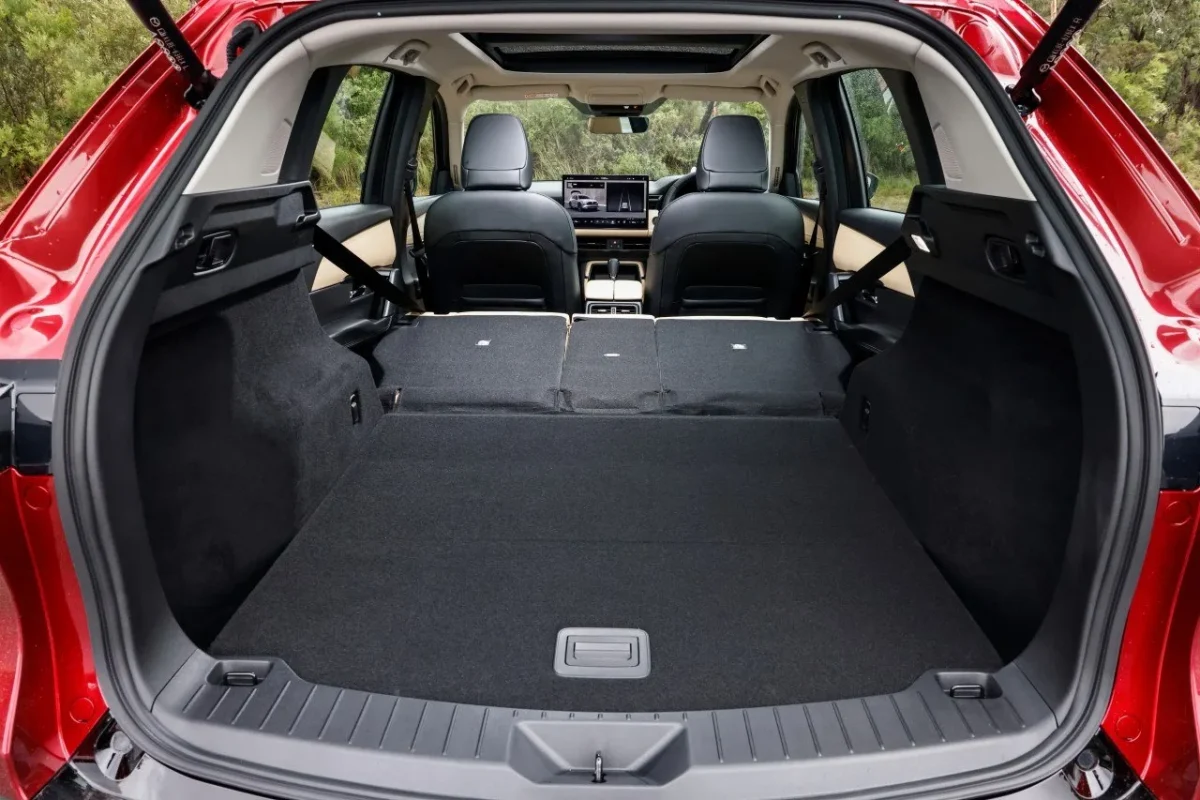
ABOVE: 2026 Mazda CX-5 — same suit, different tie, fewer features
The Six-Speed Scandal
There is no polite way to describe the 2026 CX-5’s transmission situation. While BYD offers plug-in hybrids with 523kW of combined output, while even Toyota has managed to electrify everything short of the executive toilets, Mazda continues flogging a six-speed automatic that first saw service when Kevin Rudd was still Prime Minister.
The G25 2.5-litre naturally aspirated four-cylinder produces 132kW and 242Nm. Those are figures that would have been perfectly acceptable in 2016.In 2026, with 98 RON at two-sixty-five a litre and diesel cracking three dollars, Chinese EVs offering three times the power for similar money make those figures read like a resignation letter.
The CX-5 drinks 7.4 litres per hundred kilometres. The BYD Sealion 6 PHEV, which starts at $47,888 driveaway, offers 92 kilometres of electric range before its petrol engine even wakes up. For most commuters, that means weeks between fuel stops. The Mazda offers zero electric range because it contains zero electric capability.
What Mazda Has Removed
The sat-nav deletion is not some minor trim adjustment. For over a decade, Mazda has included satellite navigation as standard across its Australian range. It was part of the brand’s pitch: we may not be Lexus, but we give you more than the competition.
That pitch has been quietly strangled in a Hiroshima boardroom.
Mazda argues that smartphone mirroring has made built-in navigation redundant. This is technically true in the same way that a bucket has made indoor plumbing redundant. Yes, you can use your phone. No, it is not the same experience. Wireless Apple CarPlay, which the CX-5 does offer, drains your phone battery like a vampire at a blood bank and requires you to own a compatible phone with a working data plan.
The company has also confirmed it will no longer offer CD players. I mention this only because someone at Mazda thought it was worth announcing, which tells you everything about the demographic they believe is still buying these cars.
The Price of Denial
The 2026 CX-5 Pure starts at $39,990 manufacturer list price. Add on-road costs and you are looking at roughly $45,000 to drive away a vehicle with no electrification, no sat-nav, and a transmission that predates the smartphone.
For context:
The MG HS Plus EV starts at $46,990 with 63 kilometres of electric range.
The BYD Sealion 6 Premium offers a PHEV powertrain with 92km electric range for $47,888.
The Chery Tiggo 8 Pro Max, a seven-seater, undercuts the CX-5 Akera by nearly $15,000 while offering a larger boot, more seats, and a longer warranty.
Mazda is charging more for less while its competitors charge less for more. This is not a sustainable business strategy. This is the band playing on while the water rises.
The Body Count
Let us be clear about the scale of the collapse.
BYD sold 5,323 vehicles in February, up 62.2 per cent year-on-year. Chery managed 3,938, up 93.2 per cent. GWM hit 4,689, up 24.9 per cent. Geely, which only entered the Australian market this year, has already sold 1,613 vehicles. Zeekr grew by 560 per cent.
Against this tsunami, the old guard is drowning.
Nissan, which once sold Patrols to every tradie in Queensland, is down 44.7 per cent year-to-date and showing no signs of recovery. Mitsubishi, which built its Australian reputation on the Pajero, is down 22.9 per cent and has not launched a competitive new product in years. The Pajero Sport has shuffled off to retirement and nobody noticed.
Jaguar, once the alternative to German prestige, has collapsed 91.3 per cent to sell precisely four vehicles in February. Four. A brand that once defined British motoring elegance now shifts fewer units than a reasonably popular burger van.
This is not a correction. This is not a market adjustment. This is an automotive reckoning, and the brands that refused to adapt are being swept away.
What You Do Get
The interior, credit where due, is rather lovely. The 12.9-inch touchscreen in base models grows to 15.6 inches in the Akera. There is wireless Apple CarPlay, heated seats from Evolve grade upward, a heated steering wheel in Touring, and enough soft-touch surfaces to justify the premium Mazda still believes it commands.
The Akera throws in ventilated seats, a panoramic sunroof, a Bose stereo, and a 360-degree camera system. At $54,990 before on-roads, it had better.
The exterior design continues Mazda’s Kigumi philosophy, which translates roughly as “everything we build looks vaguely the same and we have convinced ourselves this is intentional.” The 2026 CX-5 is marginally larger than its predecessor but virtually indistinguishable to anyone who is not being paid to notice.
The Verdict
If you have a deep and abiding love for Mazda’s driving dynamics, if you value interior quality above all else, and if you genuinely do not care about fuel efficiency, electrification, or built-in navigation, the CX-5 remains a competent vehicle.
But “competent” is not what it used to be. In 2026, competent means hybrid at minimum. It means technology that does not require you to drain your phone battery just to find your way home. It means value for money in a market where value has been completely redefined by manufacturers willing to sell you more car for fewer dollars.
Mazda is asking Australian families to pay premium prices for mid-tier technology wrapped in a genuinely nice interior. The interior is not enough. The driving dynamics are not enough. The badge, increasingly, is not enough.
The 2026 CX-5 is a lovely car for 2018. In 2026, it is a beautifully upholstered lifeboat on a ship that has already gone under.
The band plays on. The water rises. And Mazda, bless her heart, has removed the navigation system so you cannot even see how far from shore you are drifting.
I say this as someone who has a framed poster of the NSX-R on his bedroom wall. I say this as someone who cried when Honda killed the S2000. The Japanese brands taught me to love cars. Watching them drown themselves is like watching your heroes drink themselves to death at the bar.
My Kia EV5 sits in the driveway. Korean. Electric. Brilliant. I did not buy it because I stopped loving Japanese cars. I bought it because Japanese cars stopped loving me back.
Help Support Gay Car Boys Subscribe to our Youtube Channel

Alan Zurvas is the founder and editor of Gay Car Boys, Australia's leading LGBTQI+ automotive publication. Before launching GCB in 2008, Alan's automotive writing was published in SameSame.com.au and the Star Observer. With over 16 years of hands-on car reviewing experience, Alan brings an honest, irreverent voice to every review — championing value and innovation over brand loyalty.
Leave a Reply