The global automotive industry is being dismantled, and most of it hasn’t noticed yet – says Nico. Read on for more…
What we’re witnessing in early 2026 isn’t a market correction. It’s the complete unravelling of an order that has stood for the better part of a century. China now dominates. Legacy automakers are bleeding out. And geopolitical chaos has thrown petrol on the fire, or more correctly, made petrol an issue in local decision-making.
1st – China kicks the Door in
After an ever-increasing length of stagnation and complacency, the karma bus has run through the foyers of OEM HQs, collecting every CEO in its path. For the first time since 1998, Chinese-made has overtaken Japan as Australia’s largest source of new vehicles. Twenty-eight years of Japanese dominance, ended in a single month. Who could have seen that coming? Apparently, everyone but the carmakers concerned. Japan’s visage shimmered in the mirror of society the Koreans started undercutting on quality and price. But the Koreans now stand where both the Australian carmakers once stood, now joined by Japan, on the verge of irrelevance.
Likewise, the Americans have been weakened. They are a giant Jenga tower teetering on a precipice of corporate suicide.
Paint by numbers
In February 2026, 22,362 Chinese sourced vehicles were sold here, nudging past Japan’s 21,671 for the first time ever. Thailand and South Korea now look less like competitors and more like supporting acts in a play the language of which they no longer understand.
Since 2020, ten new brands have entered the Australian market. Nine of them are Chinese. The lone exception? GMC — the American truck brand — which managed 71 sales in February. One suspects the person who approved that expansion is now updating their LinkedIn.
BYD shifted 5,323 vehicles in February, up a stunning 62% on this time last year. Chery doubled its volume. GWM — the actual pioneer of Chinese vehicles in Australia since 2009 — grew 25%. If that didn’t have COOs crying into the launch budget cocktails, Zeekr exploded by 560%. Then there are the names that sound like Star Wars rejects — Deepal, Denza, Omoda Jaecoo — which are appearing on VFACTS reports with real numbers beside them.
Even MG, the brand that made “Made in China” palatable by buying their way into “tradition” with defunct British branding, is going backwards. The SAIC-owned brand is down 13% for the month, 14.7% year-to-date. The octagonal badge whispered “heritage” while the fine print screamed “Shanghai.” It worked brilliantly, until everyone else showed up with shinier cars with no pretence about where they came from. Now MG is drowning under the very wave it helped create. Irony is a hard thing to ignore.
Above: Lexus GX550 Review
#EUFTA #LuxuryCarTax #FCAI #FreeTradeAgreement #AustraliaTrade

Help Support Gay Car Boys Subscribe to our Youtube Channel by SMASHING THE BUTTON ABOVE


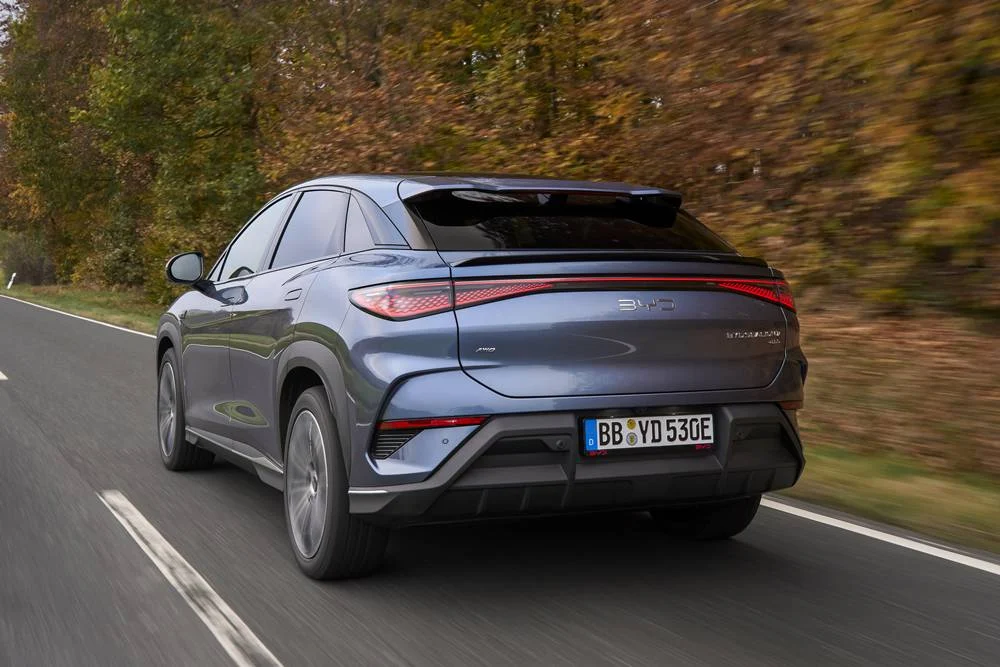


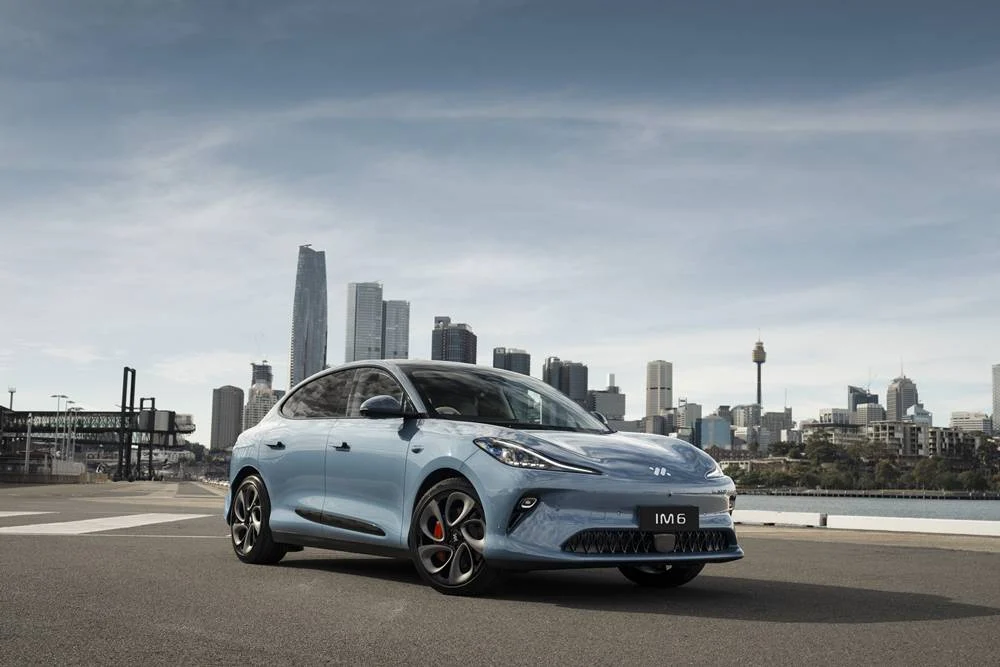
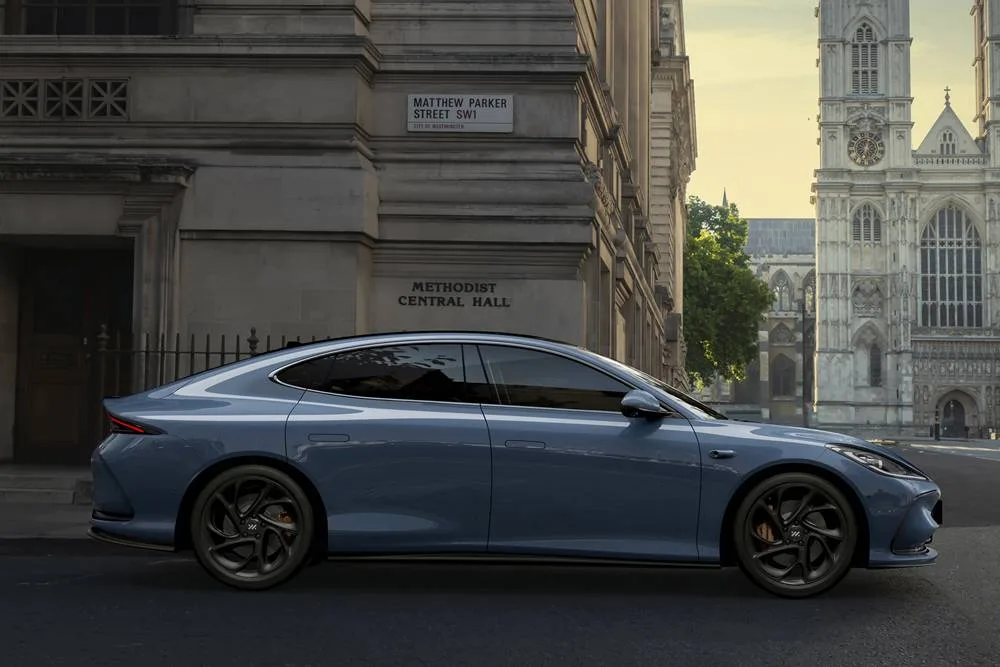
ABOVE: The Chinese wave — MG4 EV, BYD Sealion 7, Zeekr 7GT, Deepal S05, Deepal E07, and MG IM5/IM6
The Geopolitical Accelerant
Hidden deep between the lines of sales figures are details that numbers won’t tell you: the ludicrous Trump/Israeli destabilisation of the Middle East and the Trumpian trade wars have pulled the rug from under the global energy and automotive markets. Every drone strike, every tanker threat, every barrel of oil held hostage to psychopaths sends another wave of buyers into EV showrooms
Stock markets are swinging like drunks on a stool, and gold is behaving more like lead, plummeting by 21% from the January 2026 highs. Just as it did an Edmund Hillary in 2025, it’s done a Titanic in 2026. It fell 21% from its late-January 2026 peak of over $5,500 to between $4,300-$4,600 per ounce by late March 2026. That’s a catastrophic plunge despite still being up over 50% over the year. And still the legacy OEMs are sitting on the collective crapper reading about it in the Financial Times.
Petrol prices, once a roulette wheel, are now a rocket. One week it’s $1.80, the next it’s $2.20, and now 98ron is near $3 a litre. Sucks to own a V8 about now, right? Maybe a Rothschild is ok, but most can’t plan a household budget around such oil-fueled chaos. The BEV market share hit a record 11.8% in February as buyers put their voting wallets where oil companies can’t reach them, at least not directly.
The shift to renewables isn’t what the rightwing whack jobs called “environmental virtue signalling” anymore. It’s economic self-defence. Australia has oodles of sun and wind, and some of the world’s largest lithium reserves. Why are we still hostage to Middle Eastern petrostates and American foreign policy tantrums? Every rooftop solar panel, home battery, and EV in the driveway is a small declaration of independence from a global order that has proven itself catastrophically unstable.
And China understood this before anyone else. While the West spent decades outsourcing manufacturing and greedily chasing quarterly profits, China spent decades building vertical integration. They control the batteries. They control the rare earth minerals. They control the manufacturing. They control the entire supply chain from lithium mine to the buyer rolling down the highway. We’re not competing with Chinese car companies. We’re competing with Chinese industrial policy. Good luck with that.
The Global Collapse
This isn’t just an Australian phenomenon. The legacy auto industry is haemorrhaging like the black knight’s flesh wounds.
In historic Europe, Chinese brands now account for nearly 10% of UK sales. BYD’s European numbers were up 162% in February. Their Hungarian factory begins mass production this quarter, and vehicles built inside the EU render those 45% tariffs a mere piss in the ocean. They’re planning 2,000 retail outlets across Europe by year’s end, so the toe-dipping has become a well-planned invasion with properly sorted supply lines.
Senile old Trump’s tantrumous tariffs were supposed to stop this. Instead, they’ve put a rocket under it. You can’t tariff your way out of a manufacturing Armageddon. All you do is force your competitors to build factories inside your borders, employ your workers, and flog you like a knackered pony. BYD in Hungary. BYD in Mexico. Soon enough, BYD everywhere including the US’s upstairs neighbour, Canada. Canada says living above the US is like having a crack den below. Poor Canada, but the charming northerner is making out like a bandit. Trump’s loss is the maple leaf’s gain.
In the United States, the Big Three have banana-skinned their way from a global 21.4% market share in 2019 through to 15.7% in 2025 on route to oblivion and irrelevance. We’ve written extensively about Stellantis being in frantic freefall — net profit down 70%,and CEO Carlos Tavares frog-marched from the building by a Bolshy board in December. Jeep, RAM, Chrysler — all circling the drain like so much naval lint.
Toyota still holds its golden crown with 10.8 million global sales in 2025, but it too is sliding down the timbers like deck chairs on the Lusitania. Toyota Australia suffered a February bloodbath: down 27.8% year-on-year. Still number one locally, but bleeding from the carotid with only a soaked bandage for comfort. Why is Toyota still churning out last decade’s cars?
Volkswagen a complete basket case, is only slightly better than Atlantis Stellantis. The desperate car maker is moth-balling Germany factories. Its botched EV transition exposed a company that spent too long pretending diesel was the future, and cheated on their exams to prove it.
Why Legacy Automakers are standing in Chinese quicksand
The problem isn’t just EVs. It’s that legacy brands built their lives around internal combustion economics. It’s gone badly tits up and instead of scrambling for solutions, the soporific bosses are sleeping in their deeply buttoned wing chairs and ordering another single malt from club stewards.
Their desperate dealer networks make money on servicing oily bits, transmission repairs, and the thousand moving parts that EVs don’t have. Their supply chains are built around engines and gearboxes. Their workforce is trained for technologies fast becoming obsolete, like the Victorian poo-sweepers who came before them.
When your entire business model depends on selling cars that break down in predictable ways, what do you do when someone offers cars that don’t?
Tesla worked this out a decade ago. BYD worked it out five years ago. Toyota is still making quaint arguments for hydrogen and hybrids.
Australia: The Canary in the Coal Mine
Poor little Australia matters because we’re the well-educated test case. No local manufacturing. No protective tariffs, and one of the most open and crowded automotive markets in the world. What happened here is a grim preview of what’s in store everywhere once the protections fall, and fall they will. Punters won’t pay over the odds given a choice. They’re drivers not dummies.
The Chinese are swiftly pushing the Japanese, Europeans, and Americans out of the Australian top ten and the pace is picking up.
WINNERS:
- BYD — Outselling MG in Australia. European factory online. On track for 6 million global sales. May pass Ford and GM within two years, watch out Toyota.
- Chery — The Tiggo 4 Pro was Australia’s third best-selling vehicle in February.
- GWM — Quietly building serious presence while everyone watches BYD.
LOSERS:
- Toyota — Still number one, but down 27.8% on a terrifying trajectory. Their EV strategy remains a punchline, likewise Lexus.
- Nissan — Down 50% in February. Fifty, that’s an extinction event.
- Stellantis — Slow-motion collapse across every brand in the portfolio. Tavares was the symptom, not the disease.
- Mitsubishi — Down 22% and looking increasingly irrelevant. The Triton can only carry so much weight. despite the glossy brochure.
- Mazda — Down 20%. The CX-5 still sells, but they’re running out of models anyone wants. The new CX-5 looks exactly like the old one, and its 6-speed auto is a museum piece. All their cars look the same, just different sizes.
- MG — Used British heritage to make Chinese cars seem cool but is now being eaten alive by brands that don’t bother with the disguise.
- Jaguar — Down 91%. They sold four cars. Four. Manufacturing is gone and the new model reveal was a laughing stock.
Bold Predictions
Here’s where I stick my neck out. Quote me in 2028 by all means:
1. BYD will outsell Toyota in Australia within three years. Not globally — Toyota’s scale is still immense — but in this market, the trajectory is inescapable. BYD has the products, the prices, and the momentum. Toyota has the HiLux and designers stuck in the 90’s.
2. At least two more legacy brands will exit Australia by 2028. My money’s on Jeep and one of the Japanese also-rans — Nissan or Mitsubishi, take your pick, or both. The economics simply don’t work when Chinese brands can undercut you by $15,000 on a comparable vehicle.
3. MG will be overtaken by Chery as Australia’s top Chinese brand by end of 2027. The British badge trick only works once. Chery has better products, more aggressive pricing, and no legacy baggage to carry.
4. EU tariffs will fail to stop the Chinese wave. Building factories inside Europe renders tariffs irrelevant. Protectionism only works when your competitor is shipping from overseas. When they’re employing your workers and paying your taxes, you should stop drinking the Kool-Aid.
5. Every Middle East flare-up will accelerate EV adoption. The shift to electric isn’t just environmental anymore — it’s geopolitical survival. And with the region perpetually on fire thanks to the demented very-stable-geniuses in Washington and the genocidal psychopath in Tel Aviv, those spikes will keep coming.
6. The legacy automakers that survive will be unrecognisable. Different products, different business models, different economics. The companies that built the 20th century car industry will either reinvent themselves completely or die. There is no middle ground.
The Bottom Line
The automotive industry is being remade in real time. China owns the supply chain. Geopolitical chaos is driving consumers toward EVs and renewables. Legacy automakers are structurally incapable of adapting fast enough, or at all. And Australia — open, unprotected, exposed — is showing everyone what comes next.
The question isn’t whether China will dominate. They already do.
The question is what happens to everyone else. “Everyone else” are polishing their pudds while their houses burn down around them.
- Soaring fuel prices drive EV interest across Australia
- The Great Petrol Bloodbath: China Takes Top Spot
- GWM offers free servicing as part of new PHEV test drive campaign
- Chery donates over $100k to koala conservation
- The Great Petrol Bloodbath: Why Australia is choosing the plug
Sources include: Federal Chamber of Automotive Industries (FCAI), VFACTS Service, February 2026
Help Support Gay Car Boys Subscribe to our Youtube Channel

Alan Zurvas is the founder and editor of Gay Car Boys, Australia's leading LGBTQI+ automotive publication. Before launching GCB in 2008, Alan's automotive writing was published in SameSame.com.au and the Star Observer. With over 16 years of hands-on car reviewing experience, Alan brings an honest, irreverent voice to every review — championing value and innovation over brand loyalty.
Leave a Reply