
Six Months With Our Polestar 4 – Long-Term Review: Gorgeous, Gay-Friendly… and Let Down by Software
Why We Broke Up With Tesla
The Polestar 4 is our second electric vehicle. We’ve been all-in on EVs for a while now: we care about the environment, we want to reduce our dependence on fossil fuels, and we both work in tech, so the constant evolution through software updates really appeals.
Our EV journey started in 2021 with an MY21 Tesla, Model 3 back when public charging in Australia was still in its awkward early-teen phase. We were living in an apartment near Brisbane’s CBD with no option for home charging, so public infrastructure mattered.
To be fair, the Tesla was a great first EV. Everything worked from the moment we took delivery, and Tesla clearly put a lot of effort into the customer experience.
It wasn’t perfect, though. Road noise in the cabin was high, and the suspension was firm in the “you will feel every pothole in Brisbane” sense. As a passenger, I lost more than one coffee to the cratered streets. My husband insists he wasn’t aiming for the holes. I remain unconvinced.
The entertainment system was powerful but closed. No Apple CarPlay, no Android Auto, no installing your own apps. You were locked into Tesla’s navigation, which worked… until it didn’t, occasionally sending us on odd detours.
Autopilot, though, was a highlight. It’s essentially adaptive cruise control with lane-keeping, but with good speed sign recognition and easy speed adjustment. In Queensland, where speed enforcement can be unforgiving (we’ve seen tolerance as low as 1 km/h over the limit), having the car manage speed is a genuine mental load you no longer carry. Instead of constantly checking that you hadn’t crept a kilometre over, you could focus on the road and what might actually hit you.
There were quirks: Tesla’s camera-only approach meant the car sometimes “panicked” about potential collisions where none realistically existed — cars crossing well ahead, parked cars on corners, that sort of thing. On the plus side, it did nice little quality-of-life tricks like automatically cancelling your indicator once you’d completed a lane change.
What really broke the relationship, though, wasn’t mechanical or technical.
By late 2024, American politics had taken a grim turn towards fascism, anti-LGBTQI sentiment and, in particular, anti-trans activism — with Elon Musk loudly and financially backing that shift. As a queer household, we reached a point where we couldn’t, in good conscience, keep driving a car that indirectly supported that ecosystem. So we made the call: the Tesla had to go, and our next car needed to come from a more socially conscious brand.
Why the Polestar 4?
We went shopping with a clear wish list:
- Roomier than our Tesla Model 3
- Quieter and more comfortable
- Under the luxury car tax threshold (around $92,000 at the time), so we could salary-sacrifice and avoid FBT
- Still tech-forward, not a step back into “two knobs and a clock radio” territory
The Polestar 4 grabbed us early. We loved the styling, and the big tablet-style central screen meant moving from Tesla’s UI wasn’t a huge cognitive leap. At the time, our chosen spec was about $5,000 more than an equivalent Tesla Model Y.
We optioned:
- Pilot Pack – semi-autonomous driving (adaptive cruise + steering assist). Nowhere near as mature as Tesla Autopilot, but functional.
- Plus Pack – Harman Kardon sound system, head-up display, pixel auto-dimming headlights, reclining rear seats, powered tailgate with foot sensor, 12-way adjustable heated front seats, and heated steering wheel (arguably overkill in Queensland). It also added ambient interior lighting with adjustable colours.
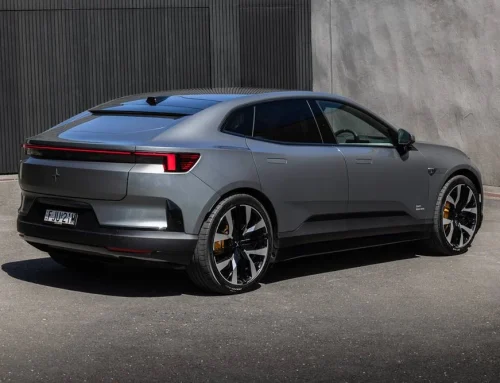
The headline compromise is the lack of a rear window. Visibility is provided by a rear camera feeding a digital rear-view mirror. Strange on paper, surprisingly easy to live with in practice.
We chose a bold, shimmering gold exterior. I was nervy about it at first, but six months on it still turns heads and strangers regularly compliment it. Inside, we went for the light blue fabric made from recycled plastic bottles. If money were no object, my husband would have gone for the Napa leather with cooled and massaging front seats, but an extra $9k would have murdered our FBT budget.
Above: This Week’s VIDEO Review – 2025 Ford Mustang GT Manual V8 REVIEW Is this the LAST TRUE MUSTANG?
#FordMustangGT, #Mustang2025, #FordAustralia, #V8Power, #SportsCar, #ManualGearbox, #CarReview, #GayCarBoys, #PerformanceCars, #MuscleCar

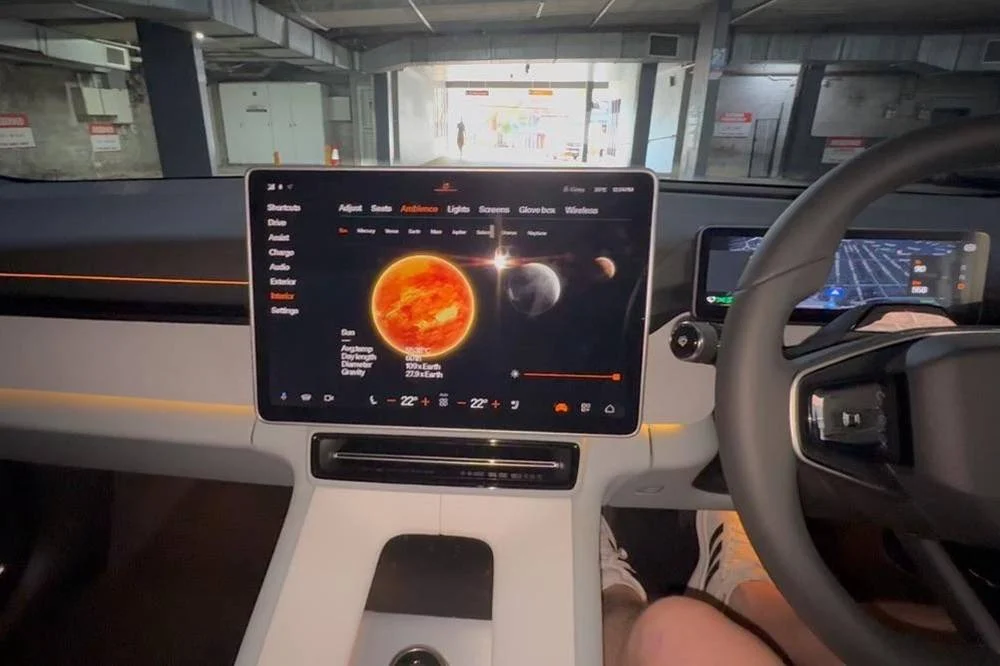
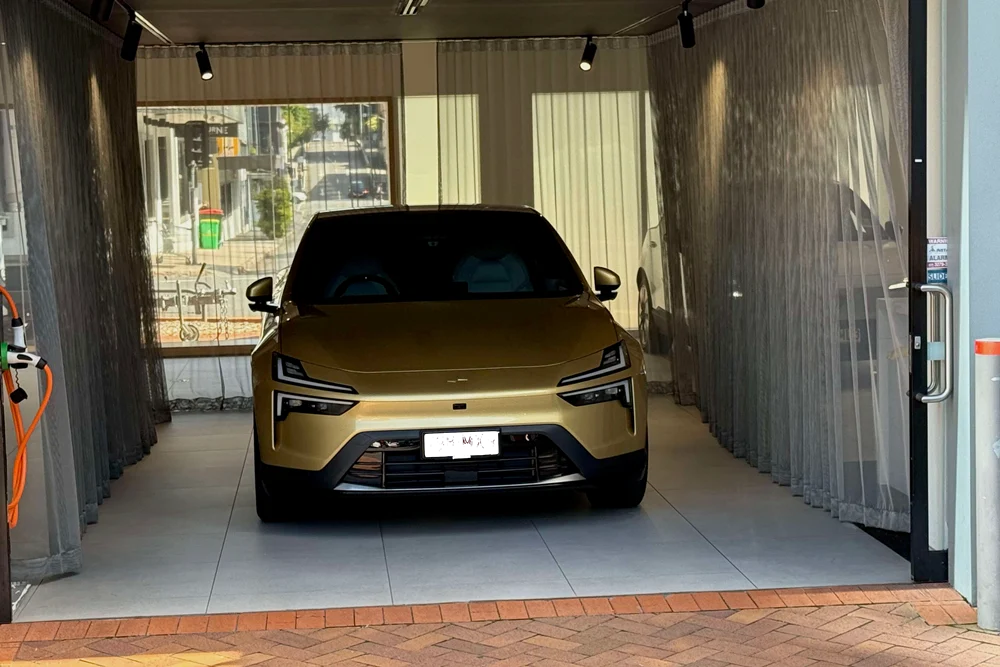
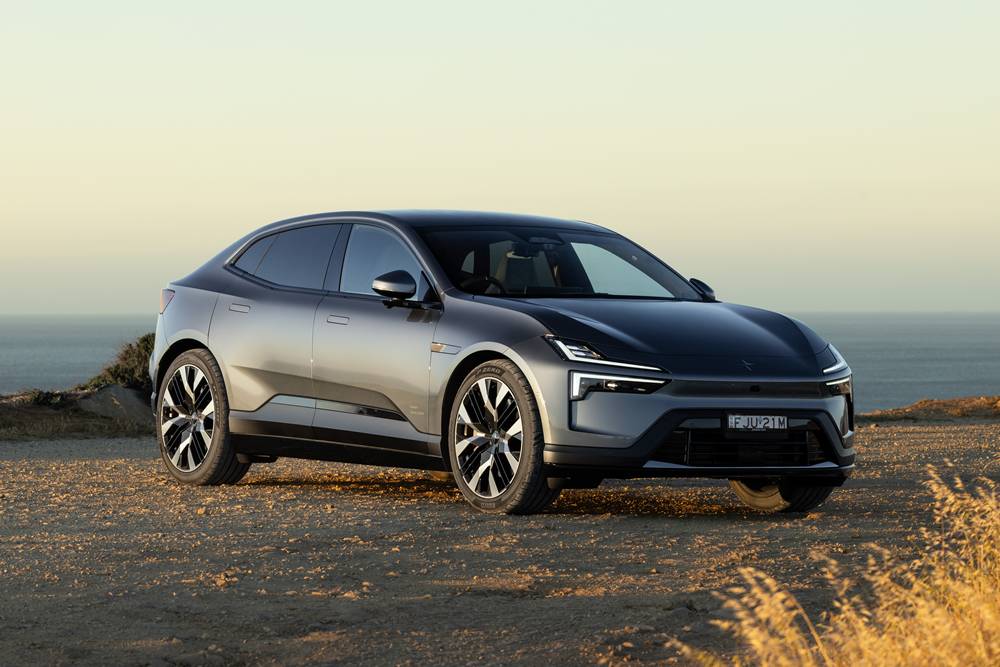
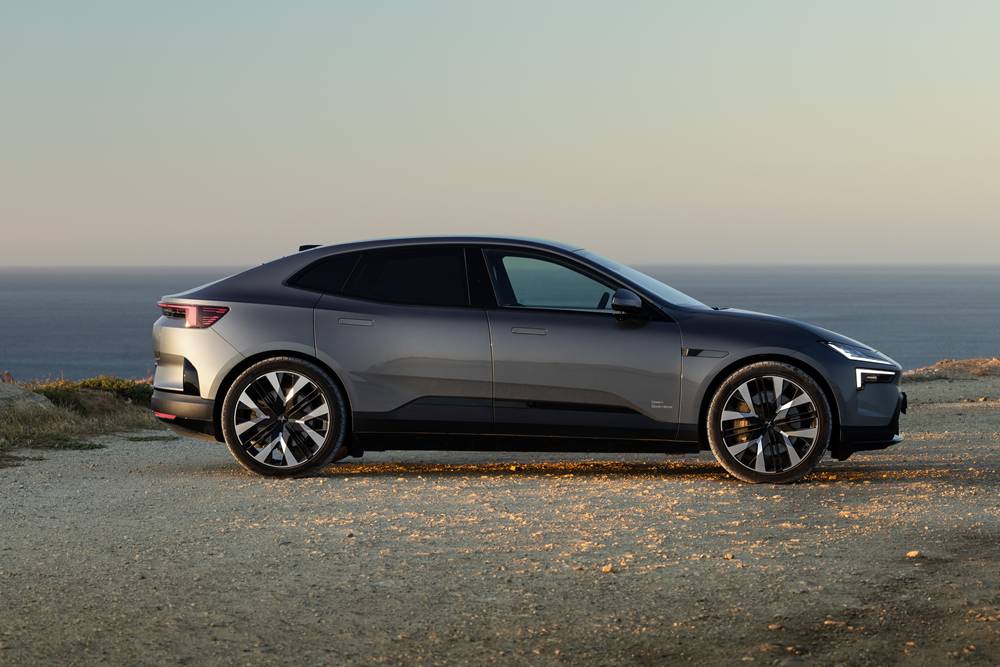


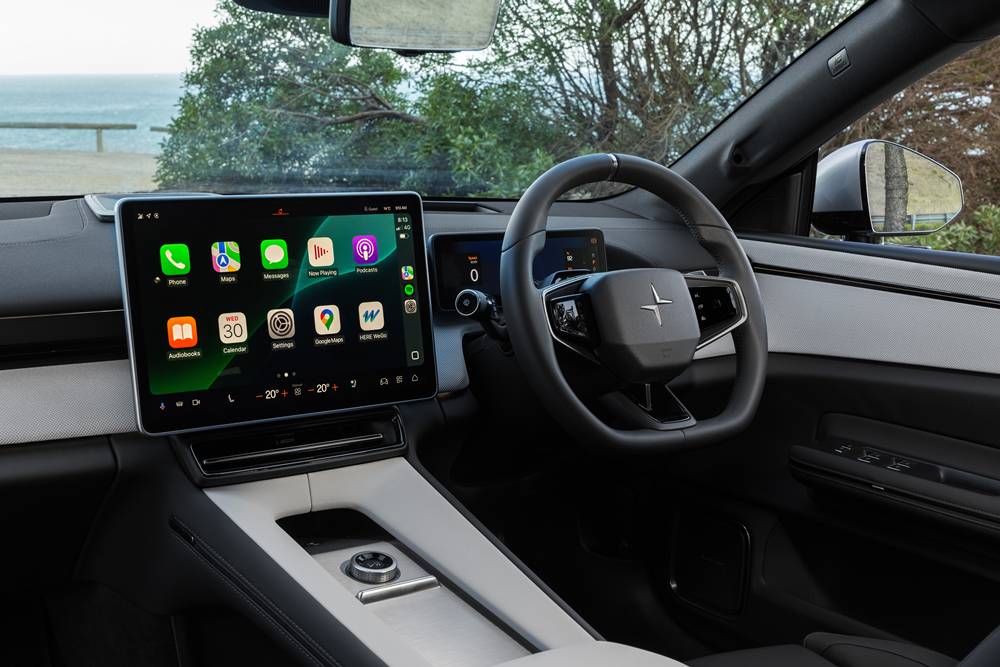
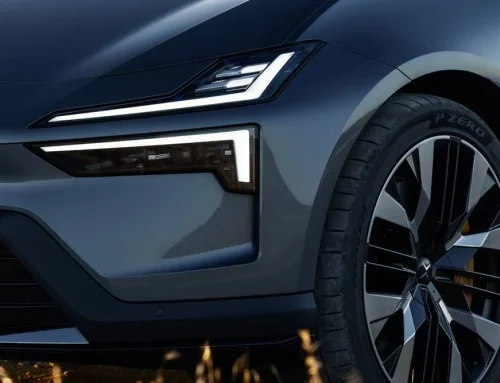
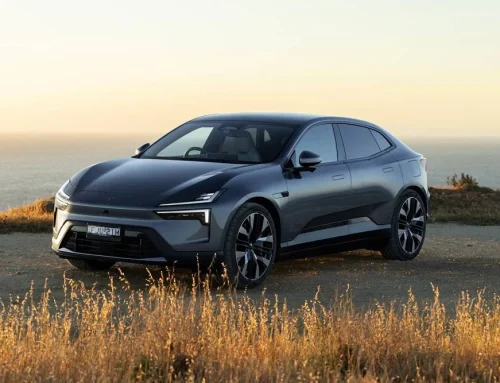
ABOVE: Our Polestar 4, plus studio Polestar shots
Ordering and Delivery: Easter Drama
We placed our order in December and were quoted an estimated delivery of May 2025. Long, but sadly normal in the current Australian new-car landscape, especially for a newly launched model.
Shortly after we ordered, Polestar downsized its Brisbane operation, folding the standalone Bowen Hills showroom into the Volvo dealership in Fortitude Valley. The sales staff we’d originally dealt with were laid off as part of that change.
Polestar’s communication during the wait was… fine. There’s an app where you can track your order status, plus email notifications. Because ours was via a fleet company, there were some hoops to jump through before the order showed up in the app, but we got there in the end.
I’m told that under normal circumstances you’d get regular calls from your sales rep with updates. In our case, downsizing likely got in the way: we only received a couple of calls across three months. As an introvert, I wasn’t devastated. The app plus a bit of internet sleuthing was enough for me — including tracking ships from the factory in China and narrowing down which one likely had our car on board.
Eventually the car arrived in Brisbane and went to the arrival warehouse for inspection and any necessary fixes before being sent to Fortitude Valley for collection.
The timing looked perfect. We’d just found a buyer for the Tesla and had a family gathering planned in Gatton (about 1.5 hours west of Brisbane) on Good Friday. The Polestar 4 would be the ideal new toy for the trip.
Then everything slowed to a crawl.
The leasing company couldn’t issue final paperwork because Polestar had invoiced them without the required details. Most fleet financiers need both the VIN and the electric motor identification numbers. Despite being asked, Polestar hadn’t provided them.
Our sales manager assured us it was being escalated, but couldn’t explain what the actual issue was. Days passed. Easter loomed.
It wasn’t until we spoke to Alan from Gay Car Boys, who then spoke to Polestar’s marketing manager, that we learned the truth: somewhere between ship and showroom, our engine numbers had simply not been recorded in the system.
The car was physically sitting in the basement. It just needed someone to go down, read the number, and type it in.
To their credit, once prompted, they did exactly that. The catch: you can’t just quietly edit core manufacturing details in a database. There was no standard process to “add” the missing information, so they had to work around it with a manual invoice.
All of this happened on the Thursday before the Easter long weekend. With Friday and Monday as public holidays and the finance team in the Philippines (two hours behind), it was noon before the new invoice was issued. Without Alan’s intervention, we suspect it could’ve dragged on much longer.
Our fleet company then scrambled to get finance approved with the lender. By 4 p.m., there was still no sign-off. Polestar told us there was no way they’d have the car ready for the weekend even if approval came through — registration alone made it impossible. To their credit, they loaned us a Polestar 2 so we could still make the family trip.
Naturally, as we were out buying supplies in the loan car, the sales manager rang with the news: finance was approved, someone had gone back into the office to register our car, and it would be ready for collection first thing Saturday morning. Not the Good Friday adventure we’d planned, but not a total disaster either.
Handover: Gold Curtains and Green Cred
Handover day came with a bit of theatre. The Polestar 4 was hidden behind gold curtains in the showroom, waiting to be “revealed”. We were given a Frank Green reusable coffee cup and water bottle set (both fit perfectly in the centre cupholders) — a nice nod to the car’s green positioning.
The sales manager walked us through the basics, including the surprisingly fussy foot-activated tailgate. To open it, you need to swing your foot straight forward and back under the middle of the car. Too fast, too slow, or a circular motion and nothing happens. There’s also a couple of seconds’ delay between the kick and the tailgate reacting. It works once you get used to it, but it’s not exactly inclusive design. Thankfully there’s a physical button too, and realistically if you have mobility challenges you’re less likely to rely on the foot-activated option while juggling shopping.
We went through the essentials of the infotainment system, ownership do’s and don’ts, and then finally drove off to start life as new parents of a Polestar 4.
Space, Comfort and Gay Road Trips
With our original Easter country drive delayed, we rescheduled and, on Easter Monday, headed to Mount Tamborine with friends. Perfect opportunity for:
- Four full-sized blokes
- One brand-new EV coupe-SUV
- A mountain full of twisty roads
I took the back seat and relinquished the front to one of our friends. At 181 cm and more “plus-size model” than “twink”, I’m not a small unit. With the centre armrest down, I had plenty of room to stretch out. Rear seatbacks recline by about 15 degrees — think economy-class seat tilt — and while it’s not dramatic, it does make a noticeable difference on longer runs.
Ride comfort is excellent. The Polestar 4 feels planted and composed, a welcome change from the more brittle ride of our old Tesla. Cabin noise is low, and the glass roof plus elevated rear seating makes the view from the back properly cinematic. Trees and mountains slid past overhead while the Harman Kardon sound system did the heavy lifting. Crank it and it’ll happily reach “annoy the neighbours” volume without obvious distortion.
On a full-day outing including lunch, sightseeing and a few drinks at a local distillery, we used less than half the battery. With a rated range of around 620 km, our real-world experience has been comfortably sufficient for day trips without thinking about chargers.
Driver Assistance: Not There Yet
Pilot Assist — Polestar’s semi-autonomous driving suite — has been one of the more disappointing aspects.
On paper, it offers:
- Adaptive cruise control
- Lane centring assist
- Steering support on highways
In practice, at least in our car and software version:
- It tends to creep over the speed limit
- Adjusting the set speed is fiddly and slow
- It often rides too far to the right within the lane rather than sitting cleanly in the centre
We’ve seen improvements over several over-the-air updates, but it still doesn’t feel trustworthy enough to leave engaged for long. We find ourselves taking back control frequently.
To keep the car under the speed limit in Queensland, we’ve had to set the limiter to 5 km/h below. That keeps the police happy but irritates other drivers, leading to a steady stream of impatient overtakes. Compared with Tesla’s Autopilot, Polestar’s system feels like a generation behind.
Cameras, Parking and Those Over-Cautious Sensors
Six months in, the lack of a rear windscreen is a non-issue. The digital rear-view mirror and 360-degree camera system handle visibility extremely well.
The stitched 360° view is helpful for tight car parks, though the front of the image appears slightly enlarged compared with the rear, which is a bit distracting once you notice it. Still, it’s easy to line the car up between painted lines and make sure the nose and tail are entirely within the bay.
Polestar’s distance sensors, however, are tuned to “nervous chihuahua”. They beep at what feels like generous distances. In a wide car, the constant chorus of warnings can be anxiety-inducing at first. Our worry now is the opposite: we’ve become so used to false alarms that we might miss a real one.
We also had front sensors triggering with nothing in front of us early on. A trip to the service centre and a software update seem to have fixed that.
Dash Cam: Great Idea, Terrible Execution
A later software update added a built-in dash cam. On paper, brilliant. In practice, it’s a masterclass in how to turn a good feature into a chore.
To use it, you need to insert a microSD card into a slot hidden in the top of the glovebox. The space is minuscule and clearly not designed for human hands. It took us over an hour to get the card in. We eventually managed it by:
- Holding the card with tweezers
- Using our iPhone’s front camera as a makeshift periscope to see what we were doing
We’ve since bought a microSD extension cable from Amazon, which effectively relocates the slot somewhere more accessible. We’d highly recommend it to anyone planning to actually use the dash cam.
Once we finally had the card mounted, the disappointment continued. The dash cam doesn’t operate on a “set-and-forget” basis like most aftermarket units. Instead, you need to manually turn it on at the start of every trip. Forget once and it’s useless. For a car that leans so heavily on software, this lack of basic usability feels like a serious oversight.
Software: The Polestar 4’s Achilles Heel
If there’s a single recurring theme with the Polestar 4, it’s this: the hardware is lovely; the software is not.
Polestar pushes over-the-air updates roughly every 6–8 weeks. That’s good in theory. In practice, each update fixes some problems and introduces fresh ones.
A few examples:
- Digital Keys (iOS)
Polestar eventually rolled out digital keys for iOS, allowing you to unlock and drive the car with an iPhone or Apple Watch instead of the physical fob or card. We loved this on the Tesla and were excited to get it here.
The good:
- Walk up to the car with your phone or watch and it unlocks. That part works well.
The not-so-good:
- Digital keys must be assigned to driver profiles (which store seat position, climate preferences, etc.).
- The process for assigning keys is clunky.
- One of our keys somehow ended up tied to the “Guest” profile. We still don’t know which one.
- The car often loads the Guest profile first (taking a minute or two), then takes another minute or two to switch to the correct driver profile.
When you just want to get in and drive, this feels unnecessarily painful.
- Infotainment and Volume
We mostly use the TuneIn app for radio. Every time we get into the car:
- Playback is stopped, even if it was playing when we got out.
- The system doesn’t remember volume settings and jumps to around 30%, which is uncomfortably loud.
We’ve learned to dial the volume down before hitting play, but again, for a premium car this sort of behaviour feels amateurish.
- Regional Defaults and Speed Signs
One particularly alarming bug appeared after an update that made the car set its region based on GPS location at startup. If the car doesn’t have a GPS lock when you start it, it defaults to Europe.
The main symptom we’ve seen is with speed sign recognition:
- The car reads a 60 km/h sign
- Interprets it as 60 mph
- Then converts that to 94 km/h and shows 94 as the speed limit on the display and head-up display
If you didn’t know why that was happening, it could be genuinely confusing and dangerous.
- Regenerative Braking Randomly Turning Off
The Polestar 4 offers three levels of regenerative braking:
- Full: lift your foot and the car slows aggressively, eventually to a stop
- Medium: some regen — you still need to use the brake pedal to stop
- Off: behaves more like a traditional ICE car, mainly coasting unless you brake
We always choose full regen and are very comfortable driving that way. Recently we’ve had a few moments where:
- Regen simply doesn’t activate
- We go into the settings and find the car has turned regen off, seemingly by itself, mid-drive
We’ve been advised to take it in for service, but combined with long wait times and prior visits that only resulted in firmware updates, our confidence is not high.
- Apple CarPlay Integration
As Apple users, we were keen to use CarPlay. Unfortunately, integration feels bolted-on:
- If CarPlay is active, you lose quick access to key vehicle functions like climate controls unless you dive through menus.
- Audio streams don’t mix. Sound comes from either CarPlay or the car’s native system, not both. That’s frustrating if you want in-car navigation plus CarPlay music, or vice versa.
- The workaround is to use CarPlay for both audio and navigation, effectively sidelining Polestar’s own system.
- Despite having a large driver display, CarPlay appears only on the central screen, missing an opportunity to put key info (like turn-by-turn directions) directly in front of the driver.
Servicing and After-Sales
Service has been a mixed bag.
- Lead times can be weeks, even for relatively simple issues.
- Our most recent visit resulted purely in firmware updates.
- We requested quotes for repairing seat damage caused by an unsecured electric scooter in the boot. The service team offered to arrange quotes but never followed through, even after we chased it.
For a brand that’s still building its reputation in Australia, this matters. EV buyers — especially queer buyers who often rely heavily on word-of-mouth and community trust — notice when after-sales support feels patchy.
Verdict: Beautiful, Promising, and Not There Yet
Six months in, our feelings about the Polestar 4 are complicated.
The good:
- Stunning design that still turns heads
- Comfortable, quiet ride
- Excellent real-world range for day trips
- Spacious and genuinely usable back seat, even for taller, broader passengers
- Strong green credentials in materials and positioning
- A clear alternative to brands and personalities whose politics are hostile to LGBTQI communities
The not-so-good:
- Delivery and administrative processes that feel fragile and overly manual
- Driver-assistance tech that lags behind the competition
- Over-sensitive parking sensors that encourage people to tune out alerts
- A dash cam feature that’s both physically awkward to set up and annoying to use
- Software issues that range from mildly irritating to potentially dangerous
- Service and follow-through that don’t yet match the premium price point
In Queensland, with our roads, our enforcement regime and our reliance on software to make EVs easy to live with, the Polestar 4 feels like a beautiful first draft rather than a finished product. It has enormous potential and we want to love it unreservedly — especially as a consciously chosen alternative to Tesla — but repeated software missteps and a patchy customer experience hold it back.
For now, we’d describe our overall feeling as disappointed but hopeful. The hardware is good enough that if Polestar can lift its software game and tighten up its processes, the 4 could become the car it looks and feels like it should already be.
Hashtags
#Polestar4, #Polestar, #ElectricCars, #EVReview, #LongTermReview, #GayCarBoys, #CoupeSUV, #EVLife, #QueerDrivers, #SoftwareIssues, #EVAustralia
More Volvo and Polestar
- The Volvo C40 Story: A Swedish Happy Ending – Full Review
- 2022 Volvo XC40 Recharge Pure Electric SUV REVIEW
- 2022 Volvo XC90 Recharge Plug-In Hybrid Review
- 2022 Volvo CX 60 B6 AWD Mild Hybrid Review: Better than Good
- Volvo to Build new EV Battery Plant in Gothenburg, Sweden
- Volvo Claims Fastest Growing Luxury Brand
- Volvo launches XC40 Recharge Pure Electric, Single Motor SUV.
- Volvo to Buy Geely’s Share in Chinese Plant
- Volvo S90 -Used Executive Car of the Year UK
- Clever Volvo Key Restricts Speed
- Is Volvo XC40 Recharge Hybrid a Real Viking?
- Polestar Rolls Out OTA Updates for Polestar 2 Models
- 2022 Polestar 2 Dual Motor Review
- Polestar 2’s Android Google Operating System Top 10 Tips
- Polestar 2 VS Tesla Model 3
- Polestar 2 Where Its Google OS is Star-Trek-Meets-Car-Trek
- How Much and How Long to Charge My Polestar 2?
SHORT Video Review: Lexus LC500 Convertible Roof operation. Mesmerising. Sorry about the rubbish background
@lexus, #lexuslc500convertible, #alanzurvas, #gaycarboys
#automobile #shorts #audietrongtrs #gaycarboys #alanzurvas ##shorts
Discover more from Gay Car Boys
Subscribe to get the latest posts sent to your email.







Leave a Reply