Honda Motor Co., Ltd. Director, President, and Global CEO Toshihiro Mibe held a press briefing to outline the company’s strategic initiatives for automobile electrification. The briefing emphasized Honda’s commitment to electric vehicles (EVs) and fuel cell electric vehicles (FCEVs), targeting 100% of global vehicle sales by 2040. Key strategies involve building a strong EV brand and business foundation to ensure long-term success.
Electrification Targets
Honda reaffirms that EVs are the most effective solution for small mobility products, such as motorcycles and automobiles. Despite a perceived slowdown in the EV market in some regions, Honda remains confident in the steady progress towards an EV-dominated future. By 2030, the company plans for EVs and FCEVs to constitute 40% of its global sales, producing over 2 million units annually.
Structural Reforms in Procurement and Production
Honda aims to establish a vertically integrated EV value chain, focusing on batteries to reduce costs significantly. By 2030, the cost of batteries in North America will be reduced by over 20%. The company targets an overall production cost reduction of approximately 35%, with a positive outlook on securing sufficient batteries for its planned production volumes.


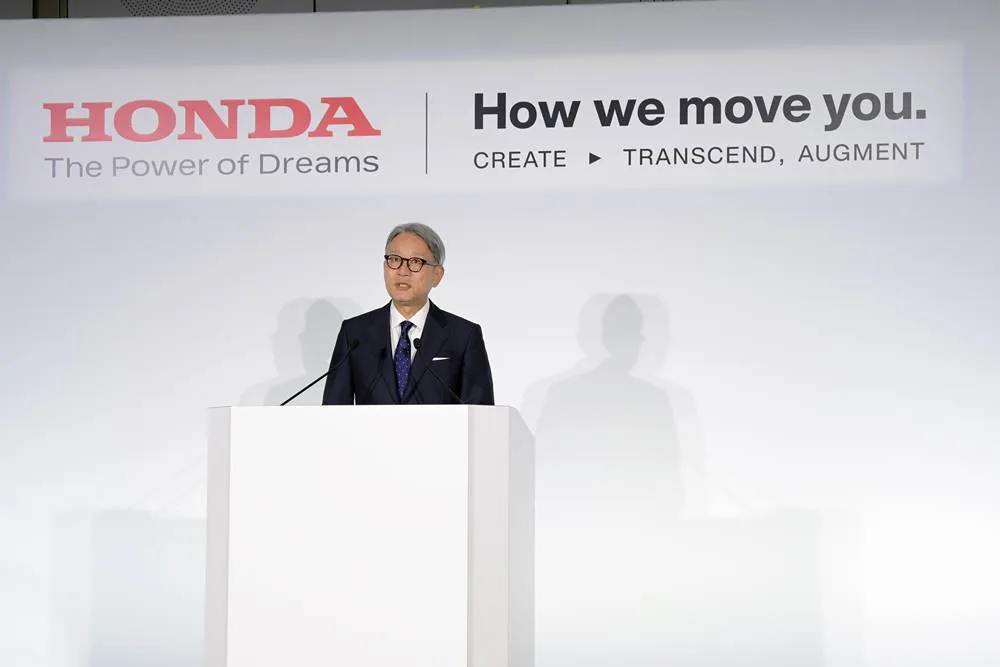
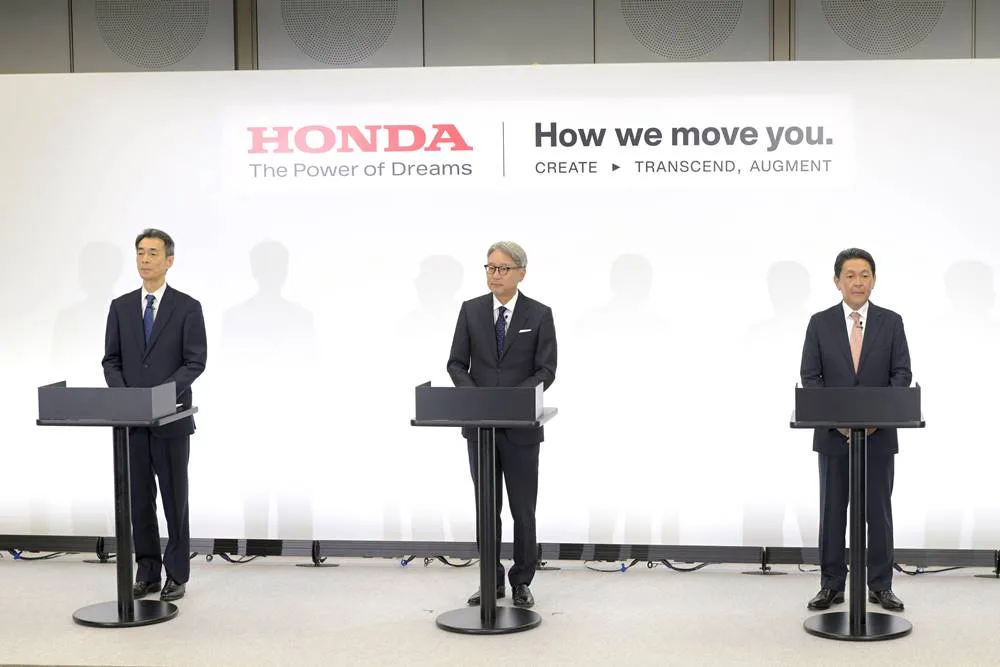




ABOVE: 2024 Honda briefing – the company’s EV future
EV Lineup Strategy
The Honda 0 Series will be the flagship EV lineup, launching seven models globally by 2030, ranging from small to large vehicles. A micro-mobility product equipped with four Honda Mobile Power Pack e: (MPP) units will be introduced in Japan by FY2026, expanding MPP applications.
Financial Strategy
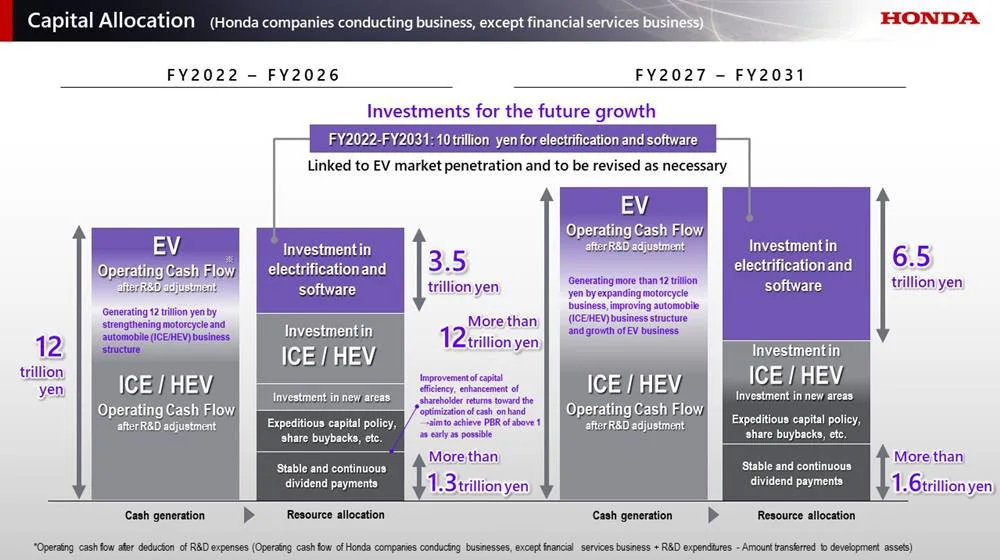
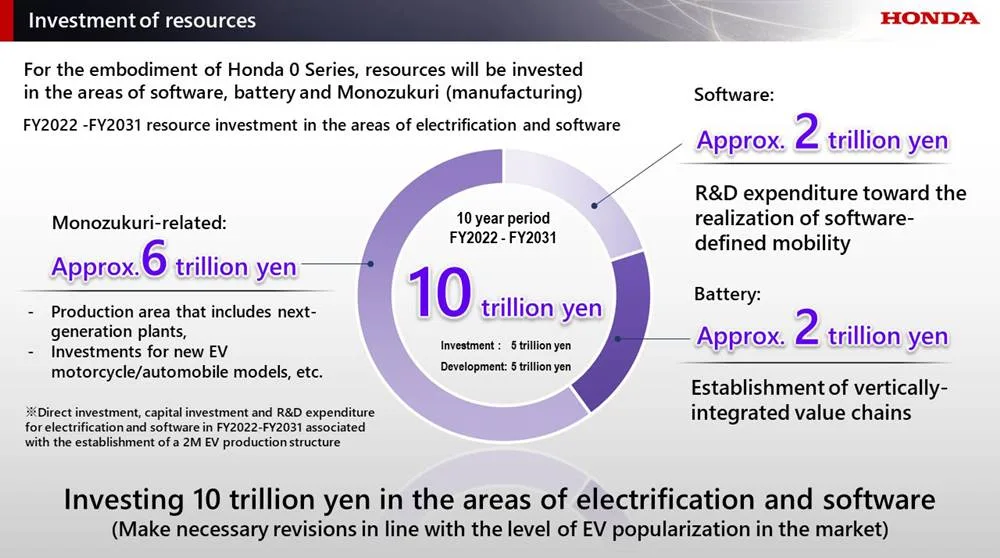
Honda plans to invest approximately 10 trillion yen by 2030, balancing investments for future growth with shareholder returns. This includes 2 trillion yen for R&D in software-defined mobility, 2 trillion yen for establishing EV value chains in key markets, and 6 trillion yen for production facilities and new model development. Honda aims to generate 12 trillion yen in operating cash flow from 2021 to 2025, reinvesting in EV and other new businesses while maintaining stable dividend payments.
Initiatives Toward Carbon Neutrality
Honda’s 2050 goal is to achieve carbon neutrality with zero environmental impact. For large mobility products like aircraft and watercraft, sustainable aviation fuels (SAF) and e-fuels are considered potential solutions. However, for small mobility products, EVs remain the focus.
Introduction of Unique EVs
Honda’s 0 Series will feature a new EV development approach termed “Thin, Light, and Wise.” This includes innovative designs, lightweight body frames, and advanced digital user experiences. The series will launch a flagship model similar to the Saloon concept in 2026, aiming for a range of over 300 miles.
Comprehensive EV Value Chain
To enhance competitiveness, Honda will build value chains centered around batteries. By 2025, the joint venture battery plant with LG Energy Solution in the U.S. will produce 40GWh of batteries annually. Honda also plans to expand into battery life cycle businesses, including charging services and battery recycling.
Advancing EV Production Technologies
Honda will utilize existing production facilities flexibly to produce both internal combustion engine (ICE) and EV models. Advanced technologies like mega casting machines and the Flex Cell Production System will optimize production efficiency and costs. By 2028, a dedicated EV plant in Canada aims to achieve world-class production efficiency.
Global EV Model Introduction
The Honda 0 Series will debut in North America in 2026, followed by a global rollout, with seven models launched by 2030. In China, Honda plans to introduce ten EV models by 2027, aiming for 100% EV sales by 2035. Small-size EVs and hybrid-electric models will also be introduced in various regions.
Securing Resources and Capital Allocation
Strategic investments will be made at appropriate times to support electrification. From 2021 to 2025, Honda will invest in EV business, ICE/HEV business, and new areas while ensuring continuous dividend payments. From 2026 to 2030, Honda aims to improve EV business profitability and generate more operating cash flow, accelerating investments in electrification and software.
Honda’s comprehensive strategy reflects its commitment to leading the transition to electric mobility while balancing innovation, cost efficiency, and shareholder value.
Other GayCarBoys EV Stories:
- The Trouble with Electric Car Charging-Polestar 2
- 2022 Polestar 2 Dual Motor Review
- Polestar 2’s Android Google Operating System Top 10 Tips
- Polestar 2 VS Tesla Model 3
- Polestar 2 Where Its Google OS is Star-Trek-Meets-Car-Trek
- How Much and How Long to Charge My Polestar 2?
- We drive 2019 Jaguar I-Pace SE EV400 Electric car
- 2023 IONIQ5 Epiq VS 2023 Genesis GV70 Electrified IS ONE BETTER?
- 2021 Hyundai IONIQ 5 EV Review
- KIA’s EV6 is Finally Here: What a Cracker! FULL REVIEW
- 2021 KIA Niro EV, PHEV and Hybrid First Drive
- Hyundai NEXO Hydrogen Fuel Cell SUV REVIEW
- Is Hyundai’s Kona EV the Best Electric Car on the Market?t
- Audi E- Tron 50 Review PT 1: EV Myths BUSTED!
- 2021 Audi E-Tron 50 Sportback Review: PT 2 The Drive
- 2019 Jaguar I-Pace SE EV400 Driven and rated in GALSTON GORGE Australia Video Review
- Nissan LEAF 2019: All New EV Powers Your Home VIDEO REVIEW
- Hyundai’s 2019 Electric Ioniq: The cheapest EV In Australia?
- New Nissan Leaf Could Power Your Home for a Week
- Tesla Model 3 Colors and Price
- Charging My tesla Model 3
- Tesla Model 3 Full Review Inside, outside, and Roadtest
- Mini Cooper SE electric
- Karma Starts E-Flex Prototype Testing
- Is Karma Automotive’s New E-Flex Platform a Game Changer
Video Review: Is Volvo EX30 Possibly the Best Volvo Yet? EX30 Range FULL GayCarBoys Review
@volvocar, #volvoex30, #volvoaustralia, #alanzurvas, #gaycarboys
SHORT Video Review: Audi e-Tron GT RS Quick Look – Light Show
#automobile #shorts #audietrongtrs #gaycarboys #alanzurvas ##shorts

Alan Zurvas is the founder and editor of Gay Car Boys, Australia's leading LGBTQI+ automotive publication. Before launching GCB in 2008, Alan's automotive writing was published in SameSame.com.au and the Star Observer. With over 16 years of hands-on car reviewing experience, Alan brings an honest, irreverent voice to every review — championing value and innovation over brand loyalty.
Leave a Reply