
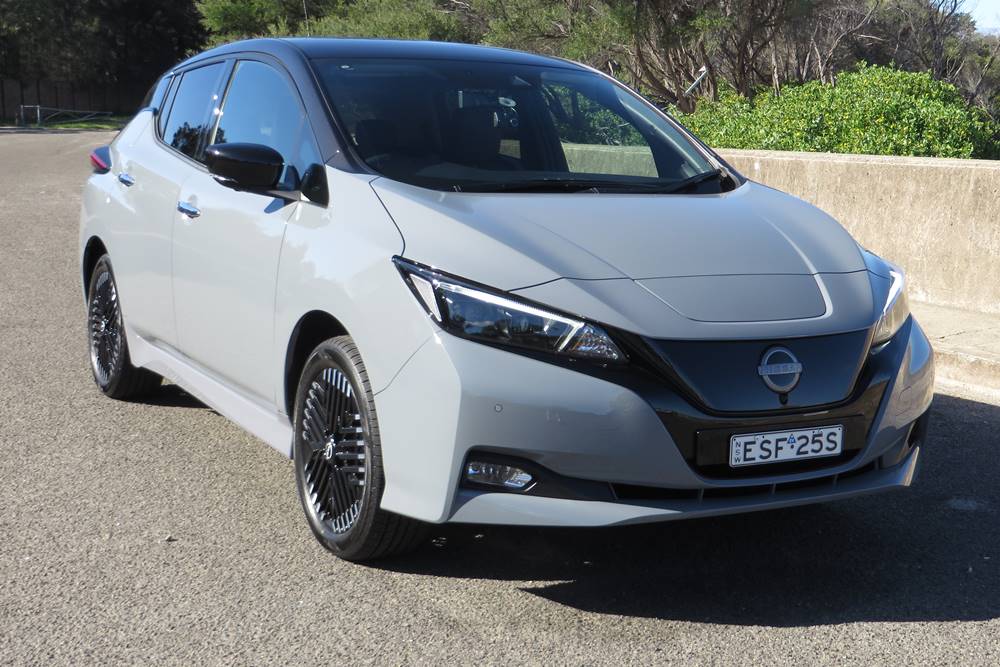
Nissan launched the leaf, and while we liked it, we thought it was a little lacking, range-wise. Then quick as a flash, Leaf + came along. The base model remains, but Leaf + increases the 40kWh battery to 62kWh, and the power from 110kw/320Nm to 160kw/340Nm. Maximum charging rate is up from 50kw to 100kw, but only the top model, with range now between 300 and 400km, or thereabouts.
Nissan Leaf remains one of the only EV’s with bi-directional VTG charging. In other words, with appropriate infrastructure, can be used as a mobile battery at home, or when out at a public charger. The Hyundai Group EVs have VTL, or, Vehicle to load. It enables their electric cars to power anything plugged into one of the 2 household-style power sockets (1 under the back seat and the other on the external adaptor that plugs into the charge port), but they will not connect back to the grid as Leaf does.
That’s a whole heapin’ helpin’ of juicy electronic goodness. It changed the way I felt about the little EV, despite the criminally ugly wheels.
The MY 23 Leaf + still has 17” alloys, but they now have a weird pentagonal lined pattern in them that makes them look like board game tokens. They are ghastly so GET. IN. THE . BIN.
Video Review: 2023 Pathfinder Ti L Revisited FULL REVIEW plus Tech Terms explained #gaycarboys
1 Minute Video Review: Nissan Pathfinder, is it better than Toyota Kluger? #shorts
Help Support Gay Car Boys Subscribe to our Youtube Channel
- Top GayCarBoys Stories:
- Sexy Men Drive 2021 Toyota Yaris Cross
- 10 Sexiest MotoGP Motorcycle Riders
- DON’T Drive YOUR CAR until you’ve Checked if your AIRBAG will KILL YOU
- 10 Hottest Racing Drivers
- Top 12 Best Gay Lesbian LGBTI Luxury Cars
- Top 10 Gay Lesbian LGBT Cars
- Top 10 Gay Lesbian LGBT Sports Cars
- Top 15 gay and lesbian LGBT SUVs
- Talented Twinks – Callum Ilott Virtually Races Arthur Leclerc
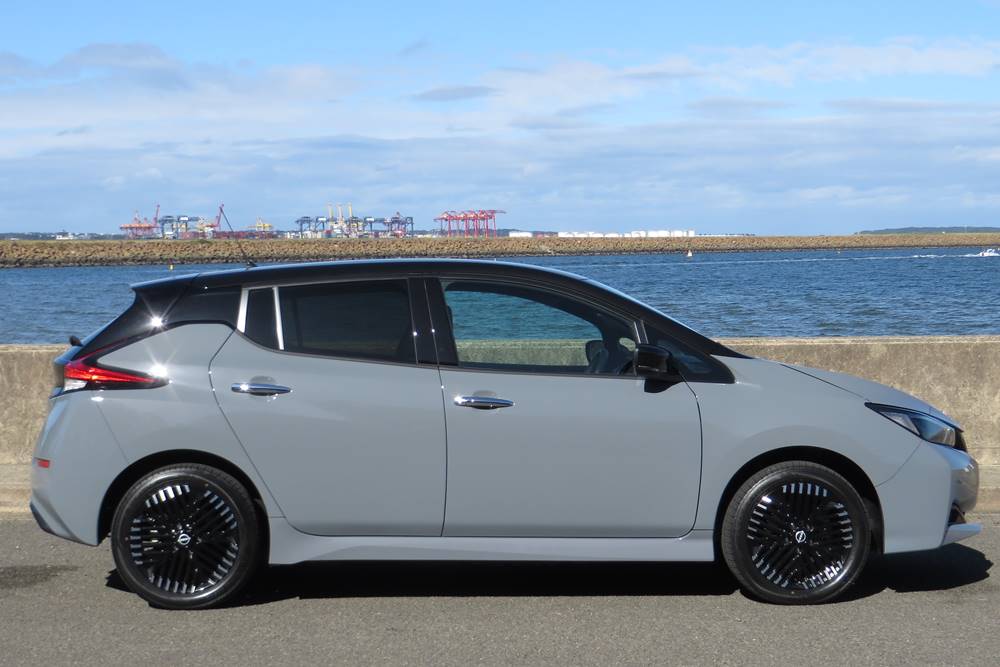
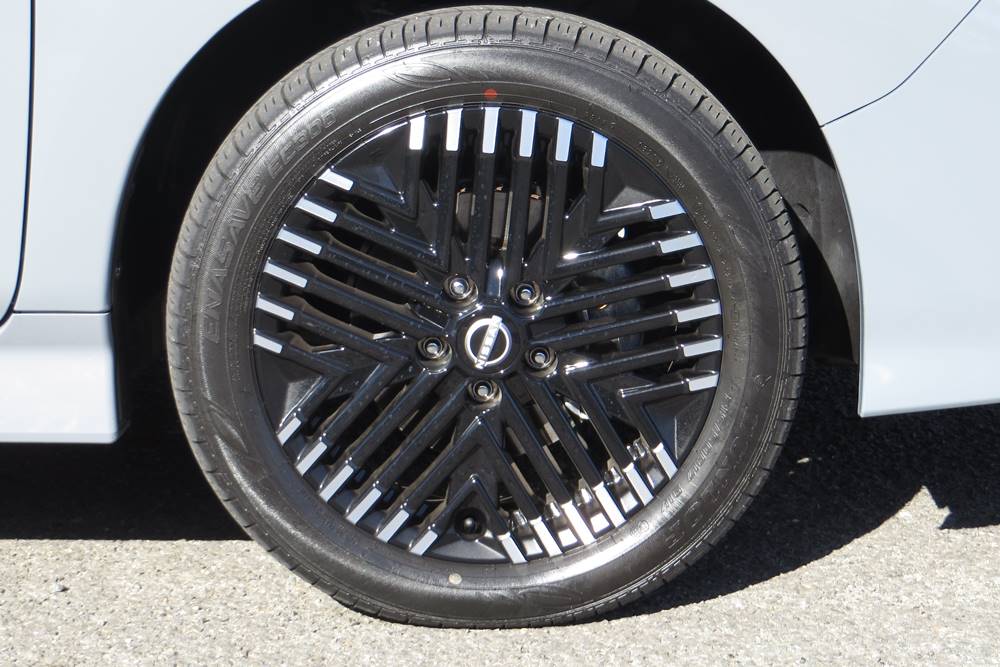
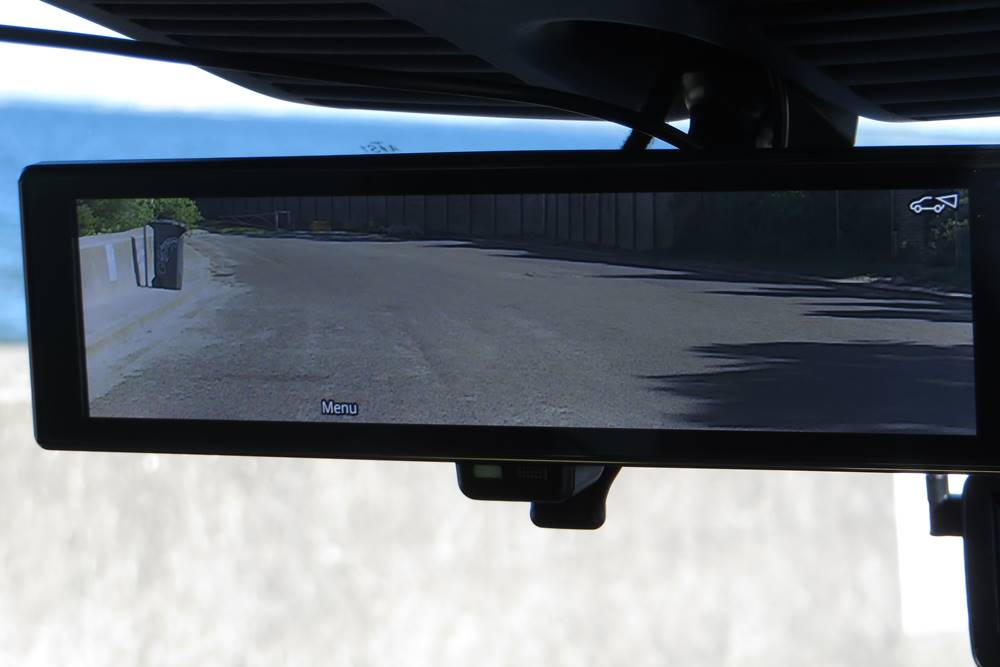
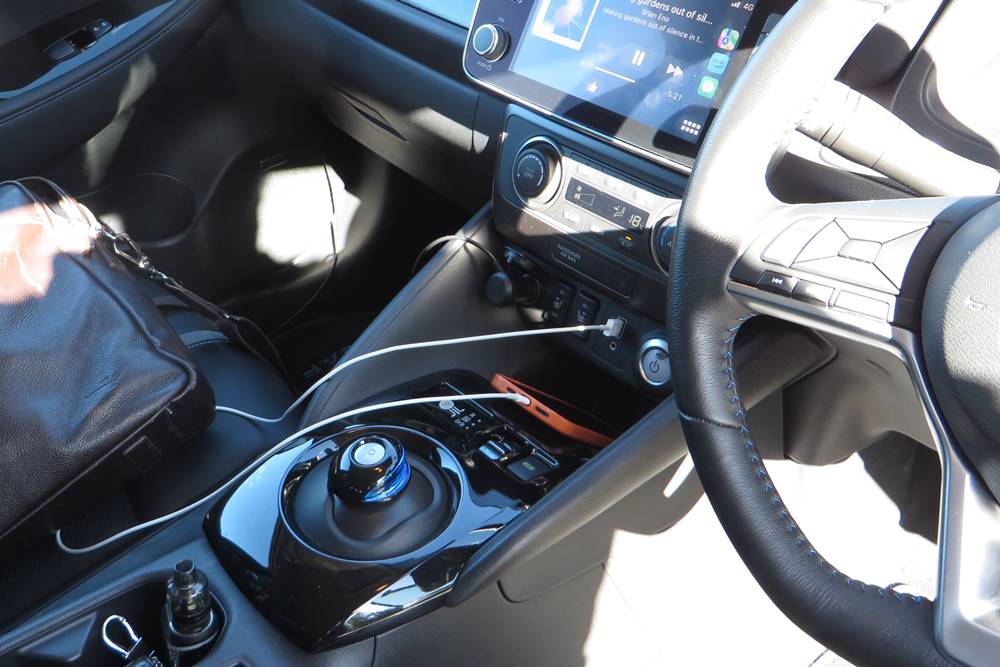

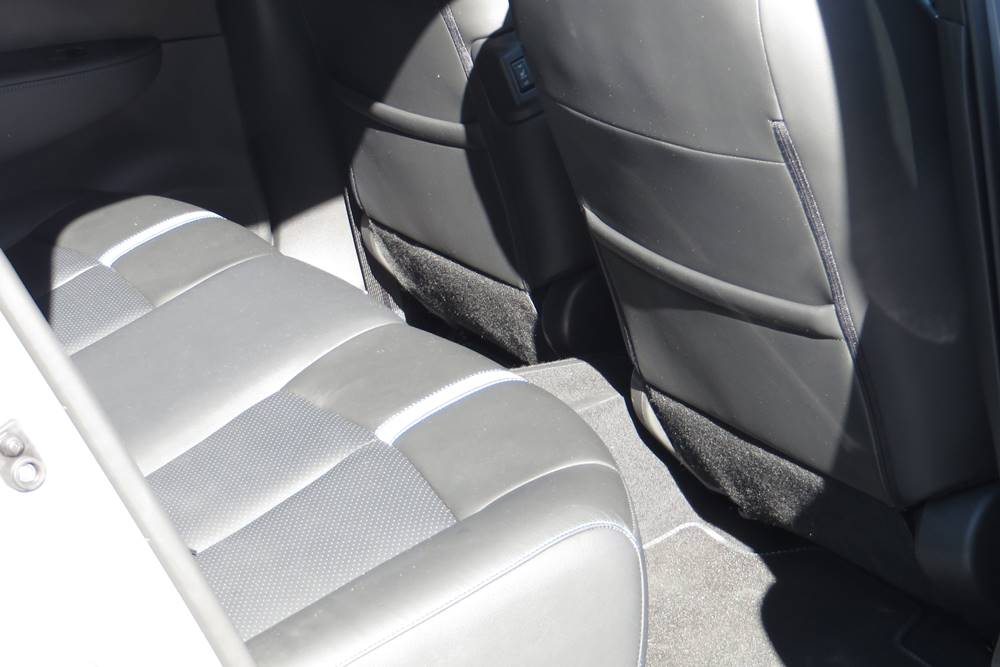
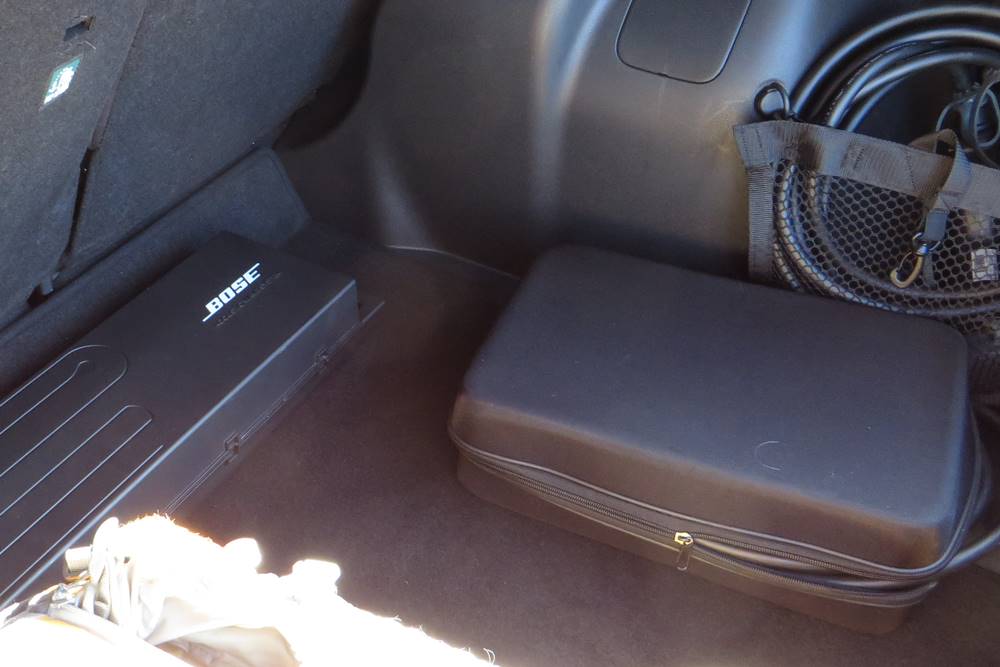


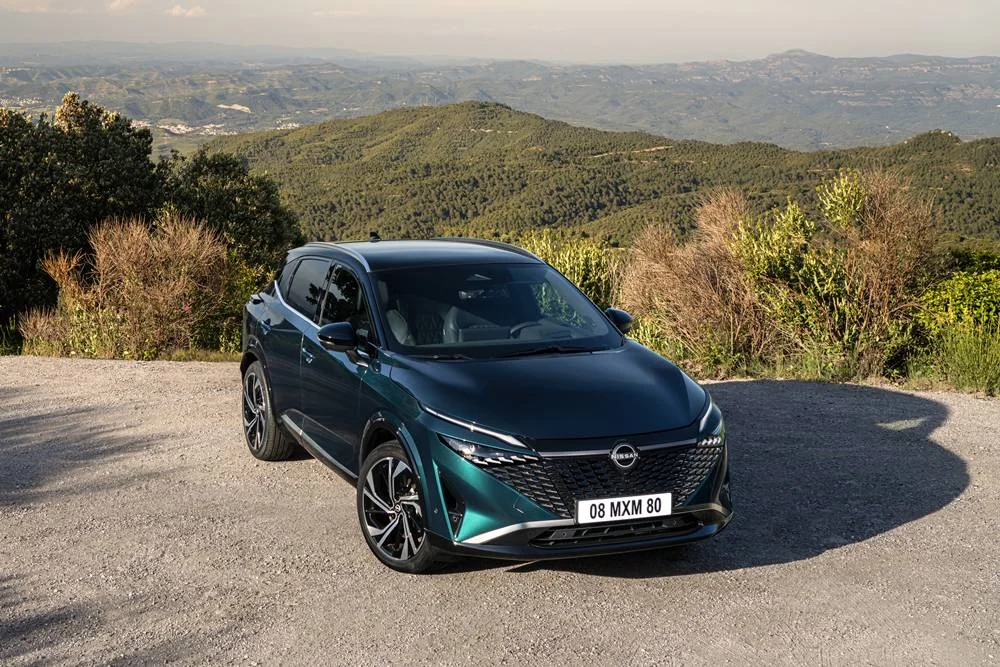
ABOVE: 2023 Nissan Leaf + (NOTE: Grey metallic paint and black roof)
The cabin
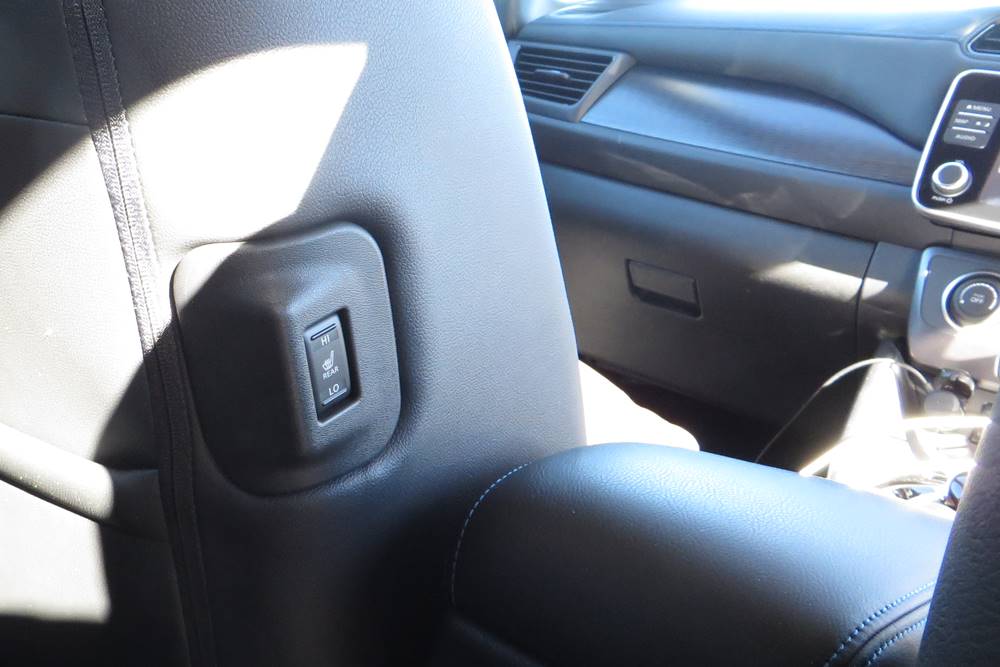
There cabin is still as quiet as ever, but now has a rather cool Bose energy-efficient 7-speaker system. The Apple CarPlay/Android auto is by USB, and the heated front seats have a whole bunch of manual leavers. I’m not averse to manual adjustment in an EV for obvious reasons.
The rearview mirror now acts as a display for a small camera mounted in the shark-fin aerial, and the reversing camera displaying down in the centre stack has predictive lines.
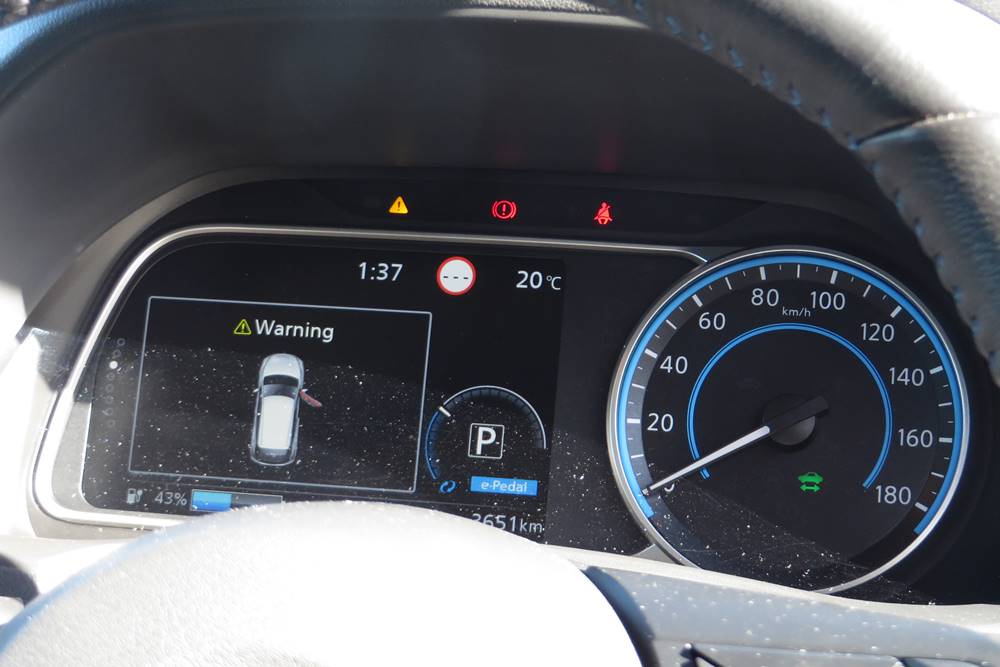
If there is one teeny criticism, it is the fact that although there are driver aids and safety assistants, there is no active steering. The lane departure warning has a vibration, visual, and audio alert, but braking is the only way it will stop you from straying lanes. Making matters even worse, it doesn’t work very well. The same goes for blind spot monitoring, which is also by warning only. Pro Pilot is Nissan’s term for a collective group of active driver/safety aids, and it is a little sketchy that Nissan’s premium, all-singing-all-dancing EV is sans the latest suite of tasty gizmos.
There is no auto brake hold at traffic lights, and the parking brake is one of those god-awful foot things. I curse and spit at having to manhandle a foot pedal to switch on a parking brake. For god’s sake, every other car in creation has an electric button, or a big long sensuous handle. What is this silly foot nonsense?
Brochure HERE: MY23 LEAF Brochure v10 Low Res
The Drive:
Despite some if the driver aids being missing, Leaf + is delightfully neutral. Acceleration is brisk yet leisurely.
Leaf is designed to be a city runabout and most peeps will get many days of driving, doing daily chores. Freeway stints and the odd enthusiastic corner are not much of a challenge if you like things smooth and comfortable. Pushing the Leaf + through tighter bends is fun, but you really need to take note of the advisories. Pushing beyond them may well end in folly.
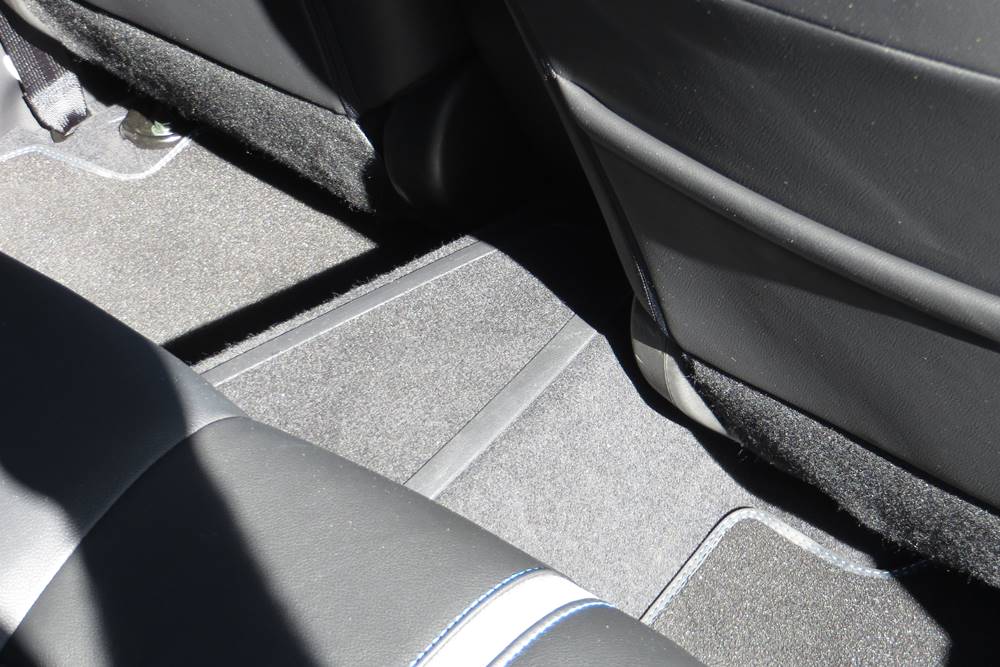
Consider the Nissan as a family hatch fit for town travel, and unless the rear seat passengers are vertically challenged, two in back is the giddy limit. The centre floor tunnel is enormous leading me to think the platform was either shared with ICE vehicles, is was something pre-flat-floor-era. Either way it is terribly intrusive.
The early Leaf models had barely more than a piddling 100km range, which was inadequate in the extreme. At almost 400km, the Leaf + is a bit more like it.
A few final thoughts:T the is a huge amount of torque-steer if you stick the boot on at the traffic lights. There are no useful drive modes, with ECO, and no SPORT, you only real option is to leave the thing in drive. If you must, use B, if you can’t work out how to use the stupid gear lever. The toggle must be moved right, then forward for reverse, or backward for forward. The is a large friendly “P” button in the middle of the toggle. In almost every other EV, that also activates and electric parking brake.
e-pedal is a switch near the gear toggle, and is great for around town. Turn if off on highways to allow you to coast, which often gives more benefit than capturing the energy by regenerative braking. You’ll get used to the nuances after you fiddle and experiment.
Conclusion:
Apart from the heinous alloys, Leaf + is a fun little thing that will last an age. Ince vehicle-to-grid becomes more ubiquitous, the Leaf + becomes more than merely wheels to hold your bum off the ground while you get from place to place. Any time it is plugged in, it is working for you. In fact, it could actually earn you money if your humble abode is equipped with solar cells.
When considering an EV, take local incentives into account, and you may find that buying and owning an EV matters more than the proposed 3,000km driving holiday that never happens.
Nissan Leaf +
- Price: $60,490
- Motor: 1 Electirc – Front
- Power: 160kw/340Nm
- Battery: 62kWh
- Charging: 100kw
- Range: 385km
Tags Nissan Leaf + review, nissan EV review, Bi-directional charging explained, gay nissan, gay ev
Hash #NissanLeaf+review, #nissanEVreview, #Bi-directionalchargingexplained, #gaynissan, #gayev
Other GayCarBoys EV Stories:
- The Trouble with Electric Car Charging-Polestar 2
- 2022 Polestar 2 Dual Motor Review
- Polestar 2’s Android Google Operating System Top 10 Tips
- Polestar 2 VS Tesla Model 3
- Polestar 2 Where Its Google OS is Star-Trek-Meets-Car-Trek
- How Much and How Long to Charge My Polestar 2?
- We drive 2019 Jaguar I-Pace SE EV400 Electric car
- 2023 IONIQ5 Epiq VS 2023 Genesis GV70 Electrified IS ONE BETTER?
- 2021 Hyundai IONIQ 5 EV Review
- KIA’s EV6 is Finally Here: What a Cracker! FULL REVIEW
- 2021 KIA Niro EV, PHEV and Hybrid First Drive
- Hyundai NEXO Hydrogen Fuel Cell SUV REVIEW
- Is Hyundai’s Kona EV the Best Electric Car on the Market?t
- Audi E- Tron 50 Review PT 1: EV Myths BUSTED!
- 2021 Audi E-Tron 50 Sportback Review: PT 2 The Drive
- 2019 Jaguar I-Pace SE EV400 Driven and rated in GALSTON GORGE Australia Video Review
- Nissan LEAF 2019: All New EV Powers Your Home VIDEO REVIEW
- Hyundai’s 2019 Electric Ioniq: The cheapest EV In Australia?
- New Nissan Leaf Could Power Your Home for a Week
- Tesla Model 3 Colors and Price
- Charging My tesla Model 3
- Tesla Model 3 Full Review Inside, outside, and Roadtest
- Mini Cooper SE electric
- Karma Starts E-Flex Prototype Testing
- Is Karma Automotive’s New E-Flex Platform a Game Changer
Discover more from Gay Car Boys
Subscribe to get the latest posts sent to your email.












Leave a Reply