

It is common for European cities big and small to have pedestrianised parts of the CBD. It is also the case that many European cities don’t have a CBD as we know it. Is there something Australia can learn?
This story proposes thought bubbles to provoke debate.
Sydney’s sister city, London, has a £15 charge, a toll if you like, for entering the congested inner city of London. However, tolls of any kind simply create a divided society. Those with money, or a company vehicle, simply ignore the charges.
Tolls roads mean to reduce local traffic, but are avoided by people who cannot afford them. Sydney is one of the most tolled cities in the world, so the tolls further divide the community. In fact, the voluntary tax does not fairly achieve the desired result, of less congestion and pollution.
What is the aim?
- Less congestion in the CBD
- Less pollution in the CBD
- Better, cheaper public transport
- Clean energy
- Lower emissions
- Live where you work
This Week Review: 2022 BMW 230i coupe FULL gaycarboys REVIEW – FAB OR FAIL?
Help Support Gay Car Boys Subscribe to our Youtube Channel
- Top GayCarBoys Stories:
- Sexy Men Drive 2021 Toyota Yaris Cross
- 10 Sexiest MotoGP Motorcycle Riders
- DON’T Drive YOUR CAR until you’ve Checked if your AIRBAG will KILL YOU
- 10 Hottest Racing Drivers
- Top 12 Best Gay Lesbian LGBTI Luxury Cars
- Top 10 Gay Lesbian LGBT Cars
- Top 10 Gay Lesbian LGBT Sports Cars
- Top 15 gay and lesbian LGBT SUVs
- Talented Twinks – Callum Ilott Virtually Races Arthur Leclerc


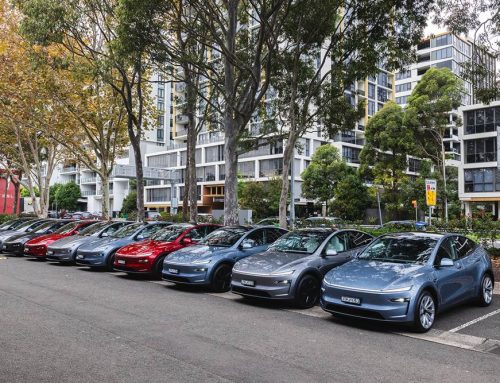
ABOVE: kerbside EV charging, City Malls, Car Free Cities
There are a few things to consider.
The world population has hit 8 billion, and is becoming more urbanised. Traffic continues to intensify as “peak hour” gradually lengthens. Anyone driving around an Australian capital knows that weekends are now as bad as week days, if not worse.
While congestion tax is aimed mainly at reducing local pollution, it is also intended to reduce congestion. As such, it doesn’t apply to ultra-low emission vehicles.
London is expanding the toll to greater London and will affect petrol cars made before 2005 (euro4) and diesel vehicles made before 2014 (euro6). The toll , which began in 2019 as a limited area of the City of London, was expanded in 2021. In 2023 will include the entire 600 sq mile area of Greater London.
Although Sydney has not yet implemented such a scheme, many have been proposed by several governments. The plan is seen as undesirable by those who deny man-man climate change, and who dislike any kind of inconvenience.
Sydney has “malled” several major streets. They’ve been turned into leafy pedestrian spaces by the progressive, people-focused, City of Sydney council. Just as the plastic bags ban, bike lanes, and solar panels, enraged some quarters, the proposal of extending malls angered right-ring commentators. As the plan is gradually enacted, the commentators move to the next shiny thing because they have the attention spans of a door knob.
Has the time come to ban cars from Australia’s inner-city areas?
The idea is a daring one. There might be exemptions for residents and deliveries for business. However, taxis and ride-share vehicles would pay a fee to enter. In order for this to work, Sydney’s creaking public transport system would need to improve manyfold. In a utopian world, taxis and ride-share would also be banned, otherwise as always, the rich and entitled would simply circumnavigate the change. The burden would fall, as always, on the poor and the working class.
The only way to make the scheme properly democratic is to ban private vehicles completely, and to limit taxis and ride-share to a boundary from which only public transport and delivery vehicles would be exempt.
All inner-city streets would become malls. Expanding this to Sydney’s city villages would create many oases of living, breathing zones of green, low-pollution gardens of Eden. Small business would also benefit.
Traffic would be confined to arteries, the toll roads which some seem to covet, and the main roads in, and more importantly, out, of town.
Affordable housing would allow workers to live near their jobs, so instead of selling it off as conservative governments have done, more should be built, never to be sold.
Would this work in reality?
Certainly not as things stand. Greed and incompetence rule. New South Wales has insufficient, underfunded, public transport capacity. What there is, is utterly unreliable. Expensive housing is forcing workers further and further out, so local, affordable housing is essential.
The government must enact strict emissions rules, increase fast public EV charging infrastructure, and ban all vehicles from certain areas. EVs must be cheaper to be within the reach of the population, available to all.
Melbourne has free trams within the limits of the CBD, so Sydney could have heavily reduced public transport before 8am, and free within the CBD at all times.
Ubiquitous car and bike share could be cheaper.
In an Ideal world:
There has to be improved, government-owned systems.
All toll roads renationalized, tolls to enter the inner-city zones, and increased pedestrianisation. For the time being, EVs would be exempt. Bi-directional EVs might even be paid to connect to inner city grids. Inner City EV charging could be free, where locals and visitors could contribute to a fairer, stabilised power grid.
The city villages would have large permanent green zones, and means-tested, affordable, rent-controlled housing.
This is never going to be provided while profit is a motive. The only answer is to remove profit from the equation. Corporations would have a limit below which deductions do not apply, and mining royalties would be paid based on an end-user certificate, not on local “profit”.
Public transport for workers and anyone on government benefits could be free. Cities would become a place to live, work, walk, and live, without the need to drive.
The reality.
Nothing will change because money talks.
Other GayCarBoys EV Stories:
- The Trouble with Electric Car Charging-Polestar 2
- 2022 Polestar 2 Dual Motor Review
- Polestar 2’s Android Google Operating System Top 10 Tips
- Polestar 2 VS Tesla Model 3
- Polestar 2 Where Its Google OS is Star-Trek-Meets-Car-Trek
- How Much and How Long to Charge My Polestar 2?
- We drive 2019 Jaguar I-Pace SE EV400 Electric car
- 2021 Hyundai IONIQ 5 EV Review
- KIA’s EV6 is Finally Here: What a Cracker! FULL REVIEW
- 2021 KIA Niro EV, PHEV and Hybrid First Drive
- Hyundai NEXO Hydrogen Fuel Cell SUV REVIEW
- Is Hyundai’s Kona EV the Best Electric Car on the Market?t
- Audi E- Tron 50 Review PT 1: EV Myths BUSTED!
- 2021 Audi E-Tron 50 Sportback Review: PT 2 The Drive
- 2019 Jaguar I-Pace SE EV400 Driven and rated in GALSTON GORGE Australia Video Review
- Nissan LEAF 2019: All New EV Powers Your Home VIDEO REVIEW
- Hyundai’s 2019 Electric Ioniq: The cheapest EV In Australia?
- New Nissan Leaf Could Power Your Home for a Week
- Tesla Model 3 Colors and Price






Leave a Reply