There is a quiet revolution happening in the driveways of middle Australia, and it smells nothing like petrol. Last month China overtook Japan as the top origin of cars sold in Australian showrooms. We warned the legacy brands but they did not listen and the result is a raft of new models doing to the Euros what the Japanese did first, then the Koreans next. Now, China is schooling the rest of the market in auto-making done to a price without sacrificing quality.
The Geely Starray EM-i Inspire is a plug-in hybrid SUV that has absolutely no business being this good at this price. At $39,990 before on-road costs, or roughly $44,000 driveaway depending on your postcode, it undercuts a base Toyota RAV4 Hybrid by over five grand while offering equipment that would make a European at twice the price blush like a schoolboy in speedos. Remember, the Geely is a PHEV while the base RAV4 is just a regular old hybrid with almost no pure EV range. It is a cracking value proposition in the Australian mid-size SUV market, and further proof that the Chinese invasion is no longer confined to budget Barbie Campers.
Who is Geely, and Why Should You Care?
For those still catching up, Geely is not some back-shed operation knocking up shonkies. This is the parent company that owns Volvo, Polestar, Lotus, Zeekr, and a chunk of Aston Martin. They have been making cars in China for nearly four decades while the rest of us were blissfully unaware. Think of Geely as the Toyota of that empire, a mainstream powerhouse that has finally decided to export the mothership brand rather than just letting the premium children run amuck.
The Starray EM-i lands in a segment loaded to the gunnels with techy goodness. The BYD Sealion 6 ($42,990), MG HS Super Hybrid ($50,990 driveaway), Jaecoo J7 SHS ($47,990 driveaway), and the Mitsubishi Outlander PHEV ($57,290 before on-roads) are all jostling for the same punters.
What Do You Get for Your Money?
The Inspire is the one to buy, and frankly, you would need the financial acumen of a turnip to choose otherwise. For just $2,500 more than the entry-level Complete, it adds 19-inch alloys, a panoramic glass sunroof, power tailgate, head-up display, a wireless phone charger, cooled front seats, 256-colour ambient lighting, and a 16-speaker, 1,000-watt premium FLYME sound system. If you haven’t heard of FLYME, the integrated sound and AI company was bought out by Geely to bring it all in-house. That is not an upgrade, that is a heist.
Inside, the Zen-inspired cabin is a rather pleasant surprise. It is a welcome reprieve from the dreary cheap appearance of the Japanese and Korean opposition. A sweeping dashboard houses a 15.4-inch central touchscreen that responds with the crispness of a well-trained butler, and the 10.2-inch digital driver’s display does the job without a load of palaver. The two-spoke steering wheel is distinctive in a “love it or leave it” sort of way. I’m not fussed on it so far but a week in the saddle should sort out those minor foibles. It feels rather like finagling a square frisbee.
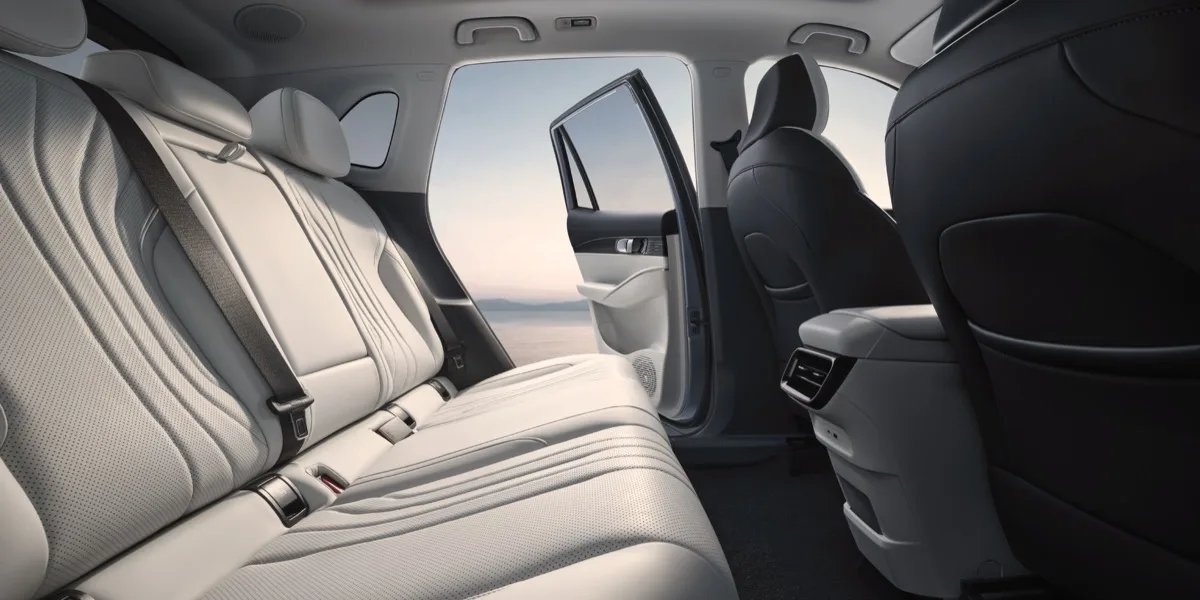
Soft-touch surfaces, pinstriped wood accents, and tasteful splashes of plastic chrome give the interior a perceived quality that far exceeds the asking price. In the Ivory White “leather” (exclusive to the Inspire), the GeeLuxe simulated cow looks properly posh, like a first-class cocktail lounge with just a hint of 60s glamour.
The rear seats offer ample room for adults, though a lack of lateral support will turn unsuspecting friends into rag dolls if they aren’t securely strapped in. The 428L boot expands to 2,065L with seats folded. Perfectly adequate for the weekly Woolies and Bunnings run.
One gripe: there is no spare tyre. A tyre repair kit is all you get, which is about as reassuring as a chocolate teapot when you are 200 kilometres from civilisation. Not once have these things worked for me. Each and every time I’ve sat like a plonker waiting for a flat-bed. One such wait was almost 4 hours, yes I am looking at you Honda!
($42,990), MG HS Super Hybrid ($50,990 driveaway), Jaecoo J7 SHS ($47,990 driveaway), and the ever-present Mitsubishi Outlander PHEV ($57,290 before on-roads) are all jostling for the same punters. Even the cheeky Chery Tiggo 7 Super Hybrid, at $39,990 driveaway, barely edges it on sticker price while offering considerably less kit.

Help Support Gay Car Boys Subscribe to our Youtube Channel
Download the Specifications here
Above: This Week’s VIDEO Review –2026 Lexus LBX Paradox
#LexusLBX, #LBXSportLuxury, #ToyotaCHR, #LuxurySUV, #HybridCars, #GayCarBoys


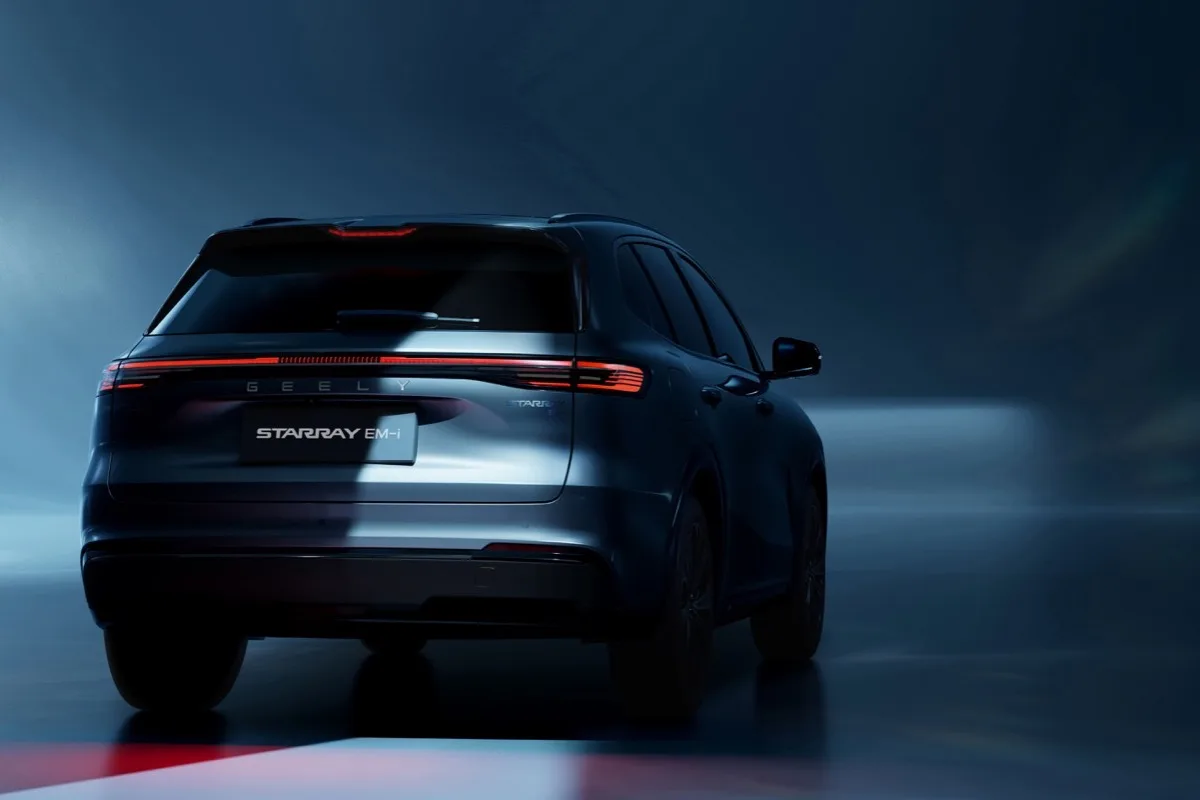
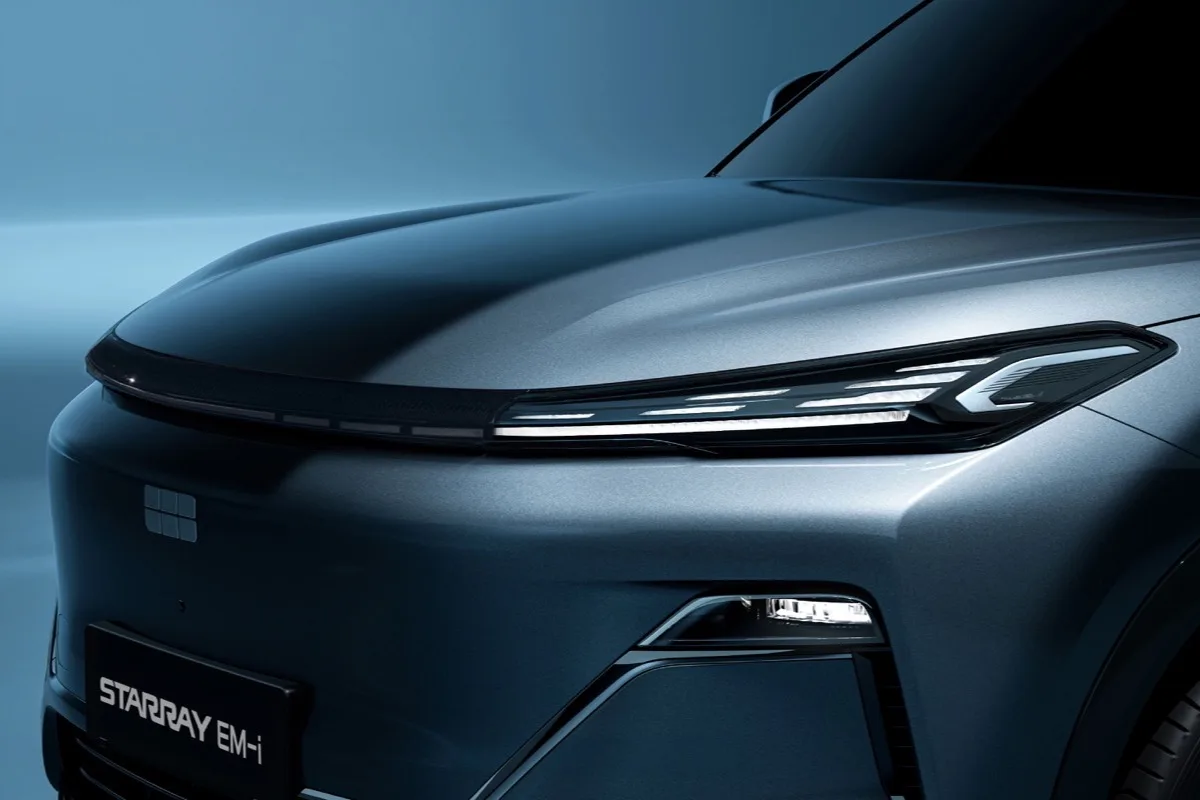


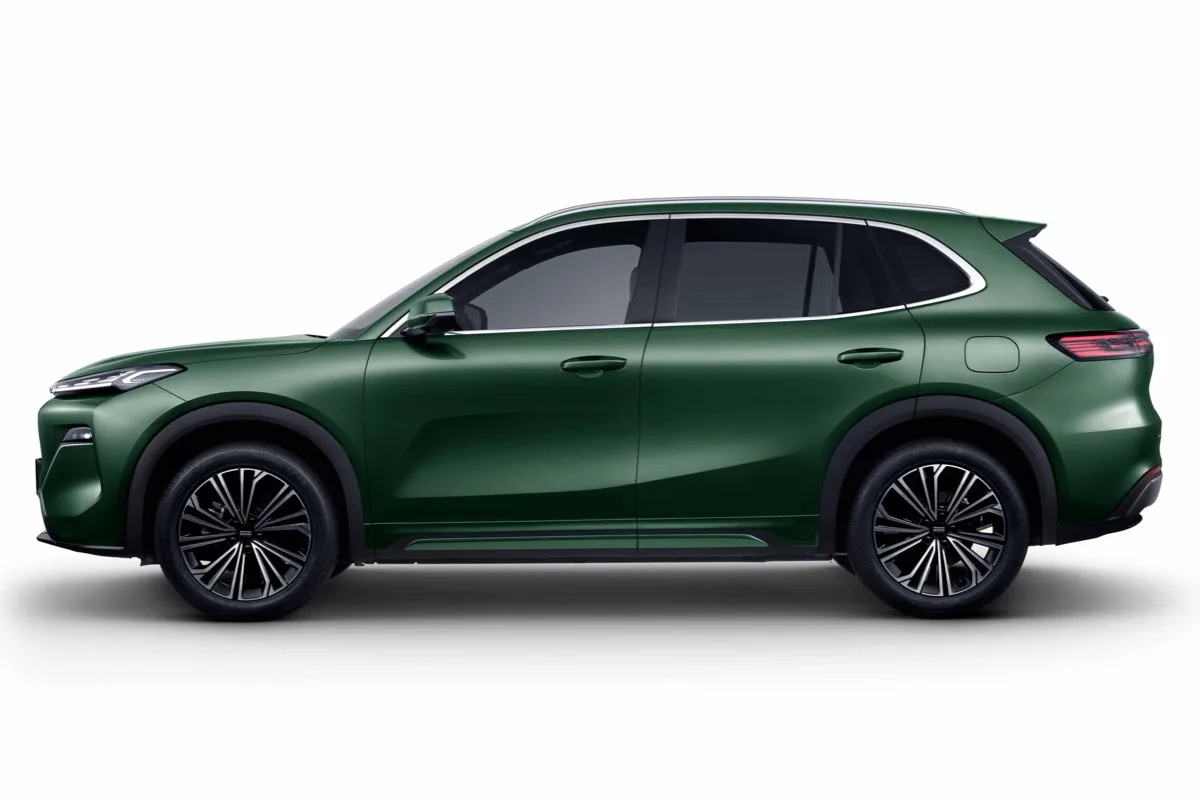


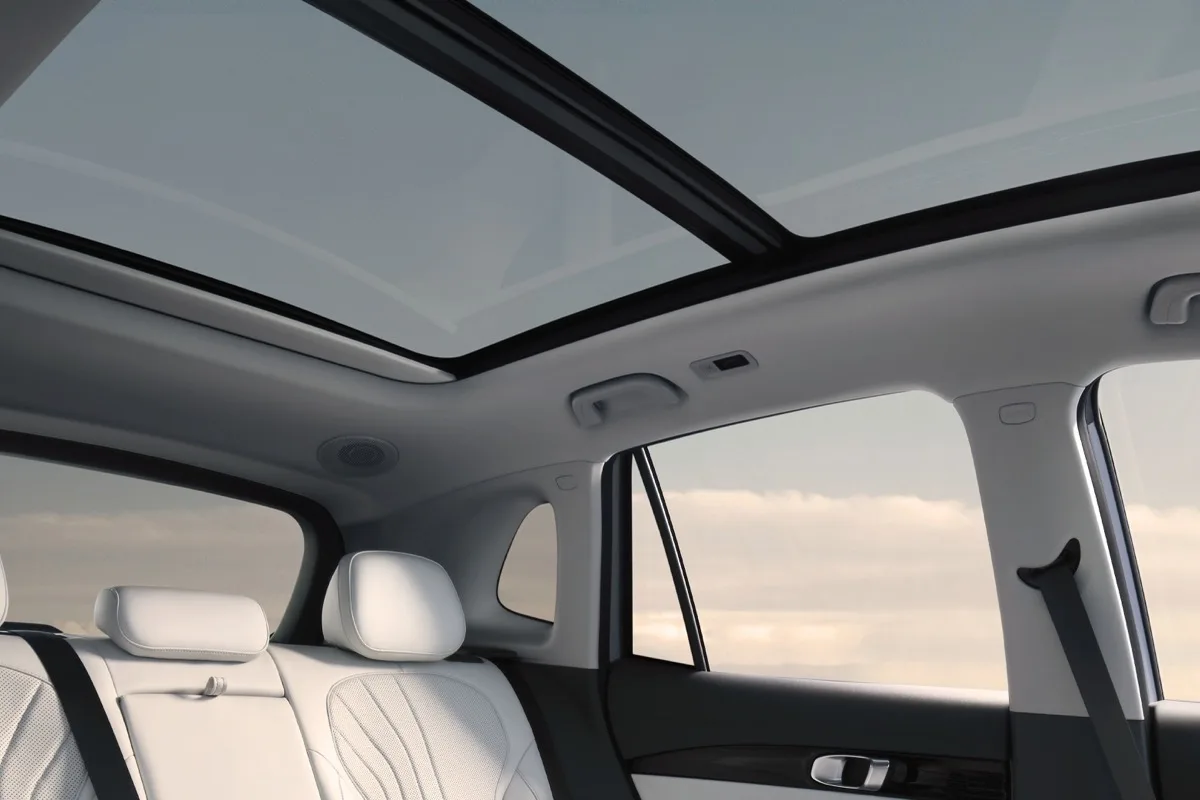
ABOVE: Geely Starray EM-i Inspire #GeelyStarray, #PHEVReview, #GeelyStarrayEMi, #SuperHybrid, #GayCarBoys
How Does the Starray EM-i Inspire Drive?
A 1.5-litre four-cylinder petrol engine (73kW/125Nm) plays the supporting role to a 160kW/262Nm electric motor, fed by an 18.3kWh lithium iron phosphate battery. Combined output is a frisky 193kW through the front wheels. No all-wheel drive, which may disappoint the whingers, but for the 99 per cent of us whose off-road adventures peak at a gravel car park, it is tickety boo.
In the real world, expect closer to 60-65 kilometres of electric range because we chewed through volts fast enough to need a daily freshen-up. You’ll need the optional home charger or 240V cable, a few hundred apiece, but forgivable at this price.
When the 1.5-litre fires up, it gets a little rambunctious. The transition between electric silence and petrol “grunt” is not as seamless as a Lexus NX 450h+ at nearly three times the cost. No one is trying to infer the Lexus is not a much sturdier lass, but is she really 3 times better?
Around town, the Starray is a delight. The suspension soaks up potholes and council neglect with the nonchalance of a pampered puss. It glides beautifully at urban speeds, but push it harder on winding country roads and the body goes off like a jelly on springs, the steering coming over all vague like a politician at a press conference. Having said that, the Lexus NX 450h+ wasn’t much better.
AC charging maxes out at 6.6kW, with a 30kW DC option. The optional AC cable will get you no more than 1.1kW at home. Claimed fuel consumption is 2.4L/100km, though real-world hybrid figures will sit closer to 5 litres, still frugal-ish. It would help if the AC cable was included.
The RAV4 PHEV Elephant in the Room
Poor old Toyota has finally got around to offering a plug-in hybrid RAV4, and while it arrives fashionably late to the party, it does so with a smidge more muscle. The 2026 RAV4 XSE PHEV starts from $58,840 plus on-road costs, which means a princely $64,000 driveaway. That is a wallet-sapping $20,000 premium over the Geely Starray Inspire for a car that occupies precisely the same parking space in the Woolworths car park.
The RAV4 PHEV has genuine strengths. Its 2.5-litre produces 200kW (227kW in AWD), good for 0-100 at 5.8-6 seconds, far friskier than the Geely. It supports 11kW AC and 50kW DC charging, claims up to 100km of electric range, and has a 1.5kw boot inverter for those who fancy a quiet cup of tea on site. The Geely has a power converter for external use too, a 6.6 kw one that outshines the more expensive RAV4 4-to-1. However, at the XSE level you are still missing the 1,000-watt sound system, 256-colour ambient “doof-doof” lighting, and head-up display that the Geely hands you for $20,000 less.
Should You Buy One?
On the basis of our day-1 assessment, the Geely Starray EM-i Inspire is not perfect. The petrol engine is coarse, and the absence of a spare tyre is unforgivable. But at this price, with this equipment, it makes the established competition look like they are either asleep at the wheel or taking the absolute mickey.
Geely has built a thoroughly competent, impressively equipped, and absurdly affordable PHEV that delivers where it matters most: the daily grind. For the family that wants to go electric without the range anxiety, save a fortune on fuel, and still park something that looks like it costs twice what it did, the Starray Inspire is a properly compelling proposition.
The Chinese have been knocking on the door for years. With the Starray, Geely has walked straight through it, helped themselves to a drink, and put their feet up on the coffee table. Toyota had better hope that badge loyalty is worth twenty grand, because the spec sheet says otherwise.
We’ve already said Chinese cars are taking over, and this is why, and no legacy brand is prepared to meet the market. This mistake will be a big one as those who remember Holden at 50% market share can attest to. Holden didn’t read the room and disappeared in a puff of its own arrogance.
-
Geely Starray EM-i Inspire Specifications
Spec
Detail
Engine
1.5L 4-Cyl Petrol + Electric Motor
Combined Power
193kW
Electric Motor
160kW / 262Nm
Battery
18.3kWh (LFP)
EV Range
83km (claimed) / ~65km (real world)
Combined Range
943km (claimed)
Fuel Economy
2.4L/100km (claimed)
0-100 km/h
7.9 seconds
Boot Space
428L (seats up) / 2,065L (folded)
Charging
6.6kW AC / 30kW DC
V2L (Vehicle-to-Load)
6.6kW
Driveaway Price
~$44,000
Warranty
7 years / unlimited km
Geely Starray EM-i Inspire vs Toyota RAV4 XSE PHEV
Feature
Geely Starray EM-i Inspire
Toyota RAV4 XSE PHEV 2WD
Engine
1.5L 4-Cyl + Electric
2.5L 4-Cyl + Electric
Combined Power
193kW
200kW (227kW AWD)
Torque
262Nm (electric motor)
TBC
Battery
18.3kWh (LFP)
22.7kWh (Li-ion)
EV Range (claimed)
83km
~100km (WLTP, EU)
Combined Range
943km
TBC
Fuel Economy (claimed)
2.4L/100km
TBC
AC Charging
6.6kW
11kW
DC Fast Charging
30kW
50kW
DC 10-80% Time
~50 min (est.)
~30 min
V2L / Vehicle-to-Load
6.6kW
1.5kW
Boot Space
428L
672L
Display
15.4-inch
12.9-inch
Sound System
16-speaker 1,000W
6-speaker (9-speaker JBL on Cruiser)
Head-Up Display
Yes (standard)
No (Cruiser only)
Cooled Seats
Yes (standard)
Yes
Panoramic Sunroof
Yes
Moonroof only (panoramic on Cruiser)
AWD Option
No
Yes (+$4,500)
Towing (braked)
TBC
1,500kg (AWD)
Warranty
7 years / unlimited km
5 years / unlimited km
MRLP
$39,990
$58,840
Driveaway (approx.)
~$44,000
~$64,000
The Trouble with Electric Car Charging-Polestar 2
- 2022 Polestar 2 Dual Motor Review
- Polestar 2’s Android Google Operating System Top 10 Tips
- Polestar 2 VS Tesla Model 3
- Polestar 2 Where Its Google OS is Star-Trek-Meets-Car-Trek
- How Much and How Long to Charge My Polestar 2?
- We drive 2019 Jaguar I-Pace SE EV400 Electric car
- 2023 IONIQ5 Epiq VS 2023 Genesis GV70 Electrified IS ONE BETTER?
- 2021 Hyundai IONIQ 5 EV Review
- KIA’s EV6 is Finally Here: What a Cracker! FULL REVIEW
- 2021 KIA Niro EV, PHEV and Hybrid First Drive
- Hyundai NEXO Hydrogen Fuel Cell SUV REVIEW
- Is Hyundai’s Kona EV the Best Electric Car on the Market?t
- Audi E- Tron 50 Review PT 1: EV Myths BUSTED!
- 2021 Audi E-Tron 50 Sportback Review: PT 2 The Drive
- 2019 Jaguar I-Pace SE EV400 Driven and rated in GALSTON GORGE Australia Video Review
- Nissan LEAF 2019: All New EV Powers Your Home VIDEO REVIEW
- Hyundai’s 2019 Electric Ioniq: The cheapest EV In Australia?
- New Nissan Leaf Could Power Your Home for a Week
- Tesla Model 3 Colors and Price
- Charging My tesla Model 3
- Tesla Model 3 Full Review Inside, outside, and Roadtest
- Mini Cooper SE electric
- Karma Starts E-Flex Prototype Testing
- Is Karma Automotive’s New E-Flex Platform a Game Changer
Help Support Gay Car Boys Subscribe to our Youtube Channel

Alan Zurvas is the founder and editor of Gay Car Boys, Australia's leading LGBTQI+ automotive publication. Before launching GCB in 2008, Alan's automotive writing was published in SameSame.com.au and the Star Observer. With over 16 years of hands-on car reviewing experience, Alan brings an honest, irreverent voice to every review — championing value and innovation over brand loyalty.
Leave a Reply